Tuesday, October 06, 2026
 There is also a need for India-specific research to understand genetic, cultural, and environmental factors influencing arthritis.




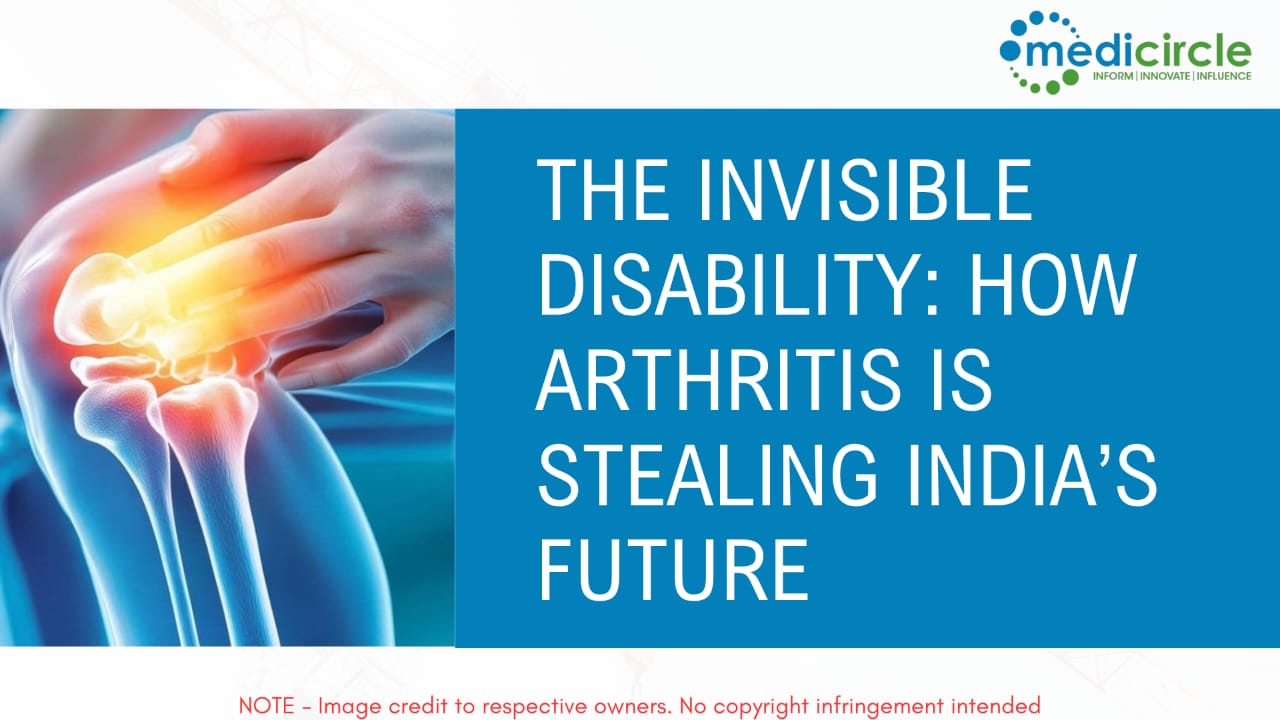
Walk through the crowded lanes of any Indian city or sit quietly in a rural household, and you will find a story that repeats itself in different words yet with the same undertone i.e. pain. It is not the fleeting discomfort of a day’s hard work or the passing stiffness of age. It is the silent weight of arthritis, a condition that has slowly but firmly become one of the most common health challenges in India, yet remains poorly addressed in our national health priorities. More than 195 million Indians, which translates to nearly one in six of our population, live with arthritis-related pain. This is a reminder that musculoskeletal disorders are no longer minor issues to be brushed aside, but a growing epidemic altering the daily lives of millions. What is even more striking is that women carry nearly two-thirds of this burden, highlighting the deep intersection of gender and chronic disease in the country.
Arthritis is not a single illness but an umbrella term for multiple conditions, the most common of which are osteoarthritis and rheumatoid arthritis. Osteoarthritis alone affects more than 54 million Indians, and its links with obesity, diabetes, and hypertension show how intricately it is tied to lifestyle and broader metabolic health. On the other hand, rheumatoid arthritis, though less common, is far more devastating in its long-term impact. Over 4.2 million Indians struggle with this autoimmune condition that progressively damages joints, causes severe disability, and heightens the risk of systemic complications like cardiovascular disease. A chilling detail from recent findings is that more than 1.1 million women of reproductive age in India are living with rheumatoid arthritis, which is significantly higher than global averages. This means that women in their prime years, at a stage of life when they are expected to juggle careers, families, and social roles, are battling pain and disability that remain largely invisible in policy discussions.
The survey that uncovered these realities was conducted under the WHO-Community Oriented Program for Control of Rheumatic Diseases (WHO-COPCORD). Covering over 56,000 people across rural and urban India, it found arthritis to be the most common self-reported illness in communities, even surpassing conditions like diabetes and hypertension that usually dominate public health conversations. This should ideally serve as a wake-up call. If arthritis pains are more commonly reported than diabetes in Indian households, then our healthcare systems and awareness campaigns should reflect that urgency. Yet the opposite seems to be true. Arthritis continues to be relegated to the background, dismissed as an inevitable part of ageing or a “minor joint problem,” while in reality it is stealing mobility, productivity, and dignity from millions.
The neglect stems partly from how arthritis is perceived. Unlike cancer or heart disease, it does not carry the same immediate fatal image. But what is ignored is the slow and relentless damage it inflicts. In osteoarthritis, for instance, the gradual wearing away of cartilage leads to severe pain, stiffness, and reduced mobility. It robs individuals of their ability to walk, climb stairs, or perform routine tasks, eventually pushing many into dependency. In rheumatoid arthritis, the immune system’s misdirected attack on the body not only cripples joints but also weakens overall health, with a significant number of patients developing heart problems or even facing premature death. The fact that arthritis can push people into lifelong disability, unemployment, and social isolation rarely receives the spotlight it deserves in our health debates.
The gender dimension of arthritis in India cannot be ignored. Women are more likely to suffer from the condition, and the reasons extend beyond biology. Cultural and social factors play a defining role. Women, particularly in rural India, often bear the physical toll of household chores, agricultural labour, and caregiving responsibilities, while having limited access to timely medical care. Their pain is often trivialised as part of “normal life” or blamed on age, with very few seeking formal diagnosis or treatment until the condition has advanced. Even within healthcare systems, women’s musculoskeletal complaints may not always receive the seriousness they warrant. The result is a silent epidemic within an epidemic where millions of women enduring years of pain without structured medical intervention, affecting not just their health but the wellbeing of their families and communities.
The findings of the WHO-COPCORD study also raise uncomfortable questions about the preparedness of India’s healthcare infrastructure to address arthritis. With over 195 million people living with arthritis-related conditions, the demand for rheumatologists, physiotherapists, and rehabilitation specialists far outstrips supply. In most parts of rural India, such expertise is virtually unavailable, leaving people dependent on home remedies, local healers, or unregulated painkillers that offer temporary relief but long-term harm. Even in urban centres, access to comprehensive arthritis care remains limited to private hospitals, placing it out of reach for the majority of patients.
What is needed is a complete shift in how arthritis is approached starting from awareness to diagnosis and management. Public health messaging must evolve to include arthritis as a serious chronic disease rather than just a lifestyle inconvenience. Screening programs should be encouraged, especially in populations at higher risk such as middle-aged women, obese individuals, and those with a family history of musculoskeletal disorders. Early detection of osteoarthritis or rheumatoid arthritis can delay progression significantly and improve quality of life. In rheumatoid arthritis, particularly, timely initiation of disease-modifying drugs can prevent irreversible damage, but delayed diagnosis remains the norm in India.
Another critical dimension is lifestyle modification and preventive strategies. Obesity, lack of physical activity, poor diet, and rising cases of diabetes and hypertension are creating a perfect storm for osteoarthritis. Addressing these risk factors through community-based programs can not only reduce the incidence of arthritis but also improve overall public health outcomes. At the same time, access to affordable physiotherapy and rehabilitation services must be expanded. These are not luxuries but essential components of arthritis management, helping patients maintain mobility and independence. Yet in India, such services are concentrated in cities and often come with high costs, leaving millions without proper support.
The economic burden of arthritis in India also deserves serious attention. Beyond healthcare costs, the productivity loss is enormous. A person incapacitated by arthritis is not just a patient but also a worker, caregiver, or breadwinner unable to contribute fully to society. For women, especially in rural households, disability from arthritis can disrupt the entire fabric of family functioning, affecting child care, nutrition, and household income. As the population ages, this burden will only grow, placing immense pressure on families and the healthcare system. Ignoring arthritis is no longer an option, it is both a public health and an economic challenge that India must address.
The silver lining lies in the fact that arthritis, despite being chronic, is manageable with the right interventions. Advances in medical science have brought new treatment options, from biologic drugs for rheumatoid arthritis to minimally invasive joint replacement surgeries for advanced osteoarthritis. But these must be made accessible and affordable. There is also a need for India-specific research to understand genetic, cultural, and environmental factors influencing arthritis. The WHO-COPCORD project has shown the value of community-based studies, and similar initiatives must be scaled up to guide evidence-based policies.
Arthritis is more than a disease of the joints; it is a disease that touches lives, households, and communities. It shapes how people work, how they age, and how they engage with the world around them. When 195 million Indians live with arthritis-related pain, the silence around it becomes a glaring act of neglect. We cannot continue to place it behind diabetes and hypertension in public health priorities when the data shows it surpasses both in community-reported prevalence. Nor can we allow women, who bear the heavier share of this burden, to remain invisible sufferers.
The path forward lies in acknowledgment, investment, and empathy. Acknowledging arthritis as a national health priority, investing in specialized care and awareness campaigns, and embedding empathy into our healthcare responses so that patients do not feel dismissed or invisible. The WHO-COPCORD findings are not just data points; they are an urgent call for India to rethink its approach to musculoskeletal health. For too long, arthritis has been considered a normal part of growing old or a minor inconvenience. The truth is far more serious. Arthritis is India’s hidden epidemic, and unless it is brought to the forefront of our healthcare agenda, it will continue to steal lives in silence.





.jpeg)
.jpg)
.jpg)
.jpg)
.jpg)
.jpg)
.jpg)


.jpg)
.jpg)
.jpg)
.jpg)
.jpg)
.jpg)