Tuesday, October 06, 2026
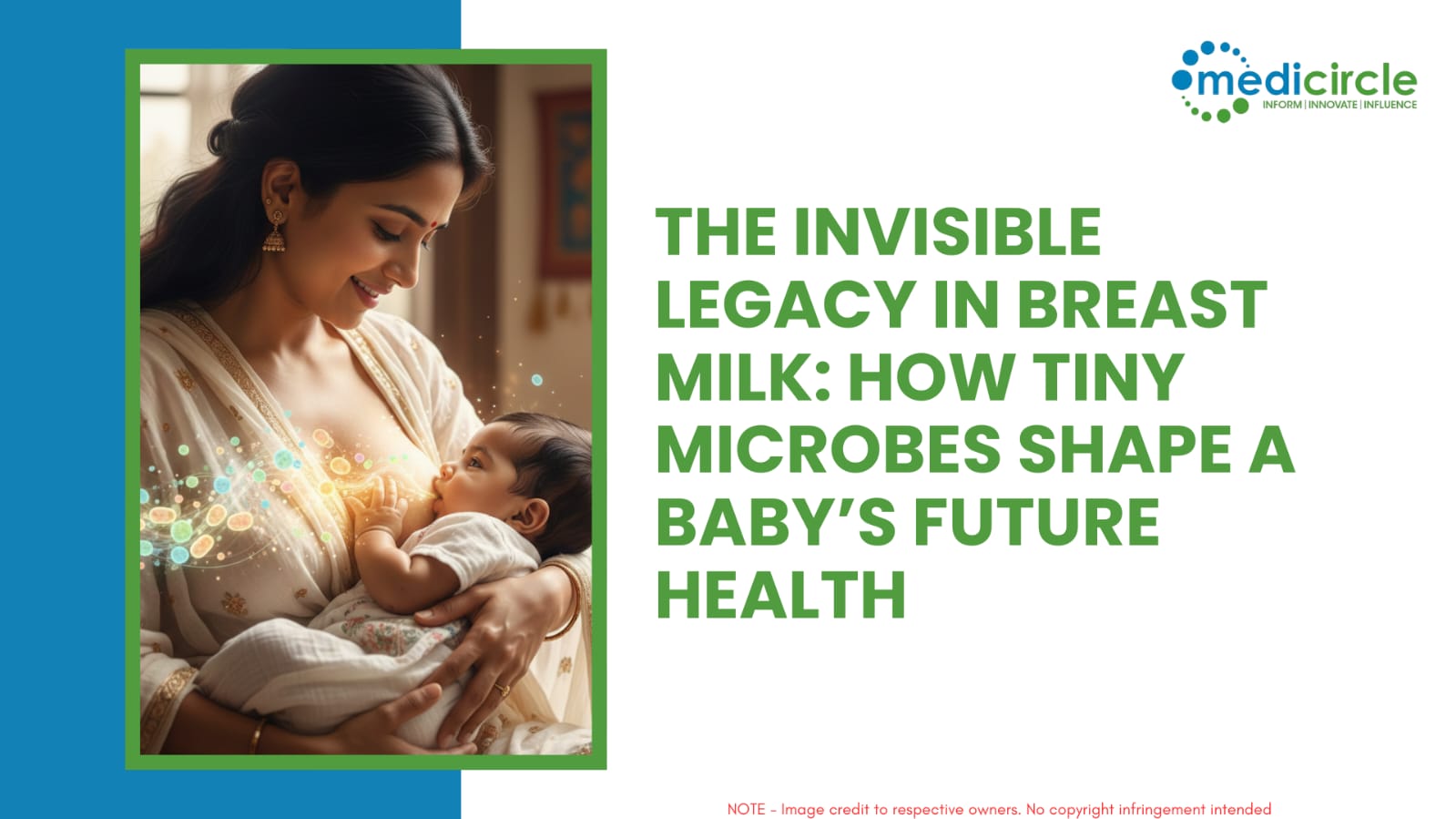
 Breastfeeding, when it is possible and supported, offers benefits that extend far beyond basic nutrition. It is a dynamic, biologically rich process that helps prepare a child for life outside the womb.




For generations, breast milk has been spoken of with reverence. It is described as liquid gold, praised for its perfect balance of nutrients, protective antibodies, and the deep emotional bond it creates between parent and child. In clinics, maternity wards, and public health campaigns, the conversation usually stops there. What remains largely unseen, and often unheard of outside scientific circles, is that breast milk is also alive with microscopic passengers. These tiny organisms, quietly present in every feed, may play a decisive role in how a baby’s body learns to digest food, fight infections, and build immunity that lasts well beyond infancy.
In recent years, the idea that the human body is a living ecosystem has reshaped healthcare thinking. The gut microbiome, in particular, has become central to discussions around digestion, metabolism, immunity, allergies, obesity, and even mental health. What has been less clear is how this complex microbial world takes shape in the earliest days of life. A growing body of evidence now suggests that breast milk is not just nutrition but instruction. It does not simply feed the baby; it helps train the baby’s gut, one microbe at a time.
A new study published in Nature Communications offers one of the most detailed and convincing views yet into this hidden process. By looking closely at the bacteria present in human milk and matching them with those found in infants gut samples, researchers have revealed how breastfeeding may actively seed the infant microbiome. This is not a vague association or a theoretical possibility. The findings point toward direct transmission of specific bacterial strains from mother to child, suggesting that breast milk carries a microbial blueprint that helps shape early-life health.
Until now, much of what scientists knew about the breast milk microbiome came from simpler methods that focused on identifying bacterial species in general terms. These techniques were useful, quick, and cost-effective, but they offered only a partial picture. They could tell researchers which types of bacteria were present, but not whether the bacteria in milk were the same ones that later appeared in a baby’s gut. That distinction matters. True transmission can only be confirmed when the exact same bacterial strains are found in both places.
To achieve that level of detail, the research team turned to metagenomic sequencing, a far more demanding approach that examines large portions of microbial DNA. This method allows scientists to go beyond labels and examine bacteria at the strain level, where meaningful biological differences exist. It is a challenging task, especially when working with breast milk, which contains relatively few bacteria and large amounts of fat that complicate genetic analysis. Yet the effort paid off.
By analyzing more than 500 samples of breast milk and infant stool from nearly 200 mother–infant pairs, the researchers were able to map a clearer microbial connection between breastfeeding and gut development. What they found challenges some long-standing assumptions. While earlier studies often highlighted bacteria such as Staphylococcus and Streptococcus as dominant in breast milk, this deeper analysis revealed a strong presence of Bifidobacterium species, particularly Bifidobacterium longum, Bifidobacterium breve, and Bifidobacterium bifidum.
These names may sound technical, but their significance is anything but abstract. Bifidobacteria are widely regarded as cornerstones of a healthy infant gut. They are especially skilled at breaking down human milk oligosaccharides, complex sugars found in breast milk that babies themselves cannot digest. These sugars exist largely to feed beneficial bacteria, creating a nurturing environment in which the right microbes can thrive. In doing so, they help protect the gut lining, regulate inflammation, and support immune maturation.
One of the most notable observations from the study was the prevalence of B. longum. More than half of the breast milk samples contained this species, and it appeared in the gut microbiomes of nearly every infant studied. This overlap alone is compelling, but the real breakthrough came when researchers identified identical strains of bacteria in both a mother’s milk and her baby’s gut. In a dozen clear cases, the genetic fingerprints matched so precisely that chance could be ruled out. This was strong evidence of vertical transmission through breastfeeding.
The implications of this finding are profound. It suggests that breastfeeding is not just associated with a healthy gut microbiome but may be one of its primary architects. Each feeding potentially delivers a tailored set of microbes, shaped by the mother’s own biology, health, and environment, directly into the infant’s developing system. In effect, breast milk becomes a personalized microbial inheritance.
The study also revealed a more nuanced reality. Alongside beneficial bacteria, researchers detected strains that are often described as pathobionts, such as certain types of Escherichia coli and Klebsiella pneumoniae. These organisms can live peacefully in the body without causing harm, but under specific conditions, they have the potential to trigger infections. Their presence in breast milk may sound alarming at first glance, but context matters. All the mothers and infants in the study were healthy, underscoring that microbial diversity does not automatically mean disease.
This complexity highlights an important shift in how healthcare professionals understand microbes. The goal is no longer to eliminate bacteria, but to understand balance, timing, and context. Early exposure to a diverse microbial community may actually help train the immune system to respond appropriately, reducing the risk of allergies and autoimmune conditions later in life. Breast milk, it appears, offers a carefully balanced microbial introduction rather than a sterile feed.
Another intriguing discovery involved bacteria typically associated with the oral cavity. Species commonly found in the mouth were identified in breast milk samples, suggesting that the act of breastfeeding itself may influence the milk microbiome. During feeding, small amounts of saliva from the infant may flow back into the nipple and milk ducts, carrying oral bacteria with it. This phenomenon, known as retrograde flow, points to breastfeeding as a two-way biological conversation rather than a one-directional transfer.
This insight adds depth to the understanding of the breastfeeding relationship. The baby is not just receiving nourishment but may also be sending signals back to the mother’s body, subtly shaping the composition of the milk. Such a feedback loop could help explain how breast milk adapts over time to meet an infant’s changing needs, a feature long observed but poorly understood.
Interest in early-life nutrition, microbiome health, and disease prevention is growing rapidly. Conditions such as obesity, diabetes, asthma, and inflammatory bowel disease have all been linked, directly or indirectly, to early microbial exposures. Understanding how breast milk contributes to this foundational period opens new avenues for research and intervention.
The study’s value extends beyond its immediate findings. By making a large, well-characterized dataset publicly available, the researchers have created a resource that will support future investigations into maternal health, infant development, and long-term outcomes. This transparency and scale help move the field forward, allowing scientists worldwide to ask new questions and test new hypotheses.
Looking ahead, the research team plans to take an even broader approach. By combining microbial data with information about milk metabolites, environmental exposures, and chemical contaminants, they hope to build a more complete picture of early-life influences. Human milk oligosaccharides, for example, vary widely between individuals and are known to shape microbial growth. Environmental factors such as pollutants and antimicrobial resistance genes may also pass through milk, with unknown implications for infant health.
The ultimate goal is to connect these early signals with health trajectories that unfold over years or decades. If specific patterns in breast milk composition can be linked to future outcomes, it may become possible to identify risks earlier and intervene more precisely. Such insights could inform nutritional guidance, support strategies for breastfeeding parents, and even influence the development of improved infant formulas for situations where breastfeeding is not possible.
Breastfeeding, when it is possible and supported, offers benefits that extend far beyond basic nutrition. It is a dynamic, biologically rich process that helps prepare a child for life outside the womb. At the same time, the findings invite compassion and balance. Microbial health is influenced by many factors, and breastfeeding is just one part of a larger picture that includes genetics, environment, and healthcare access.
In the end, what this research makes clear is that some of the most powerful influences on human health are invisible. Within each drop of breast milk lies a legacy of microbes, passed from one generation to the next, helping to shape resilience, adaptability, and well-being. As science continues to uncover these hidden connections, it becomes increasingly evident that early life is not just a beginning, but a foundation laid with remarkable biological care





.jpeg)
.jpg)
.jpg)
.jpg)
.jpg)
.jpg)
.jpg)


.jpg)
.jpg)
.jpg)
.jpg)
.jpg)
.jpg)