Tuesday, October 27, 2026
 For countries like India, where dense populations and high antibiotic use create the perfect conditions for resistance, the findings of this study are an important wake-up call.




The fight against antimicrobial resistance has always felt like a race against time, but what researchers are now uncovering in the world’s wastewater suggests that the finish line is moving farther away every year. While we worry about the drug-resistant infections we can already see a deeper threat growing beneath the surface. A biological shadow world made up of genes we didn’t even know existed. These hidden genes, tucked away inside bacteria that live in drains, sewers, and wastewater channels, are silently evolving. They are waiting, learning, and preparing for their moment to step into the spotlight. And when they do, the antibiotics we trust today may no longer protect us tomorrow.
Antimicrobial resistance, often called AMR, has been recognised as one of the most dangerous challenges to global health. Drug-resistant bacteria already kill more than one million people every year, and the number continues to rise as microbes find new ways to defy medicines. What makes this situation even more troubling is the role humans play in feeding the problem. Antibiotics are overused, misused and prescribed when unnecessary. Animals in the food industry are exposed to them regularly. Wastewater that carries traces of these drugs becomes a breeding ground where bacteria learn, adapt and strengthen their defences. While experts have previously focused on known antimicrobial resistance genes, a new international study has revealed that the world holds a much larger hidden reservoir of antimicrobial resistance than we ever imagined.
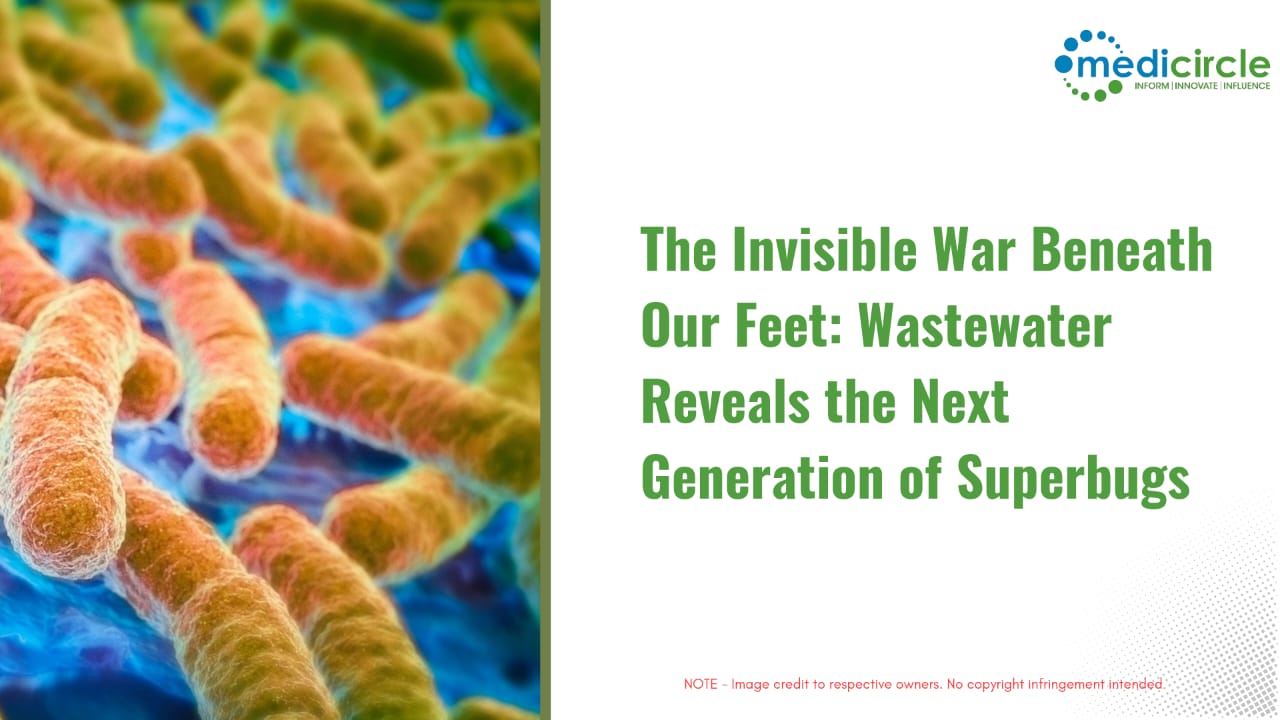
Researchers studied 1,240 wastewater samples from 351 cities across 111 countries. What they found was far beyond what traditional surveillance systems ever detected. Using functional metagenomics i.e. a scientific method that allows researchers to search for genes even if they are not active, the team uncovered thousands of latent antimicrobial resistance genes. These genes are not currently functioning in ways that create resistance, but they have the potential to switch on under certain circumstances. This means they represent a genetic time bomb that could transform harmless microbes into future superbugs.
The study suggests that latent antimicrobial resistance is not rare or restricted; it is widespread, almost everywhere. It sits quietly inside microbial DNA, waiting for the right trigger such as environmental changes, antibiotic exposure or genetic reshuffling to come alive. In simple terms, the world is full of resistance that has not yet been activated. And this hidden layer of defence may be stronger, more adaptable and far more dangerous than the resistance genes scientists already know.
One of the most striking observations from the study is that the evolution of these hidden genes seems to be shaped more by selection and competition than by simple geographical spread. Bacteria constantly compete in every environment they occupy, whether inside humans, animals or wastewater. Those that can survive the antibiotics present in these environments gain an advantage. Over time, this competition becomes a powerful force pushing microbes to develop new resistance strategies, even before they encounter the antibiotics used in hospitals or clinics.
This finding is a critical message to health systems across the world: if we continue to expose the environment to antibiotics through overuse in medicine, farming and industry, we are giving microbes the perfect training ground to sharpen their survival tools. We may end up creating the superbugs we fear through our own behaviour, long before they ever infect humans.
The study’s authors emphasise the need for stronger wastewater surveillance. Wastewater captures everything, bacteria from human waste, animal waste, hospitals, farms, industries and the surrounding environment. It becomes a natural, ethical and cost-effective tool for understanding what is happening in real time. When researchers test sewage, they are essentially scanning millions of microbes at once, giving a broad picture of which resistance genes already exist and which hidden ones may emerge.
Wastewater surveillance proved its value during the COVID-19 pandemic when cities used it to track virus circulation. The same model could become one of the best defences against antimicrobial resistance. By monitoring both known and latent antimicrobial resistance genes, scientists can map how resistance evolves, how quickly it travels and which regions are at highest risk. Just as importantly, they can predict which bacteria may one day become resistant to which antibiotics.
This predictive power may become crucial because developing new antibiotics is a slow and expensive process. By the time a new drug reaches hospitals, bacteria may already carry the genetic tools needed to resist it. Researchers warn that microbes are often several steps ahead, creating their own molecular “scissors” to break down antibiotics we haven’t even invented yet. Understanding latent genes now may help doctors and pharmaceutical scientists stay ahead of future resistance.
The study also highlights an important ethical dimension. Because wastewater aggregates everything from human waste and hospital discharge to traces of medicines used in livestock, it gives scientists access to populations without breaching anyone’s privacy. There is no need to test individuals or communities separately; sewage becomes a collective sample representing an entire city. As antimicrobial resistance continues to rise, using this method as a routine surveillance tool could become one of the safest and most powerful public health strategies.
The researchers are cautious in their interpretation. They are not suggesting that all latent genes will turn into threats. Many may never activate or cause any harm. But ignoring them would be a mistake. History has shown that bacteria can adapt in unexpected ways. A gene that appears harmless today may evolve into a dangerous resistance mechanism in a decade. By studying these genes now, the world could avoid future surprises, or at least be better prepared.
Antimicrobial resistance is no longer just a medical challenge; it has become an environmental, economic and societal crisis. Resistant infections increase healthcare costs, prolong hospital stays, reduce treatment options and place immense pressure on public health systems. In countries where healthcare infrastructure is already stretched, drug-resistant infections can quickly become life-threatening. In the food sector, resistant bacteria in animals can travel through meat, water and soil. In the environment, resistant genes spread through rivers, soil and sewage systems.
This invisible network of resistance is expanding faster than our countermeasures. Every time antibiotics are misused, every time wastewater is untreated, every time poor sanitation spreads microbes across communities, we are helping resistance grow. The problem is global, and so must be the solution.
For countries like India, where dense populations and high antibiotic use create the perfect conditions for resistance, the findings of this study are an important wake-up call. Robust wastewater surveillance, tighter antibiotic regulations, public awareness campaigns and hospital infection-control programmes will play a decisive role in preventing a future AMR catastrophe. India has already experienced outbreaks of drug-resistant tuberculosis, neonatal sepsis caused by resistant bacteria and hospital infections that do not respond to standard treatment. Without strong surveillance systems, these outbreaks will become more frequent, more severe and more difficult to control.
The study published in Nature Communications is a warning, a roadmap and a reminder. It tells the world that the biggest threat may not be the superbugs we see today but the ones hiding in plain sight inside wastewater pipelines, inside silent genes, inside microscopic battles we cannot witness. It tells us that the world’s fight against antimicrobial resistance must evolve beyond hospitals and clinics and extend into the environment, where the earliest signs of danger often appear.
As researchers continue to decode the hidden world of latent antimicrobial resistance, one thing becomes clear that the future of global health may depend on our willingness to look into places we once ignored. Sewage may not seem glamorous, but it holds the clues that could save millions of lives. The microbes living there are teaching us their secrets, and it is up to us to listen before it is too late.
If the next generation of superbugs is already writing its story in the sewers beneath our feet, then understanding that story today may be the only way to prevent tomorrow’s crisis.




-23-300x250.png)

.jpeg)





.jpg)
.jpg)
.jpg)
.jpg)
.jpg)
.jpg)
.jpg)
.jpg)
.jpg)