 Tuesday, October 27, 2026
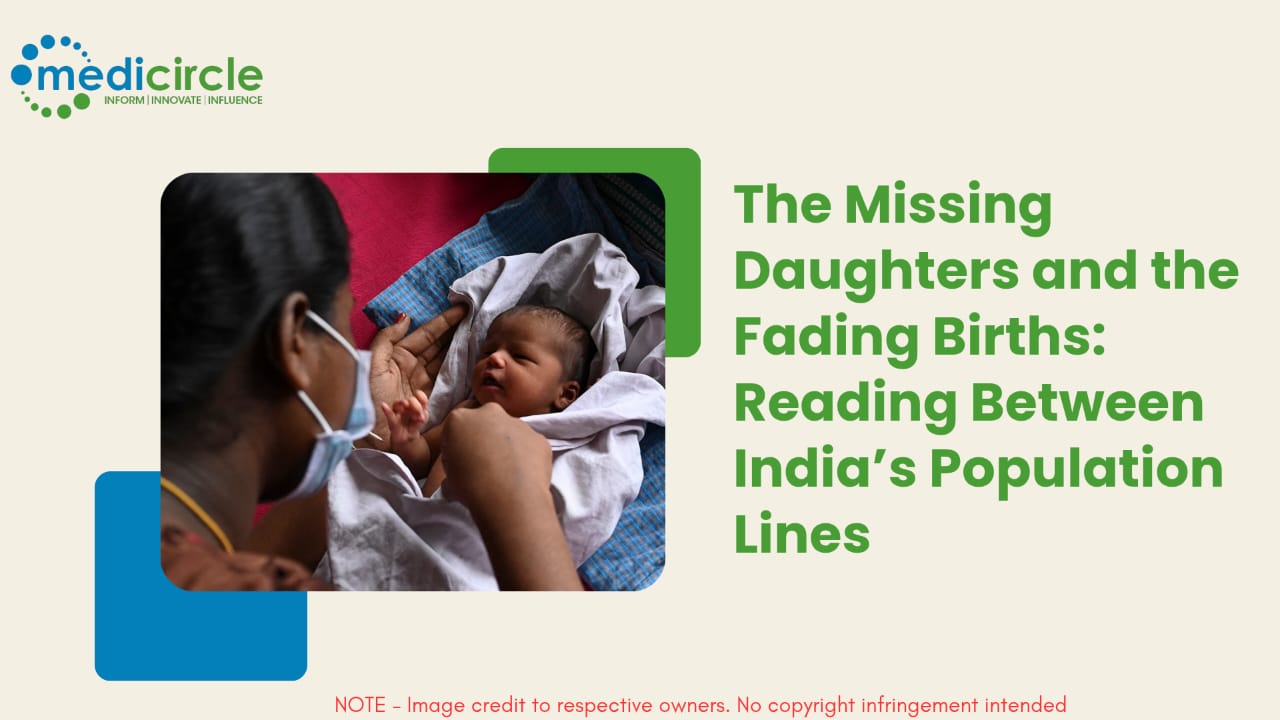
 As the country marches towards becoming a global power, its strength will no longer lie merely in population size but in the health, equality, and awareness of its people.




India, a country long associated with a booming population, has entered a phase that few anticipated this early i.e. a decline in the number of registered births. The latest report from the Registrar General of India (RGI), titled Vital Statistics of India based on Civil Registration System (CRS) for 2023, brings forth a subtle yet powerful revelation. In 2023, India recorded 2.52 crore births which is a fall of around 2.32 lakh compared to the previous year. This may appear marginal at first glance, but in a country where every demographic shift holds social, economic, and cultural weight, this dip carries profound meaning. The report also revealed that 86.6 lakh deaths were registered in the same year, a slight increase from 2022’s 86.5 lakh, yet far below the mortality surge India witnessed during the COVID-19 years.
For decades, India’s narrative has revolved around managing population explosion, from family planning campaigns to debates on population control policies. Yet, 2023 sets a different tone. A declining birth rate in a country that contributes significantly to the global youth population signals a major demographic transition. The fall may seem subtle, but its implications are vast stretching from workforce planning to healthcare delivery and from women’s reproductive rights to the economics of aging.
Interestingly, the decline in births coincides with a near-stable death registration pattern. Despite the devastating toll of the pandemic years, the post-COVID phase has brought the country back to a more predictable mortality trend. Between 2022 and 2023, the death registration figures barely shifted, showing that the healthcare and civil registration systems have stabilized after the pandemic shockwaves. The CRS data reveals that India saw an unprecedented spike in deaths during 2021, the peak year of the pandemic, where the registered deaths jumped from 81.2 lakh in 2020 to 102.2 lakh i.e. an excess of over 21 lakh. It was a reminder of how the pandemic reshaped the population structure, affecting birth patterns as well. The current decline in births could partially reflect the aftereffects of those years where reduced fertility intentions, delayed family planning, and the overall emotional and economic exhaustion followed the pandemic’s chaos.
But beyond numbers, the report carries a more worrying revelation. India’s persistent gender imbalance at birth. Jharkhand recorded the lowest sex ratio at 899 females per 1,000 males, followed closely by Bihar (900), Telangana (906), Maharashtra (909), Gujarat (910), Haryana (911), and Mizoram (911). It is deeply concerning that despite decades of awareness campaigns, technological advancements, and strict legal frameworks such as the Pre-Conception and Pre-Natal Diagnostic Techniques (PCPNDT) Act, the gender divide at birth continues to persist. Bihar’s case is particularly troubling, it has been consistently recording the lowest sex ratio since 2020. This pattern reflects a complex intersection of socio-cultural preferences, economic pressures, and access to healthcare facilities that still dictate reproductive outcomes in many parts of India.
On the brighter side, some regions are leading the way towards balance. Arunachal Pradesh topped the list with a sex ratio of 1,085, meaning more female births than male. Nagaland followed with 1,007, while Goa (973), Ladakh and Tripura (972 each), and Kerala (967) presented relatively healthy ratios. The contrast between states underlines how deeply local culture, literacy, healthcare access, and awareness influence gender balance. States like Kerala and Goa, with higher literacy and better healthcare access, consistently report higher sex ratios, proving that empowerment and education remain key tools in correcting demographic imbalances.
Institutional births which is a key marker of healthcare accessibility and maternal safety continue to show promising improvement. The CRS report indicates that 74.7% of births in 2023 took place in medical institutions. This suggests that the public and private healthcare infrastructure, despite its many disparities, is playing an expanding role in childbirth. Institutional deliveries are not just about numbers; they signify the growing trust in medical systems, reduced maternal mortality, and improved neonatal outcomes. However, the absence of data from Sikkim reminds us that full inclusion across all states remains a goal yet to be achieved.
The report also highlights another vital aspect which is the efficiency of birth registration itself. Overall, India recorded a 98.4% registration of births for 2023, an achievement that reflects the country’s strengthening administrative systems. In 11 States and Union Territories including Gujarat, Puducherry, Chandigarh, Dadra and Nagar Haveli and Daman & Diu, Tamil Nadu, Lakshadweep, Andaman and Nicobar Islands, Haryana, Himachal Pradesh, Goa, and Punjab, over 90% of births were registered within the prescribed period of 21 days. This is an important step towards creating a real-time demographic database, which can inform social policy, public health strategies, and welfare schemes.
However, some gaps still exist. Odisha, Mizoram, Maharashtra, Chhattisgarh, and Andhra Pradesh reported registration rates between 80% and 90%, while a significant number of states including Assam, Delhi, Madhya Pradesh, Tripura, Telangana, Kerala, Karnataka, Bihar, Rajasthan, Jammu & Kashmir, Jharkhand, West Bengal, Meghalaya, and Uttar Pradesh stood between 50% and 80%. Such inconsistencies reveal the uneven progress in India’s civil registration systems and the persistent divide between urban and rural administrative capacities.
The subtle decline in births could also be reflective of social transformation in India. More women are pursuing higher education, delaying marriage, and exercising reproductive choices. Urbanization, lifestyle changes, and economic uncertainty have led many couples to postpone or reconsider childbearing altogether. The rising costs of living, education, and healthcare have made smaller families the norm, particularly among the urban middle class. This societal change, while indicative of progress in women’s empowerment, also raises policy challenges in maintaining a sustainable population structure for the future.
If this downward trend continues, India could eventually face the same demographic paradox that now challenges many developed nations, an aging population with fewer young people to support it. Countries like Japan, South Korea, and parts of Europe are already struggling with labor shortages, pension burdens, and economic stagnation due to shrinking youth populations. While India is far from that stage today, the current dip in birth registrations signals that the “demographic dividend” i.e. a term once synonymous with India’s youth-driven growth potential may not last forever.
The interplay of healthcare access, social awareness, and policy execution becomes critical here. The CRS report shows that where institutional births and timely registrations are high, the quality of maternal and child health indicators improves significantly. This directly links to the larger goal of achieving Sustainable Development Goals (SDGs), particularly SDG 3, which focuses on ensuring healthy lives and promoting well-being for all ages.
Moreover, the declining birth numbers must be seen through the lens of reproductive rights and healthcare equity. A fall in fertility can signify progress, when driven by informed choice and access to healthcare. But it can also signal distress when caused by economic hardship, inadequate maternal care, or rising infertility rates. The surge in lifestyle diseases, polycystic ovarian syndrome (PCOS), and stress-related reproductive disorders among Indian women is an emerging concern that might also be influencing birth trends. Healthcare experts point out that fertility patterns are now more complex than before, shaped by social behavior, environmental factors, and the increasing medicalization of childbirth.
The gender imbalance at birth, in contrast, continues to represent a moral and ethical challenge. It reflects the deeper cultural bias that still undervalues daughters in many parts of the country. Despite stricter laws, easy access to prenatal sex determination technology has made it difficult to completely eliminate gender-based selection. Campaigns like Beti Bachao, Beti Padhao have created awareness, but true change will emerge only when societal attitudes evolve, and economic incentives align with gender equality.
As India steps deeper into the 21st century, this subtle yet significant decline in birth registration numbers should spark a larger conversation about the kind of population future the country envisions. Policymakers, healthcare experts, and social leaders must look beyond mere numbers and address the root causes shaping these trends.
Every figure in the CRS report represents a life, a choice, and a story of India’s evolving identity. The fall in births may indicate stability to some, but it also raises critical questions about the direction in which our society is heading. The gender disparities at birth reveal that beneath the surface of progress, deep-rooted social biases continue to breathe.
India’s demographic transition is not about losing numbers but about redefining balance. It’s about ensuring that every child born (boy or girl) enters a society that values life equally, provides healthcare fairly, and registers every birth with dignity. As the country marches towards becoming a global power, its strength will no longer lie merely in population size but in the health, equality, and awareness of its people.
The future is being reshaped silently, steadily, and decisively. Whether that future becomes a symbol of progress or a warning of imbalance depends on how India interprets and responds to the realities these numbers reveal.




-23-300x250.png)

.jpeg)








.jpg)
.jpg)
.jpg)
.jpg)
.jpg)
.jpg)
.jpg)
.jpg)
.jpg)

