Tuesday, October 06, 2026
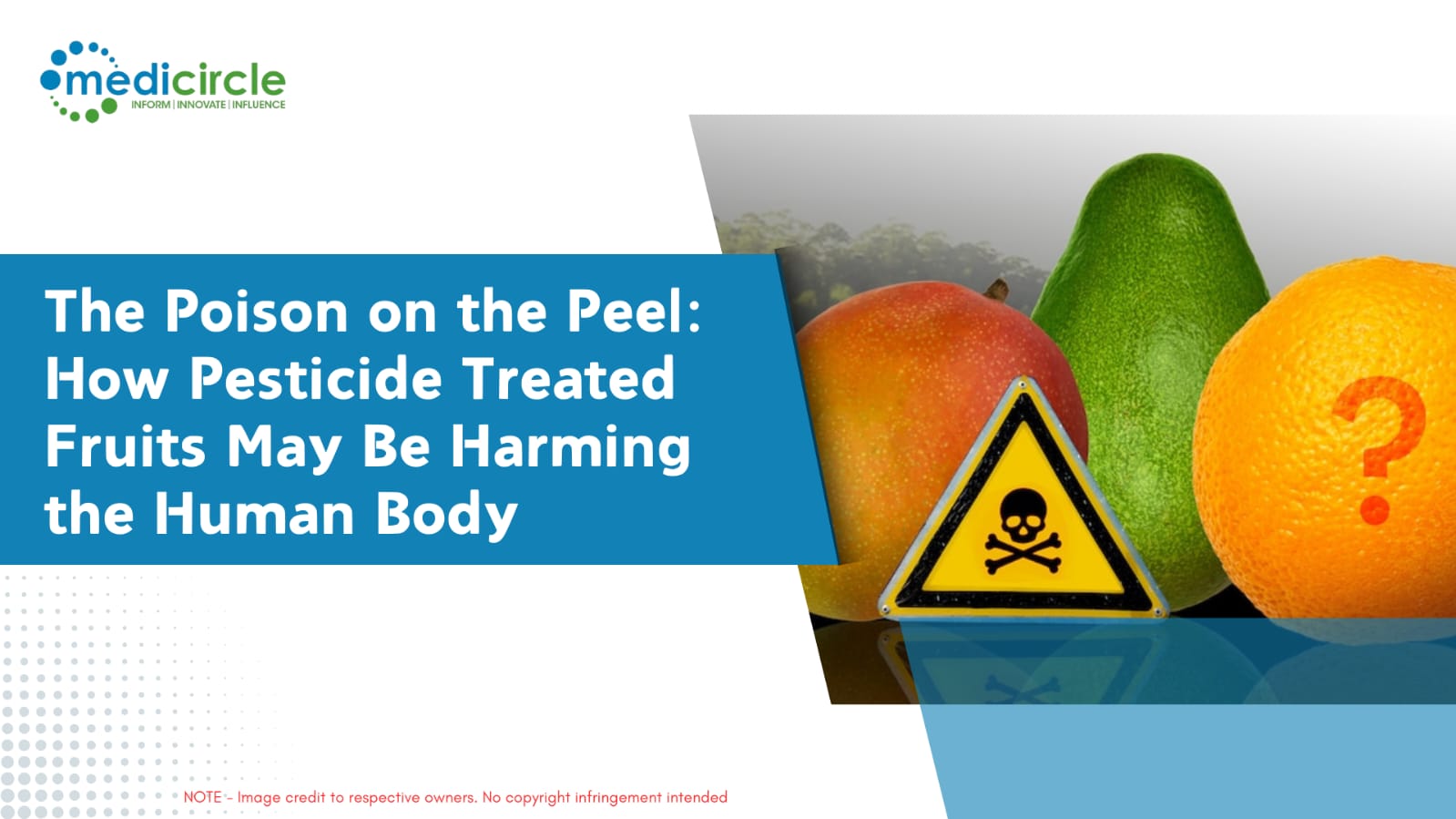
 Ensuring that the food we eat supports our health rather than undermining it will require vigilance, innovation, and collective responsibility




In homes across India, the simple act of cutting a fruit is often seen as a small step towards better health. A bowl of sliced apples placed before a child, a handful of grapes after dinner, or a mango shared among family members during summer carries a comforting belief that fruit represents purity, nutrition, and protection from disease. For generations, fruits have symbolised vitality. Doctors recommend them to patients recovering from illness, nutritionists encourage them as a cornerstone of a balanced diet, and parents offer them as a healthier alternative to processed snacks. But beneath this comforting image lies a question that is becoming harder to ignore: what if the very fruits we depend on for health are quietly carrying traces of chemicals that could harm us over time?
The growing concern about pesticide residue in fruits and vegetables is gradually moving from agricultural discussions into the mainstream health conversation. Modern farming relies heavily on chemical pesticides to protect crops from insects, fungi, and other threats that can destroy harvests. In a country like India, where agriculture supports millions of livelihoods and where food demand is constantly rising, protecting crops is often seen as essential for economic survival. Experts estimate that pests can destroy between one-fifth and one-third of agricultural production if left unchecked. Farmers therefore turn to pesticides as a defensive shield, ensuring that fruits reach markets in large quantities and with attractive appearances that consumers expect.
However, the same chemicals that protect crops from pests may leave behind residues that travel from farm to table. For many years, scientists have been studying how pesticide residues in food influence human health. A recent study published in the International Journal of Hygiene and Environmental Health has added a new layer to this conversation by showing that exposure to pesticide residues through diet can be detected inside the human body itself. Researchers observed that people who frequently consume certain fruits and vegetables may carry measurable pesticide biomarkers in their urine. These findings reinforce the growing concern that food exposure is one of the most common pathways through which humans encounter agricultural chemicals.
When pesticide residues enter the human body repeatedly over long periods, scientists believe they may contribute to a variety of health challenges. Some pesticides are suspected of interfering with hormones, while others are associated with increased risks of cancer, reproductive complications, and neurological disorders. The health impact is rarely immediate. Instead, exposure tends to accumulate slowly, making it difficult for individuals to connect everyday dietary habits with long-term health outcomes. This gradual nature of exposure is precisely what worries many public health experts.
In India, the debate about pesticide contamination in food has been ongoing for years. Several monitoring programs conducted by national agencies have attempted to measure pesticide residues in food commodities. Studies supported by institutions such as the Indian Council of Medical Research and the Indian Council of Agricultural Research indicate that residues are present in a significant proportion of food samples collected from markets. While most samples fall within regulatory limits, a notable percentage still contain measurable levels of pesticides. A small but concerning fraction even exceeds the permissible limits set by food safety authorities.
For consumers, these statistics create an uncomfortable paradox. Fruits are widely promoted as an essential component of preventive healthcare. Medical guidelines consistently recommend increased fruit and vegetable intake to reduce the risk of chronic diseases such as cardiovascular illness, obesity, and diabetes. Yet at the same time, concerns about pesticide exposure raise doubts about the safety of these very foods. The dilemma becomes even more complicated when one considers how frequently fruits appear in daily diets. Apples, grapes, mangoes, pomegranates, and berries are among the most popular choices in Indian households, and many of them are cultivated using intensive pest control methods.
International research has also highlighted that certain fruits and vegetables are more likely to carry pesticide residues than others. Crops with thin skins or those that are frequently attacked by insects often require repeated pesticide applications during the growing season. In some cases, farmers spray chemicals multiple times to maintain crop quality and prevent losses. The result is that residues can remain on the outer surface of produce even after harvesting. Washing can remove a portion of these chemicals, yet it may not eliminate them completely, especially if residues have penetrated the skin or pulp of the fruit.
Studies examining pesticide exposure among consumers reveal a striking pattern. Individuals who regularly consume produce grown with heavy pesticide use tend to show higher levels of pesticide-related biomarkers in biological samples. Researchers studying dietary patterns have observed that switching to organically grown produce for even a short period can reduce these biomarkers significantly. Such findings suggest that dietary choices play an important role in determining the extent of pesticide exposure.
The issue is particularly important for vulnerable groups such as children and pregnant women. Developing bodies are more sensitive to chemical exposure, and scientists worry that early-life exposure to certain pesticides could affect brain development, hormone balance, and immune function. Pregnant women face additional concerns because substances that enter the maternal bloodstream may influence the health of the developing fetus. While research continues to explore these connections, many health professionals believe that reducing unnecessary chemical exposure during pregnancy and childhood is a sensible precaution.
Another aspect of the pesticide debate lies in the broader public health context. India already carries a heavy burden of chronic diseases, including cancers, endocrine disorders, and developmental challenges among children. While these conditions arise from multiple factors such as genetics, lifestyle, environmental pollution, and nutrition, scientists increasingly recognise that chemical exposure through food could be one contributing element. Identifying and controlling such environmental risk factors is essential for long-term disease prevention.
Regulatory authorities in India have established limits for pesticide residues in food through food safety regulations. Monitoring programs periodically test fruits and vegetables from markets and farms to ensure compliance. These efforts are an important step toward consumer protection, yet experts acknowledge that monitoring alone cannot fully eliminate the problem. Agricultural practices vary widely across regions, and enforcement can be challenging in a country with such a vast and diverse food supply chain.
The conversation therefore extends beyond regulation and enters the realm of agricultural sustainability. Many scientists and environmental advocates argue that farming practices must gradually shift toward safer pest management strategies. Integrated pest management, biological pest control, and improved crop monitoring can help farmers reduce their dependence on chemical pesticides while still protecting their harvests. Such approaches require training, research support, and financial incentives so that farmers feel confident adopting them.
For consumers, the challenge lies in balancing awareness with practicality. Completely avoiding pesticide exposure is nearly impossible in modern food systems, yet certain steps can reduce risk. Thorough washing of fruits and vegetables under running water can remove surface residues. Peeling certain fruits may further reduce exposure, although it also removes beneficial nutrients present in the skin. Soaking produce in saltwater or vinegar solutions is another practice some households follow, though scientific evidence on its effectiveness varies.
One increasingly popular approach is choosing organically grown produce when possible. Organic farming restricts the use of synthetic pesticides and emphasises natural pest control methods. Although organic produce can be more expensive and sometimes difficult to verify, its popularity reflects a growing desire among consumers to reduce chemical exposure in their diets. Some studies have shown that people who switch to organic diets experience rapid reductions in pesticide biomarkers, suggesting that food choices can influence exposure levels within a relatively short time.
However, organic food alone cannot solve the problem. Access to organic produce remains limited in many regions, and its higher price often places it beyond the reach of lower-income households. Ensuring safe food for the entire population therefore requires systemic solutions that address agricultural practices, supply chains, and consumer awareness simultaneously.
Globally, public health organisations have attempted to guide consumers by identifying produce items that are more or less likely to contain pesticide residues. Lists such as the “Dirty Dozen” and the “Clean Fifteen” have been widely circulated in some countries to help shoppers make informed decisions. These lists highlight fruits and vegetables that tend to show higher pesticide contamination in monitoring studies and those that usually carry lower levels. While such tools are helpful for awareness, experts in India suggest that a country-specific version based on local agricultural practices would be more relevant for Indian consumers.
Public awareness is another key element of the discussion. Many people remain unaware that pesticide residues can remain on fruits and vegetables after they reach markets. Education campaigns that explain safe food handling, proper washing techniques, and the importance of balanced diets could help reduce unnecessary exposure. Healthcare professionals also play an important role by discussing environmental health risks with patients and encouraging informed dietary habits.
The issue of pesticide exposure ultimately raises deeper questions about the future of food systems. Modern agriculture has succeeded in producing large quantities of food for a growing global population, yet it has done so with heavy reliance on chemical inputs. As concerns about environmental sustainability and human health grow stronger, many experts believe that the next phase of agricultural innovation must focus on safer, smarter farming practices.
Scientific research continues to explore how pesticides behave in the environment and how they affect human health. New analytical techniques allow scientists to detect even tiny traces of chemicals in food and biological samples. Such advances are helping researchers understand exposure patterns more clearly than ever before. At the same time, policymakers are examining ways to strengthen regulations, encourage safer alternatives, and improve transparency in food production.
For ordinary consumers, the story often begins with a simple decision at the fruit market. A shiny apple or a perfectly shaped mango may appear appealing, yet appearance alone tells us little about how that fruit was grown. Behind every fruit lies a complex journey involving farming methods, pesticide applications, transportation, and storage. Understanding this journey helps consumers appreciate the importance of food safety and environmental health.
The conversation about pesticide residues is not meant to discourage people from eating fruits. On the contrary, fruits remain one of the most valuable sources of vitamins, minerals, fibre, and antioxidants essential for human health. Reducing fruit consumption out of fear would create new health problems. Instead, the goal is to ensure that the fruits reaching our plates are as safe and nutritious as possible.
As India continues to modernise its healthcare and food safety systems, addressing pesticide exposure through food must remain a priority. Collaboration between agricultural scientists, public health experts, policymakers, and farmers will be crucial in building a food system that protects both crop productivity and human well-being. Investments in safer pest control technologies, improved monitoring, and consumer education can gradually reduce the hidden chemical burden in everyday diets.
In the end, the question is not whether fruits are healthy. The real question is whether the systems that produce and deliver these fruits are keeping pace with our growing understanding of environmental health. Ensuring that the food we eat supports our health rather than undermining it will require vigilance, innovation, and collective responsibility.
The next time a family gathers around a bowl of fresh fruit, the hope is that the conversation will revolve around taste and nutrition, not hidden chemicals. Achieving that future demands a renewed commitment to food safety, sustainable agriculture, and public health awareness. Until then, the humble fruit which is a symbol of nourishment for centuries remains at the centre of a critical health debate that the world can no longer afford to ignore






.jpeg)
.jpg)
.jpg)
.jpg)
.jpg)
.jpg)
.jpg)


.jpg)
.jpg)
.jpg)
.jpg)
.jpg)
.jpg)