Tuesday, October 27, 2026
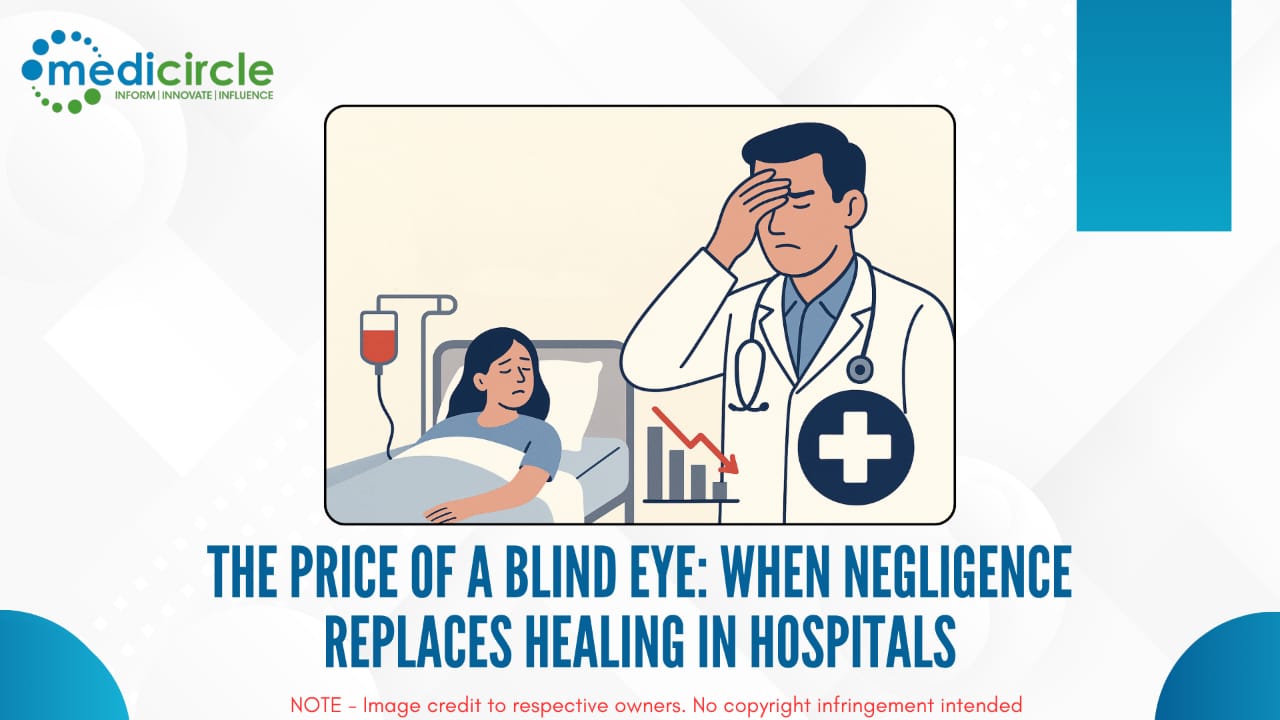
 Patients should not have to depend on consumer courts to get justice for medical errors. Preventive systems, continuous audits, and strict disciplinary actions should be the first line of defence.




In a country that prides itself on medical advancements and affordable healthcare schemes, stories like that of K.T. Dhanasekaran are a reminder that the gap between policy and practice can sometimes cost a person their vision, dignity, and peace of mind. What began as a routine cataract surgery at Chennai’s ESI Hospital, Ayanavaram, ended with a man losing the sight in his right eye and a legal battle that exposed how negligence can quietly seep into systems meant to heal.
Dhanasekaran, a 57-year-old security guard, walked into the ESI Hospital in April 2024 seeking help for blurred vision in one eye. Like countless others who depend on the Employees State Insurance (ESI) network, he trusted that he would receive competent and compassionate care. Doctors diagnosed him with a cataract (one of the most common and treatable eye conditions) and scheduled a surgery that should have restored his vision. Instead, it changed his life forever.
After the operation, what followed was a chain of pain, swelling, and unending visits back to the hospital. The discomfort in his eye grew severe, and the blurry vision he had hoped to correct gave way to near-complete darkness. Medical records later revealed something that should never have happened. A thin sheet of cataract material, known as cortex, had been left behind in his eye. This overlooked fragment became the starting point of a nightmare.
As his pain intensified, doctors attempted a follow-up procedure called “cortex re-aspiration” in May 2024 to remove the remaining tissue. Yet the damage had already begun. His condition worsened with signs of corneal edema and iritis, both painful and vision-threatening complications. Dhanasekaran was soon referred to the Regional Institute of Ophthalmology, Egmore, where specialists tried to save what little could be salvaged. Despite undergoing a complex procedure known as pneumodesmetopexy in July 2024, his right eye could not be restored.
For a man who depended on his sight for his job as a security guard, this was a devastating loss of livelihood. His right to safe, competent medical care which is a basic expectation of any patient had been violated. Yet, like many victims of medical negligence in India, his journey to justice was neither quick nor easy.
The hospital, in its defence, insisted that the surgery had been conducted properly. They claimed that all post-operative care was timely, that the residual cortex was later cleared, and that the patient was referred to higher medical facilities when complications arose. But the records told a different story that pointed to carelessness, lack of due diligence, and a disregard for patient safety.
The Chennai (North) District Consumer Disputes Redressal Commission, after carefully reviewing the evidence, saw what the hospital chose to overlook. The presence of corneal edema and remnants of the cataract material after the first surgery was clear proof that the operation had been performed carelessly. The commission applied the principle of res ipsa loquitur meaning “the thing speaks for itself.” In legal terms, it means that the very nature of the incident implies negligence without the need for elaborate evidence. In simple words, if a patient loses vision after a basic cataract surgery, something clearly went wrong.
The commission ruled that the surgery and subsequent treatment fell below accepted medical standards. It held the hospital responsible for medical negligence and directed the superintendent to compensate Dhanasekaran with ₹10 lakh, along with ₹10,000 towards litigation costs. The judgment was not just a legal victory; it was a moral acknowledgment of the suffering endured by a man whose trust in a government hospital was betrayed.
This case reflects a deeper issue that India’s healthcare system must confront which is the growing disconnect between medical skill and accountability. Cataract surgeries are among the most frequently performed procedures in India, often hailed as simple, safe, and cost-effective. Yet, when performed carelessly, even this routine operation can turn into a lifelong disability. In Dhanasekaran’s case, it wasn’t just an error; it was a preventable tragedy.
India performs over six million cataract surgeries every year, and the success rate is generally high. However, reports from medical boards and patient rights organizations reveal that post-surgical complications due to negligence are not rare. Many patients from lower-income backgrounds, like Dhanasekaran, depend on government or insurance-based hospitals for treatment, often unaware of their rights or the standards of care they are entitled to receive.
When negligence strikes, the consequences are often permanent. A lost eye, a paralyzed limb, a life cut short, these are not just statistics. They are the painful realities of people who walk into hospitals for healing and walk out broken. The larger question that arises is: who ensures accountability when the very institutions designed to protect patients fail them?
Medical negligence cases in India have surged over the last decade, but very few reach the courts or end in compensation. The fear of confronting large institutions, lengthy legal processes, and lack of awareness prevent many victims from seeking justice. Even in cases where compensation is granted, no amount of money can truly restore lost sight, trust, or quality of life.
There is also the ethical question of how hospitals handle complications. Medicine is not infallible, and every surgical procedure carries risk. But the duty of care demands transparency, proper documentation, and swift corrective measures when things go wrong. In this case, the commission observed lapses in all three. Instead of acknowledging the error early and referring the patient to a tertiary centre immediately, the hospital’s hesitation worsened his condition.
This kind of medical culture where accountability is evaded and patients are treated like numbers, corrodes the very foundation of healthcare ethics. Every patient has the right to informed consent, quality treatment, and post-operative follow-up. When a surgeon performs a procedure, they assume a moral and professional responsibility for the outcome. Ignoring post-surgery complications or dismissing patient complaints as “normal” recovery signs can lead to irreversible damage, as seen in Dhanasekaran’s case.
The tragedy also raises questions about the training and supervision of surgeons in government hospitals. Are they overworked, understaffed, or simply complacent? Do institutions have proper peer-review mechanisms to evaluate surgical outcomes and identify recurring errors? In many cases, internal hospital reviews end with vague conclusions, shielding doctors from scrutiny and leaving patients in the dark.
Another concern lies in the lack of communication. Patients, especially those from non-medical backgrounds, often trust doctors blindly. They rarely understand the details of what went wrong or what could have been done differently. Informed consent becomes a mere signature on a form, rather than a genuine discussion about risks and expectations. Had Dhanasekaran been properly informed and promptly referred, his vision might have been saved.
The commission’s ruling is a reminder that patient rights are not optional they are fundamental. It reaffirms that healthcare institutions must maintain a standard of care that meets both medical and ethical expectations. Compensation is not charity; it is accountability in financial form.
Beyond the courtroom, this story mirrors the crisis unfolding across India’s public hospitals. While the government expands its healthcare infrastructure and insurance coverage, the quality of care remains uneven. Infrastructure may improve, but compassion and responsibility must grow with it. Patients should not have to depend on consumer courts to get justice for medical errors. Preventive systems, continuous audits, and strict disciplinary actions should be the first line of defence.
Healthcare, at its heart, is a sacred trust between doctor and patient. Every surgery performed, every prescription written, carries an unspoken promise to do no harm. When that promise is broken, it shakes the very essence of the medical profession. It is not just one man losing an eye; it is a system losing credibility.
For Dhanasekaran, justice came in the form of a cheque. But no amount can replace his vision, his confidence, and his faith in a system he believed would protect him. His story must serve as a wake-up call, a reminder that medical negligence is not an unfortunate accident but a failure of ethics, oversight, and empathy.
As India marches forward in digital health and AI-driven diagnostics, the human touch must not fade. Technology can aid doctors, but it cannot replace accountability. Every case like this should push policymakers, administrators, and healthcare leaders to re-evaluate where the system is failing and how to restore trust.
Medical negligence is not a headline that should fade in a day. It should echo as a demand for better care, stronger oversight, and ethical reform. Because in the end, when a patient loses an eye to negligence, the blindness spreads far beyond into the conscience of the system itself.




-23-300x250.png)

.jpeg)






.jpg)
.jpg)
.jpg)
.jpg)
.jpg)
.jpg)
.jpg)
.jpg)
.jpg)