Tuesday, October 27, 2026
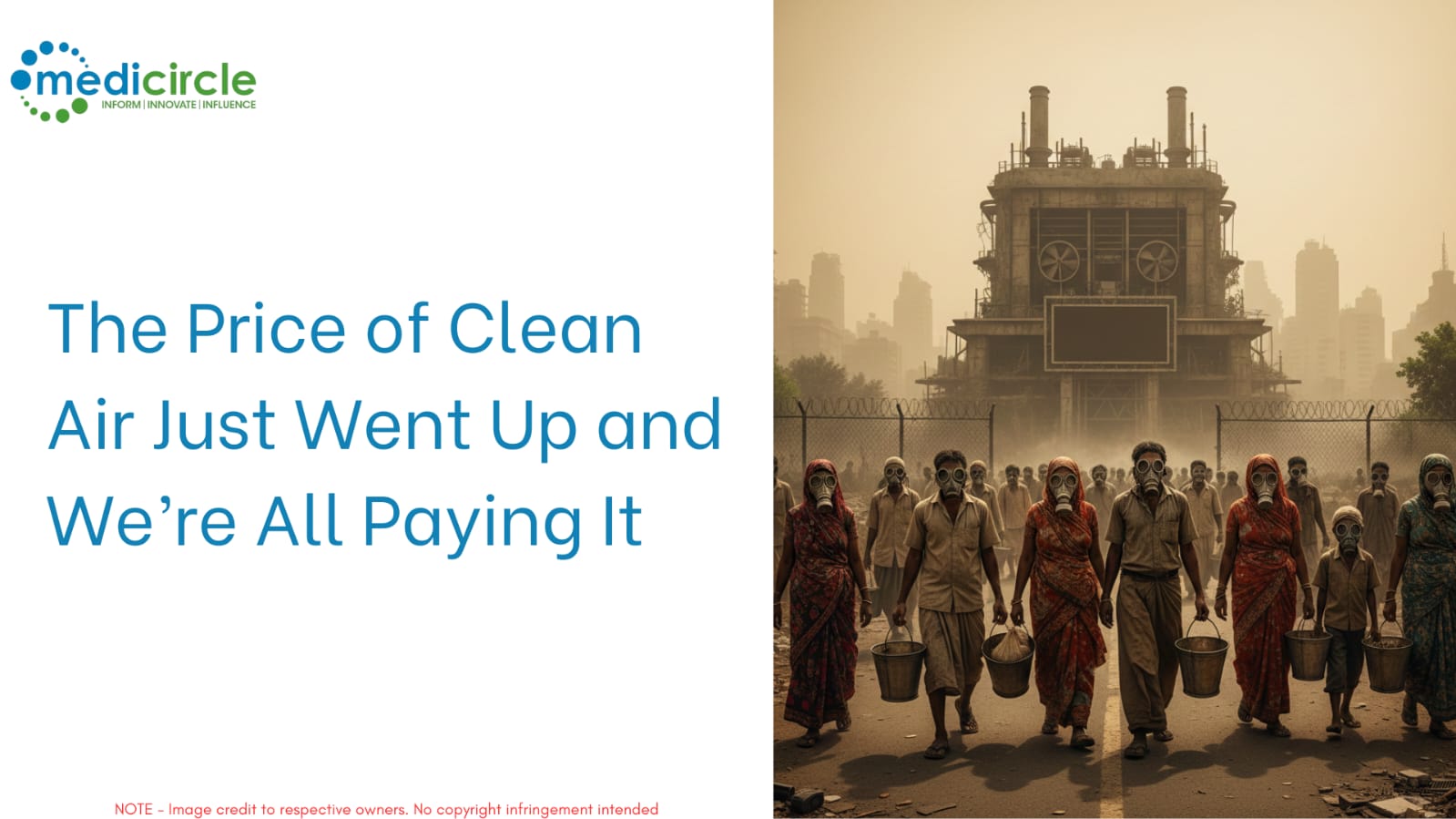
 Clean air is no longer a soft issue or a niche concern. It sits at the intersection of health, economy, and sustainability.




In every winter, Delhi NCR and large parts of the Indo-Gangetic plains disappear under a familiar grey veil. Schools shut, flights are delayed, hospital emergency rooms fill up, and residents learn to read air quality apps as carefully as weather forecasts. Air pollution in North India is no longer a seasonal inconvenience or a distant environmental concern. It is a daily public health emergency that quietly eats into lungs, hearts, productivity, and life expectancy. Against this backdrop, expectations from Union Budget 2026-27 were high. Many hoped for a clear signal that clean air would finally be treated as a national priority, backed by serious money and political intent. Instead, the Budget delivered an uncomfortable surprise. Funding for key pollution control institutions has been reduced, and air pollution did not even merit a direct mention in the finance minister’s speech.
For a country where some of the world’s most polluted cities are located, this silence is concerning. The Central Pollution Control Board, India’s apex body responsible for monitoring and regulating air and water quality, saw its allocation trimmed from Rs 126 crore in the previous year to Rs 123 crore. On paper, this cut may appear marginal, but for an institution already stretched thin by limited manpower, expanding responsibilities, and rising expectations, even small reductions matter. The CPCB plays a central role in setting standards, coordinating with state boards, analysing pollution data, and guiding policy. Weakening its financial capacity sends an unsettling message about the importance assigned to environmental governance.
The picture is no better for the Commission for Air Quality Management, a statutory body created specifically to address the air pollution crisis in Delhi NCR and surrounding regions. Established in 2021 after years of judicial interventions and public outrage, the CAQM was meant to bring coordination and authority to a fragmented system. Its budget has been cut by almost ten percent, falling from nearly Rs 39 crore to just over Rs 35 crore. This comes at a time when the problem it was created to solve remains largely unresolved. In 2025, Delhi recorded only 79 days when air quality fell in the “good” or “satisfactory” range. For most of the year, residents continued to breathe air that health experts classify as unhealthy or worse. November alone saw average AQI levels crossing 350, a range associated with severe health risks. Reducing the budget of the very body tasked with managing this crisis appears disconnected from ground realities.
The National Clean Air Programme, launched in 2019 with the stated aim of improving air quality in 131 cities, is also affected by the broader cuts in pollution control funding. The overall allocation for pollution control in Budget 2026-27 stands at Rs 1,091 crore, lower than the revised estimate of Rs 1,300 crore in the previous year. What makes this more concerning is the pattern seen in actual spending. In 2024-25, despite substantial allocations on paper, the actual expenditure on pollution control was just over Rs 16 crore.
For the average citizen, budget figures can feel abstract. Yet the consequences of underfunding pollution control are deeply personal. Air pollution is a slow poison. It rarely makes headlines the way epidemics do, but its cumulative impact is devastating. Doctors across India have long warned that dirty air aggravates asthma, chronic obstructive pulmonary disease, heart disease, and stroke. Children exposed to high levels of pollution show impaired lung development, which can affect them for life. Older adults face higher risks of heart attacks and respiratory failure during severe pollution episodes. Even people who consider themselves healthy are not spared. Persistent exposure to fine particulate matter quietly increases the risk of premature death.
The Air Quality Life Index report of 2025 put this starkly into perspective. It estimated that residents of Delhi NCR could live an average of 8.2 years longer if particulate pollution were reduced to meet World Health Organization guidelines. This is the highest potential gain in life expectancy recorded anywhere in the world. In simple terms, dirty air is stealing years from millions of lives. When viewed through this lens, cuts to pollution control funding are not just administrative decisions. They are choices that shape population health outcomes.
The economic cost of polluted air is equally severe, though it often receives less public attention. Ill health translates into lost workdays, lower productivity, and rising healthcare expenditure. Families spend more on doctor visits, medicines, hospitalisations, and long-term treatment for chronic diseases worsened by pollution. Employers bear the cost of absenteeism and reduced efficiency. The economy absorbs the shock of a less healthy workforce.
At the same time, Budget 2026-27 is not entirely devoid of climate-related ambition. The government has earmarked Rs 20,000 crore over five years for carbon capture, utilisation and storage technologies. This funding targets heavy industries such as steel, cement, power, and refineries, aiming to reduce carbon dioxide emissions and associated pollutants. There is also continued support for battery manufacturing and broader energy transition initiatives. These measures are important in the long term. Reducing industrial emissions and shifting to cleaner energy sources are essential for India’s climate commitments and future sustainability.
Yet there is a disconnect between long-term climate mitigation and immediate air quality management. Technologies like carbon capture may take years to scale up and show tangible benefits at the local level. Meanwhile, people continue to breathe toxic air today. Accelerating electric vehicle adoption, improving public transport, enforcing emission norms, managing crop residue burning, and strengthening local pollution monitoring require sustained, visible investment. Many experts believe the Budget could have sent a stronger signal by directly addressing these areas.
Another concern lies in governance and coordination. Air pollution does not respect administrative boundaries. Emissions from one state drift into another. Tackling it requires cooperation between central agencies, state governments, local bodies, and multiple ministries. Institutions like the CPCB and CAQM were meant to provide this coordination. Weakening them financially undermines their authority and effectiveness. Monitoring networks need expansion, data needs to be analysed in real time, and enforcement actions need follow-through. All of this costs money and requires political backing.
Hospitals in polluted cities report predictable spikes in respiratory and cardiac cases during high pollution periods. Pediatricians see more wheezing infants. Cardiologists treat more heart attacks. Pulmonologists warn that what they are seeing now may be only the beginning. As exposure accumulates over decades, the burden of chronic disease will rise. This places additional strain on an already overburdened healthcare system. Preventing pollution-related illness is far cheaper than treating it, yet prevention often struggles to find budgetary space.
On one hand, India invests heavily in expanding healthcare infrastructure, insurance coverage, and access to medicines. On the other, it underinvests in reducing a major driver of disease. Clean air is perhaps the most fundamental form of preventive healthcare. It benefits everyone, regardless of income or access to hospitals. When budgets fail to reflect this reality, the system ends up paying the price elsewhere.
It is also worth reflecting on public perception. Budget speeches and allocations shape priorities in the public mind. When air pollution is not explicitly addressed, it risks being seen as a secondary issue, something to be managed episodically rather than structurally. This can weaken accountability. Citizens may grow accustomed to living with smog, adjusting routines, wearing masks, and installing air purifiers, instead of demanding systemic change. Normalising pollution is dangerous because it lowers expectations of what is acceptable.
At the same time, there is still room for course correction. Budgets are not static documents. Mid-year revisions, targeted schemes, and stronger implementation can alter outcomes. Funds allocated to related sectors such as transport, energy, and urban development can be leveraged for air quality gains if used wisely. Monitoring how different departments use their allocations will be critical. As some experts have noted, many sectors that influence air quality have received funding. The question is whether these investments will translate into cleaner air on the ground.
India has acknowledged the air pollution crisis in courtrooms, policy documents, and international forums. Translating that acknowledgement into sustained financial commitment remains uneven. Budget 2026-27, with its cuts to pollution control bodies, risks being remembered as a missed opportunity at a time when the evidence of harm is overwhelming.
For citizens, every winter cough, every breathless night, every school closure is a reminder that clean air cannot be taken for granted. The debate over budgets and allocations is not just about numbers. It is about years of life, quality of health, and the kind of future being shaped for the next generation.
Growth built on polluted air is fragile. Productivity suffers when people are sick. Healthcare costs rise when prevention is ignored. Global investors and partners pay attention to environmental governance. Clean air is no longer a soft issue or a niche concern. It sits at the intersection of health, economy, and sustainability.
Budget 2026-27 may have chosen restraint over resolve when it comes to pollution control. Whether this approach will change in response to mounting evidence and public pressure remains to be seen. What is clear is that the cost of inaction is already being paid, breath by breath, by millions of Indians.
Source: indiatoday.in




-23-300x250.png)

.jpeg)





.jpg)
.jpg)
.jpg)
.jpg)
.jpg)
.jpg)
.jpg)
.jpg)
.jpg)