 Tuesday, October 27, 2026
 In the evolving landscape of India’s health and fitness industry, safeguarding the integrity of nutritional supplements is essential.




The fitness revolution in India is impossible to ignore. Walk into any gym in Delhi, Mumbai, Bengaluru, or smaller cities across the country and you will see young men and women shaking bottles of protein drinks between workouts. Protein supplements, whey protein powders, and muscle-building nutrition products have become symbols of a healthier lifestyle and stronger body. For many people, these supplements promise faster recovery, improved muscle growth, and better athletic performance.
Behind this booming fitness culture lies a troubling reality that few consumers fully recognise. The market for dietary supplements has grown so rapidly that it has also created fertile ground for counterfeit products. In recent days, law enforcement authorities uncovered a disturbing example of this trend in the national capital region. Two individuals were arrested in Delhi for allegedly manufacturing and distributing fake protein supplements while passing them off as products from well-known global brands.
The case has sparked concern among health experts, nutritionists, and fitness professionals. Fake supplements do more than cheat consumers financially. They may expose people to unknown ingredients, poor-quality raw materials, and potentially harmful substances. For a generation that believes it is investing in health and strength, the discovery raises an unsettling question: how safe are the protein supplements circulating in the market?
According to investigators from the Delhi Police Crime Branch, the alleged operation involved the production of counterfeit protein powders in illegal manufacturing units operating in the Brahmpuri area of northeast Delhi. Acting on intelligence inputs, authorities conducted a raid that led to the arrest of two suspects believed to be connected to the racket. The men were identified as Mohit Tiwari and Mohit Dixit, both residents of the same locality.
Police say the suspects were engaged in preparing imitation versions of popular whey protein supplements and selling them under the labels of established brands. These products were reportedly supplied across Delhi and the National Capital Region, where demand for fitness supplements has expanded dramatically in recent years.
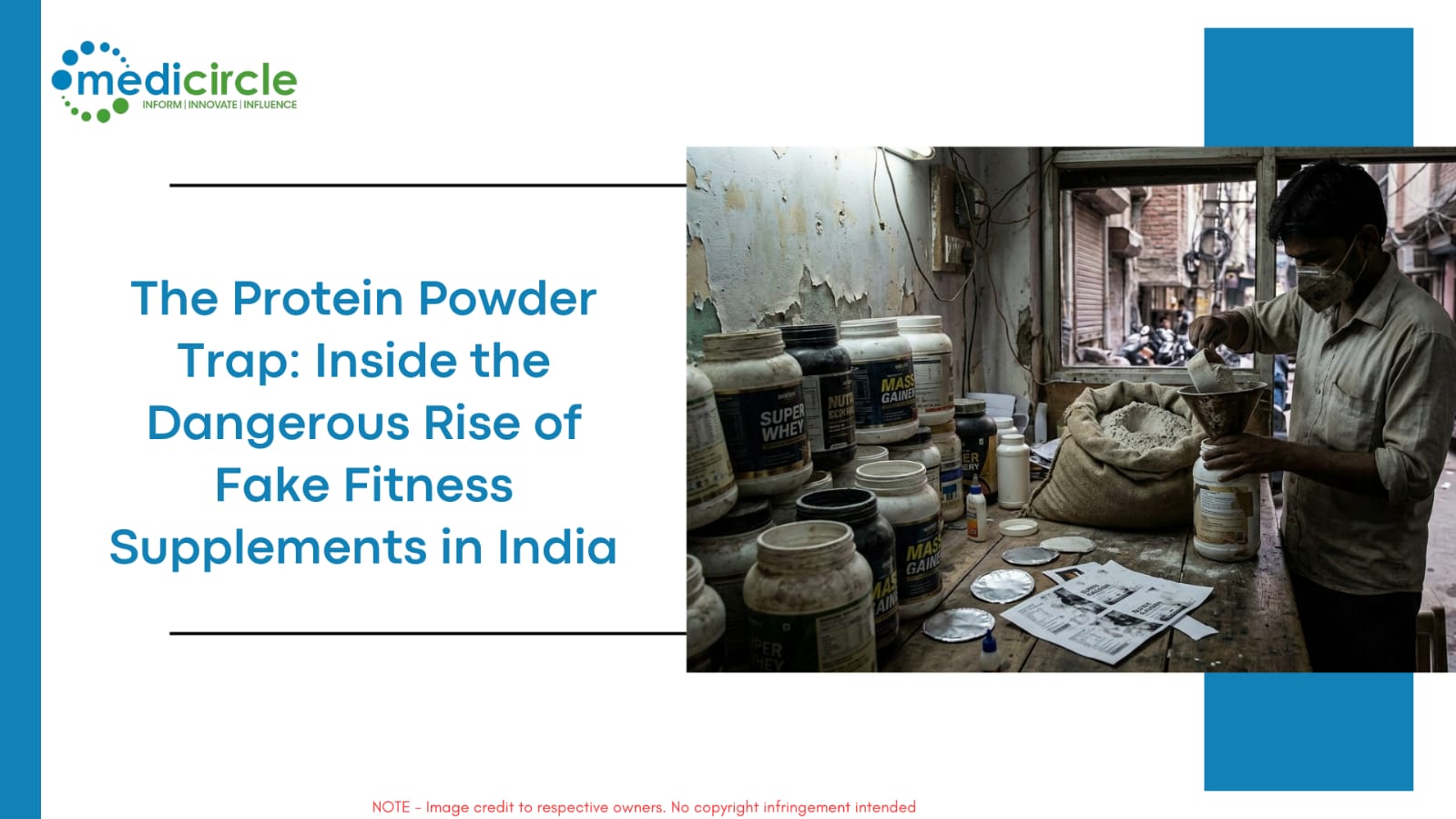
The investigation revealed that the accused allegedly used simple mixing equipment to produce large quantities of counterfeit supplements. Raw ingredients were blended together and then packed into containers designed to resemble original branded products. Labels, hologram stickers, seals, and packaging elements mimicking well-known international brands were used to give the appearance of authenticity.
During the search operation, officers recovered a significant quantity of materials linked to the manufacturing process. These included containers bearing labels of widely recognised fitness supplement brands such as Optimum Nutrition Gold Standard Whey, Syntha-6 Ultra Premium Protein Matrix, and Isopure Zero Carb Protein. Investigators also found flavouring agents, cocoa powder, whey powder, fat powder, and maltodextrin stored at the premises.
Alongside the raw ingredients, police seized equipment used to mix and package the powders. Mixing machines, weighing scales, plastic jars, lids, and brand-labelled packaging materials were reportedly part of the seized inventory. Officials estimated that roughly one hundred kilograms of finished counterfeit supplements were recovered, along with over fifty kilograms of raw materials used in their preparation.
For consumers, these numbers represent far more than a legal violation. They highlight the scale at which counterfeit protein supplements may already be circulating in the fitness market. Health experts warn that fake whey protein products can undermine nutritional goals and expose users to health risks that are difficult to predict.
Protein supplements play a significant role in sports nutrition and muscle recovery. Athletes, bodybuilders, and gym enthusiasts often rely on whey protein powder to support muscle repair after intense workouts. Genuine products are formulated through controlled manufacturing processes, ensuring accurate protein content and safety standards.
Counterfeit supplements, however, rarely follow such protocols. Manufacturers operating outside regulatory frameworks may substitute expensive ingredients with cheaper fillers. Maltodextrin, a carbohydrate powder commonly used as a food additive, is often used in fraudulent products to bulk up the mixture while reducing the amount of actual protein.
This substitution can mean paying premium prices for products that contain far less protein than advertised. Someone who believes they are consuming a high-quality whey protein supplement may actually be ingesting a mixture dominated by sugar-based carbohydrates and artificial flavouring.
The consequences extend beyond wasted money. In some cases, counterfeit supplements have been found to contain contaminants or unregulated substances that can affect health. Poor-quality manufacturing environments may introduce bacteria, heavy metals, or chemical residues into the product.
Nutrition specialists point out that individuals who consume protein powders regularly are often doing so in relatively high quantities. A typical gym-goer might take one or two servings of protein powder every day. If those servings contain unsafe or contaminated ingredients, the long-term health impact could become significant.
Kidney strain, digestive issues, allergic reactions, and metabolic disturbances are among the potential risks associated with adulterated supplements. Individuals with pre-existing health conditions, such as kidney disease or diabetes, may face even greater dangers if they unknowingly consume counterfeit nutritional products.
The discovery of fake supplements in Delhi also raises concerns about supply chains within the booming sports nutrition industry. India’s supplement market has expanded rapidly over the past decade as awareness of fitness and bodybuilding has grown. Social media influencers, fitness trainers, and gym culture have encouraged many young adults to incorporate dietary supplements into their daily routines.
This surge in demand has created opportunities for legitimate companies as well as for fraudulent operators. Counterfeiters often take advantage of high consumer demand for premium brands, knowing that buyers may struggle to distinguish genuine products from convincing imitations.
Fake supplement manufacturers frequently replicate packaging designs with remarkable precision. Brand logos, colour schemes, holographic seals, and product descriptions can be copied closely enough to deceive even experienced consumers. Once these products reach gym counters, small retail stores, or online marketplaces, they can circulate widely before authorities detect the fraud.
Law enforcement agencies say dismantling such networks requires careful investigation because counterfeit goods may pass through multiple intermediaries before reaching the final consumer. Raw materials, packaging supplies, and distribution channels often originate from different sources, making it difficult to trace the entire supply chain.
In the Delhi case, investigators are continuing to examine the broader network behind the operation. Officials are working to identify additional individuals who may have been involved in sourcing ingredients, producing packaging materials, or distributing the counterfeit supplements in the market.
The legal charges filed in the case include provisions under the Bharatiya Nyaya Sanhita and the Copyright Act, which address fraud and intellectual property violations. However, health experts believe that the issue extends beyond legal concerns about brand infringement. The presence of fake supplements in the market represents a public health problem that deserves greater attention.
Dietary supplements occupy a unique position in the healthcare ecosystem. They are widely consumed for health and fitness benefits, yet regulatory oversight can vary depending on the product category. Unlike prescription medicines, many nutritional supplements are sold directly to consumers through retail outlets and online platforms.
This accessibility can make it easier for counterfeit products to enter the supply chain. Without strict monitoring at every stage, fake supplements may slip into the market before regulators or brand owners become aware of the problem.
Public health specialists emphasise the need for stronger quality control measures within the supplement industry. Certification systems, batch verification technologies, and digital authentication tools can help consumers verify whether a product is genuine. QR codes, serial numbers, and tamper-proof seals are increasingly being used by reputable brands to protect against counterfeiting.
Consumers themselves play an important role in preventing the spread of counterfeit supplements. Experts advise purchasing protein powders and fitness supplements only from authorised retailers or verified online stores. Extremely low prices compared with standard market rates can be an early warning sign that a product may not be authentic.
Checking packaging carefully can also help identify suspicious products. Misspelled brand names, faded labels, poorly printed instructions, or broken seals may indicate that a supplement has been tampered with or repackaged. Reputable companies typically maintain consistent packaging quality across all batches.
Nutritionists also encourage individuals to consult qualified professionals before beginning any supplement regimen. A balanced diet rich in natural protein sources such as eggs, dairy products, legumes, and lean meats can often meet the body’s nutritional needs without reliance on large quantities of supplements.
For those who do choose to use whey protein supplements, selecting products certified by recognised quality assurance organisations can reduce the risk of exposure to counterfeit goods. Laboratory-tested products are more likely to meet safety standards and contain the protein content advertised on the label.
The Delhi police operation highlights the importance of vigilance in protecting consumer health within the rapidly growing fitness industry. As more people embrace gym culture and performance nutrition, the temptation for unscrupulous operators to exploit that demand may continue to grow.
At its core, the issue reflects a larger challenge facing modern health markets. The pursuit of wellness has become a major economic sector, encompassing everything from dietary supplements to sports nutrition and weight management products. While this growth offers many benefits, it also requires robust safeguards to ensure that consumers receive safe and authentic products.
Fake protein supplements represent a particularly troubling example because they target individuals actively trying to improve their health. A person investing in protein powder to build muscle, recover from workouts, or support athletic performance expects that the product will deliver real nutritional value.
When counterfeit products enter the equation, that expectation is shattered. The consumer may unknowingly ingest low-quality or potentially unsafe ingredients while believing they are strengthening their body.
As investigations continue into the Delhi counterfeit supplement case, authorities are expected to trace the distribution network that allowed these products to reach the market. Identifying suppliers, retailers, and additional manufacturing units will be critical in preventing similar operations from resurfacing.
The pursuit of fitness must be accompanied by awareness and caution. Protein supplements can be valuable tools when used responsibly and sourced from trusted manufacturers. Yet the rise of counterfeit products reveals how easily consumer trust can be exploited.
In the evolving landscape of India’s health and fitness industry, safeguarding the integrity of nutritional supplements is essential. The challenge goes beyond protecting brand names or commercial interests. It is about ensuring that the products people rely on for strength, recovery, and well-being truly support the health they promise.
Until stronger oversight and consumer awareness become the norm, the protein powder sitting on a gym shelf may carry a question few buyers think to ask: is it really what it claims to be?





-23-300x250.png)

.jpeg)








.jpg)
.jpg)
.jpg)
.jpg)
.jpg)
.jpg)
.jpg)
.jpg)
.jpg)

