 Thursday, October 08, 2026
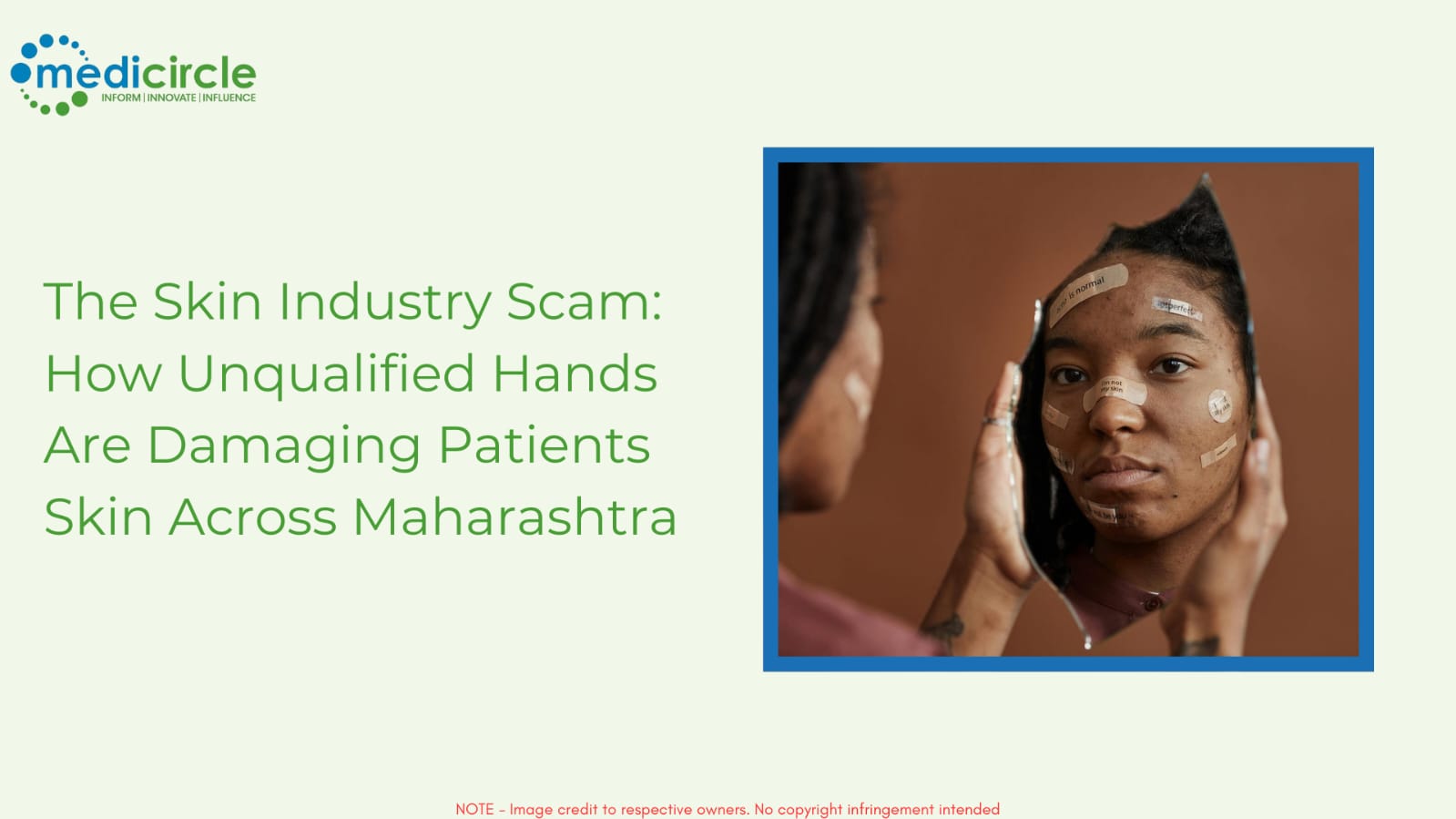
 Beauty treatments may promise quick transformation, but only qualified dermatologists and registered doctors can ensure safety.




The world of skincare and cosmetic treatments is changing faster than most people can keep track of, and in that rush, something deeply problematic has unfolded across Maharashtra. The pursuit of flawless skin, instant glow, rapid hair growth, or quick-fix cosmetic enhancements has created a new market where charm replaces competence and confidence masks the absence of qualifications. Behind glossy advertisements and soft-focus Instagram videos lies a growing threat that the Maharashtra Medical Council (MMC) has now chosen to confront head-on. Unqualified individuals posing as “skin specialists”, “trichologists”, “aesthetic doctors”, and every other label that gives the illusion of medical expertise. The danger is visible in the inflamed skin, the stubborn scars, the damaged nerves, and suffering of patients who trusted the wrong hands.
For years, dermatologists have battled a parallel world of cosmetic shortcuts practiced by individuals who lack medical training yet boldly perform advanced procedures. These self-proclaimed experts often promote themselves aggressively on social media, offering everything from chemical peels and skin boosters to microneedling and intralesional injections, all without legitimate degrees or licenses. What looks tempting online with filters and testimonials can quickly turn into a medical emergency when reality hits. The MMC’s recent letter to the state’s medical education and drugs department is a warning that this crisis is no longer sporadic, it has become an everyday threat affecting thousands of unsuspecting people.
In that letter, the MMC has asked the government to strengthen anti-quackery efforts by involving qualified members from recognised medical bodies in district-level committees. These committees already exist to investigate cases against fake practitioners, but the results have been far from satisfactory. Investigations often lack medical insight, verification is weak, and prosecution is rare. A person can harm dozens of patients, shut shop, and reopen under another name in another locality within months. The MMC’s call to include dermatologists and other experts aims to add depth to inquiries that currently fail to identify the gravity of malpractice. Without medical expertise in these committees, quacks continue to slip through loopholes with minimal accountability.
The latest action taken by MMC follows a wave of complaints from the Vidarbha Dermatological Society (VDS), a regional branch of the Indian Association of Dermatologists, Venereologists and Leprologists (IADVL). Members of VDS recently met MMC president and National Medical Commission member Dr Vinky Rughwani to explain the scale of the crisis. Dermatologists expressed their concerns about the growing misuse of corticosteroids by unqualified individuals. The misuse has expanded from topical creams to oral steroids and now, shockingly, intralesional injections that should only be handled by trained professionals. Steroid misuse is already a national challenge, but the involvement of untrained practitioners has turned it into a public health hazard that can leave patients with irreversible damage.
Dermatologists shared cases of patients who walked in with severe complications: deep chemical burns after unsafe peels, permanent scars after mishandled lasers, disfigured faces due to improper fillers, and widespread skin thinning caused by prolonged steroid misuse. These are not rare incidents anymore. They are becoming routine. The rise of such cases reveals how quackery has adapted to modern trends, it no longer stays confined to rural areas or small localities. It thrives in cities, beauty clinics, spas, salons, and private rooms with expensive décor but no medical oversight.
Dr Rughwani confirmed that the MMC will soon issue clear guidelines specifying which skin procedures can only be performed by qualified specialists. These guidelines are expected to redefine what is permissible and where the line must be drawn. When someone performs cosmetic injections, lasers, or chemical procedures without a recognised medical qualification, they are not simply bending rules, they are practicing medicine unlawfully. “Those doing such procedures without qualifications are bogus doctors,” he said. His statement reflects a reality that people often overlook: cosmetology may appear glamorous, but it remains a branch of medicine requiring knowledge of the skin, nerves, blood vessels, allergies, contraindications, and emergency care.
To tighten the system further, MMC plans to enforce the “Know Your Doctor” (KYD) verification system across Maharashtra. This QR code-based system allows patients to instantly check whether a doctor is registered and qualified. If implemented effectively, it can become one of the strongest tools to fight medical fraud. With just a quick scan, patients can verify credentials before trusting anyone with a procedure that could alter their face, skin, or overall health. For a state battling widespread quackery in cosmetic treatments, KYD is not just a technological upgrade, it is a form of protection.
Behind every flashy post, dermatologists are witnessing the tragic aftermath. Patients with facial burns are unable to go outdoors for months. Individuals treated with unsafe injections end up with nerve injuries that alter their facial expressions. Young men seeking quick hair solutions undergo procedures that damage follicles permanently. Women approach dermatologists with severe skin thinning due to prolonged steroid use recommended by someone they believed was an expert. Cosmetic damage goes beyond appearance, it affects self-esteem, mental health, and social interactions. Many victims live with physical and emotional trauma for years.
The worst cases arise from steroid misuse, which has become disturbingly common. Patients often approach salons or unregistered skin clinics for quick whitening or glow therapies. What they receive instead are potent steroids that give short-term brightness but cause long-term disasters. Prolonged steroid use can trigger fungal infections, acne eruptions, uncontrolled hair growth, pigmentation disorders, and skin thinning. Some people avoid proper medical care because early results appear promising, only to face severe complications later that take months of treatment and significant financial investment to repair.
Quackery thrives because it plays on hope for faster results, cheaper treatments, and the illusion of expertise. Many people hesitate to visit certified dermatologists because they assume the cost will be high or the procedure too formal. Quacks exploit these fears by offering “budget-friendly magic”, but what patients receive instead is risk disguised as affordability. In reality, the long-term cost of repairing damage caused by unqualified practitioners far exceeds the price of safe treatment by licensed professionals.
The MMC has recognised that this problem cannot be solved with warnings alone. Stronger regulations, improved verification systems, and expert involvement in investigations are necessary. But regulation is only one part of the solution. Public awareness must rise equally. Patients need to understand that skincare is not cosmetic decoration, it is healthcare. Cosmetic procedures may look simple, but they involve layers of medical understanding, including skin anatomy, risk assessment, infection control, and emergency response. When untrained individuals perform these procedures, they gamble with someone else’s body.
As Maharashtra intensifies its anti-quackery efforts, the responsibility also lies with the public to choose wisely. The easiest way to prevent harm is to verify credentials before undergoing any skin, hair, or cosmetic treatment. A salon chair, a private room, or a social media post is not a medical clinic. A certificate on the wall is not always proof of expertise. A professional title is only real when backed by legal medical registration.
There is a growing need for stronger digital awareness campaigns, community outreach, and media coverage to educate people about the risks associated with unqualified practitioners. When people understand that cosmetic procedures can carry serious consequences, they are more likely to make informed decisions. Dermatologists and medical associations must continue to highlight real cases, share evidence-based information, and push for stricter actions against offenders.
The rise of fake skin experts is a dangerous trend that threatens public health. Maharashtra’s decision to intensify action is a critical step, but long-term change will require continuous monitoring, collaboration between authorities and medical associations, and strong public participation. The cosmetic industry cannot be allowed to operate like an unregulated marketplace where anyone with a syringe or chemical bottle can play doctor.
In conclusion, beauty treatments may promise quick transformation, but only qualified dermatologists and registered doctors can ensure safety. When untrained hands handle medical procedures, the results can be life-altering. Maharashtra’s crackdown on quackery is a reminder that in matters of health and appearance, people deserve expertise, not experiments.





.jpeg)








.jpg)
.jpg)
.jpg)
.jpg)
.jpg)
.jpg)


.jpg)
.jpg)
.jpg)