Tuesday, October 27, 2026
 Emergency care is no longer confined to hospital corridors. It is moving into communities, onto roads, and closer to the people who need it most.




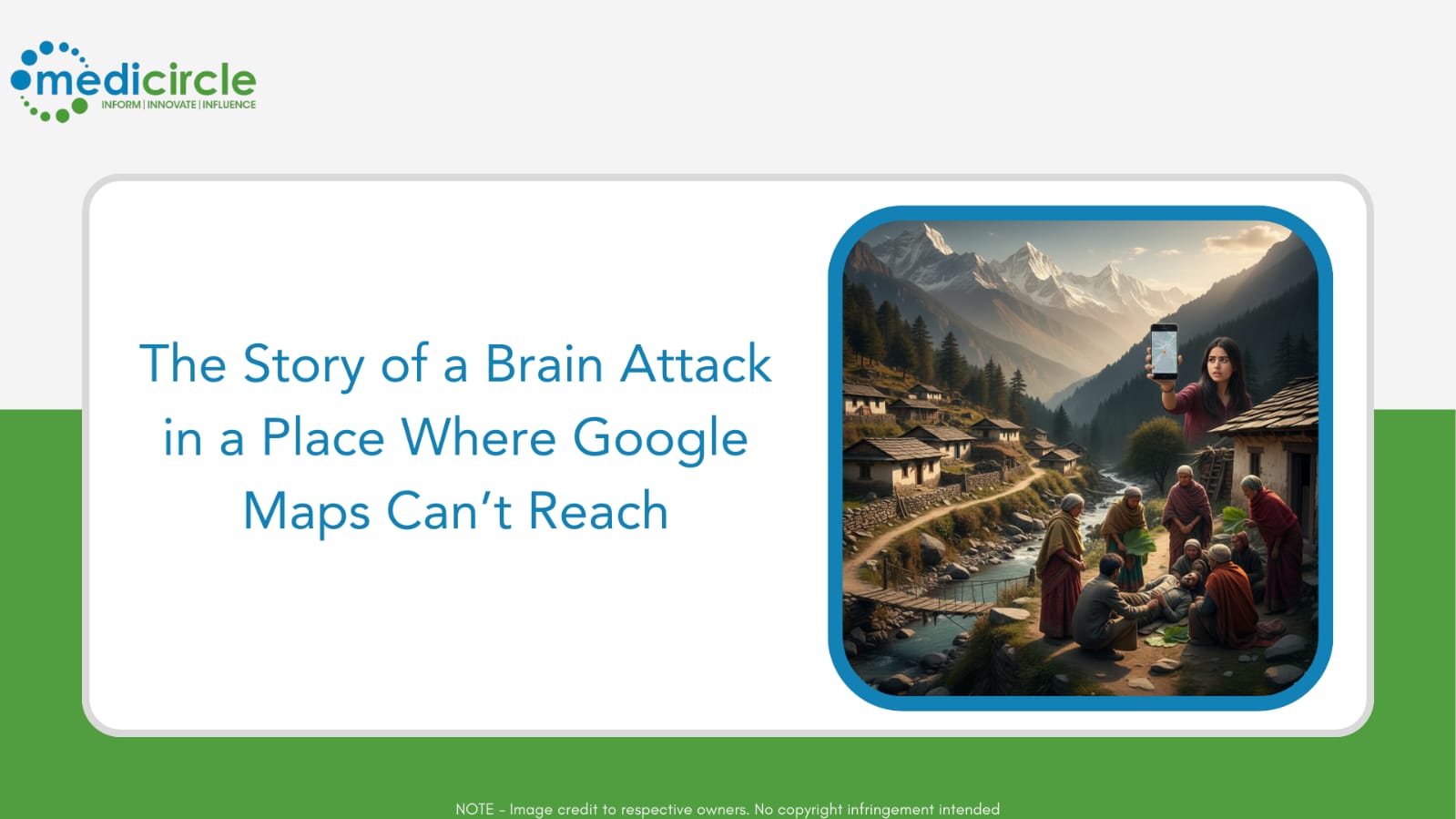
In large parts of India, a medical emergency is often followed by a journey. Families rush to find transport, roads stretch endlessly, and time slips away long before a hospital is reached. For patients suffering a stroke, those lost minutes can decide the rest of their lives. Paralysis, loss of speech, permanent disability, and death are not sudden outcomes; they are often the result of delay. This is why the recent move to bring stroke treatment to the patient, rather than the patient to the hospital, marks a turning point that deserves close attention.
India has now become only the second country in the world to successfully integrate Mobile Stroke Units with emergency medical services for rural care, a milestone highlighted by Dr Rajiv Bahl, Secretary of the Department of Health Research and Director General of Indian Council of Medical Research. The announcement came as two fully equipped Mobile Stroke Units were formally handed over to the government of Assam, ensuring that a pilot project does not remain an experiment but becomes a living public health service.
For decades, stroke care in India has revolved around hospital-based models. The patient collapses at home or in a village, relatives recognise something is wrong, and the race begins to reach a medical facility. In urban centres, this race is difficult. In rural and remote regions, it is often impossible. The golden hour, the narrow window during which clot-busting drugs can reverse or limit brain damage, is frequently lost before the first scan is even done. This reality has kept stroke among the leading causes of death and long-term disability in the country, with families bearing the emotional and financial consequences for years.
Mobile Stroke Units challenge this old reality. They reverse the direction of care. Instead of waiting for the patient to reach a hospital, the hospital reaches the patient. These units are not ambulances in the conventional sense. They are mobile hospitals on wheels, fitted with a CT scanner, point-of-care laboratory facilities, telemedicine links to stroke specialists, and life-saving clot-dissolving medicines. This combination allows doctors to diagnose the type of stroke on the spot and begin treatment almost immediately, even in locations far from tertiary hospitals.
The idea of such units was first developed in Germany and later tested in large global cities. What makes the Indian experience different is the terrain. Northeast India is defined by difficult geography, long distances, and limited access to specialist care. The region also carries a disproportionately high burden of stroke. In this setting, the integration of Mobile Stroke Units into routine emergency services is more than a technological achievement. It is a social intervention that directly addresses inequality in healthcare access.
Under an ICMR-funded study focused on understanding and improving stroke care pathways, Mobile Stroke Units were deployed across parts of Assam. The goal was to study whether advanced pre-hospital stroke care could work in rural and remote areas. The results were astonishing. Treatment times, which earlier stretched close to a full day, dropped to roughly two hours. Mortality reduced by nearly one-third. Disability outcomes improved dramatically, with patients far more likely to regain independence rather than live with lifelong impairment. These numbers represent more than statistics; they reflect lives altered, families spared years of caregiving, and communities retaining productive members.
Recognising the impact of this work, the decision was made to hand over the units to the state after the pilot phase ended. This ensured continuity, preventing a common fate of successful pilot projects that fade once research funding ends. As noted by P. Ashok Babu, Secretary and Commissioner of Health in Assam, the transition strengthens the state’s emergency response system and embeds this life-saving service within public ownership. It also creates a foundation for expansion, signalling that stroke care innovation need not remain limited to academic studies.
What makes this model particularly powerful is the way it fits into a larger system rather than operating in isolation. Alongside Mobile Stroke Units, ICMR supported the creation of a neurologist-led stroke unit at Assam Medical College and Hospital in Dibrugarh, as well as physician-led stroke units at Tezpur Medical College Hospital and Baptist Christian Hospital in Tezpur. The Mobile Stroke Units were woven into this network, forming a seamless pathway from doorstep diagnosis to definitive hospital care. This continuity is essential. Early treatment saves brain tissue, but coordinated follow-up care determines long-term recovery.
This shift changes the experience of a medical emergency. Instead of panic and helpless waiting, there is rapid assessment and visible action. Families see scans being done, specialists appearing on screens, and treatment starting before the fear fully settles in. This reassurance matters. Stroke is a frightening event, often misunderstood, and early clarity can reduce emotional trauma alongside physical damage.
The broader implications of this initiative extend well beyond Assam. India’s population is ageing, and risk factors such as hypertension, diabetes, and sedentary lifestyles are becoming more common. Stroke incidence is expected to rise, particularly in regions with limited access to preventive care. A model that can deliver advanced stroke treatment quickly, even outside cities, offers a way to blunt this trend. It also aligns with the larger push toward strengthening emergency medical services and integrating technology into public health delivery.
There is a deeper lesson here about how healthcare systems evolve. For years, innovation in medicine has been associated with bigger hospitals, more specialised departments, and centralised excellence. Mobile Stroke Units suggest a different philosophy. They show that decentralisation, when combined with technology and trained personnel, can deliver outcomes that rival or even surpass traditional models. By placing critical diagnostic and treatment tools closer to the patient, the system becomes faster, more humane, and more equitable.
This approach also has economic implications. Stroke-related disability imposes enormous costs on families and the healthcare system. Long-term rehabilitation, loss of income, and dependency can push households into financial distress. By reducing disability rates, early intervention through Mobile Stroke Units may lower long-term healthcare expenditure and improve quality of life. In a country where out-of-pocket health spending remains high, such savings matter deeply.
Of course, challenges remain. Mobile Stroke Units require significant investment, trained personnel, and strong coordination with emergency services. Maintenance of equipment, continuous training, and integration with local healthcare infrastructure are critical for sustainability. Scaling this model across India will demand careful planning, state-level commitment, and adaptation to local needs. Yet the success in Assam demonstrates that these challenges are not insurmountable.
Another important dimension is public awareness. Stroke symptoms are often missed or ignored, especially in rural areas. Facial drooping, sudden weakness, speech difficulties, and confusion may not always be recognised as medical emergencies. The presence of Mobile Stroke Units must go hand in hand with community education, so that people know when and how to call for help. Faster response begins with faster recognition.
The initiative also reinforces the role of research-driven policy. By funding a structured study, analysing outcomes, and then transitioning successful interventions into public services, ICMR has demonstrated a model of evidence-based decision-making. This approach reduces guesswork and ensures that resources are directed toward strategies that truly work on the ground. It sets an example for how other emergency care innovations can be tested and adopted.
In many ways, the story of Mobile Stroke Units in India is about trust. Trust that advanced care can be delivered outside hospital walls. Trust that rural patients deserve the same urgency and precision as urban ones. Trust that investing in early treatment pays dividends far beyond the initial cost. When these assumptions come together, healthcare systems move closer to their purpose.
A stroke no longer has to mean a desperate race against impossible distances. Help can arrive faster, closer, and better prepared. The difference between permanent disability and meaningful recovery may now be measured in minutes rather than miles.
As India continues to struggle with the dual burden of infectious diseases and rising non-communicable conditions, such innovations signal a shift in mindset. Emergency care is no longer confined to hospital corridors. It is moving into communities, onto roads, and closer to the people who need it most. In that movement lies the promise of a healthcare system that responds to reality rather than tradition.
The handover of Mobile Stroke Units in Assam is therefore a statement that timely care is a right, not a privilege of geography. When minutes decide lives, bringing medicine to the doorstep may be the most compassionate and effective choice a system can make




-23-300x250.png)

.jpeg)


.jpg)
.jpg)
.jpg)
.jpg)
.jpg)
.jpg)
.jpg)
.jpg)
.jpg)