 Tuesday, October 27, 2026
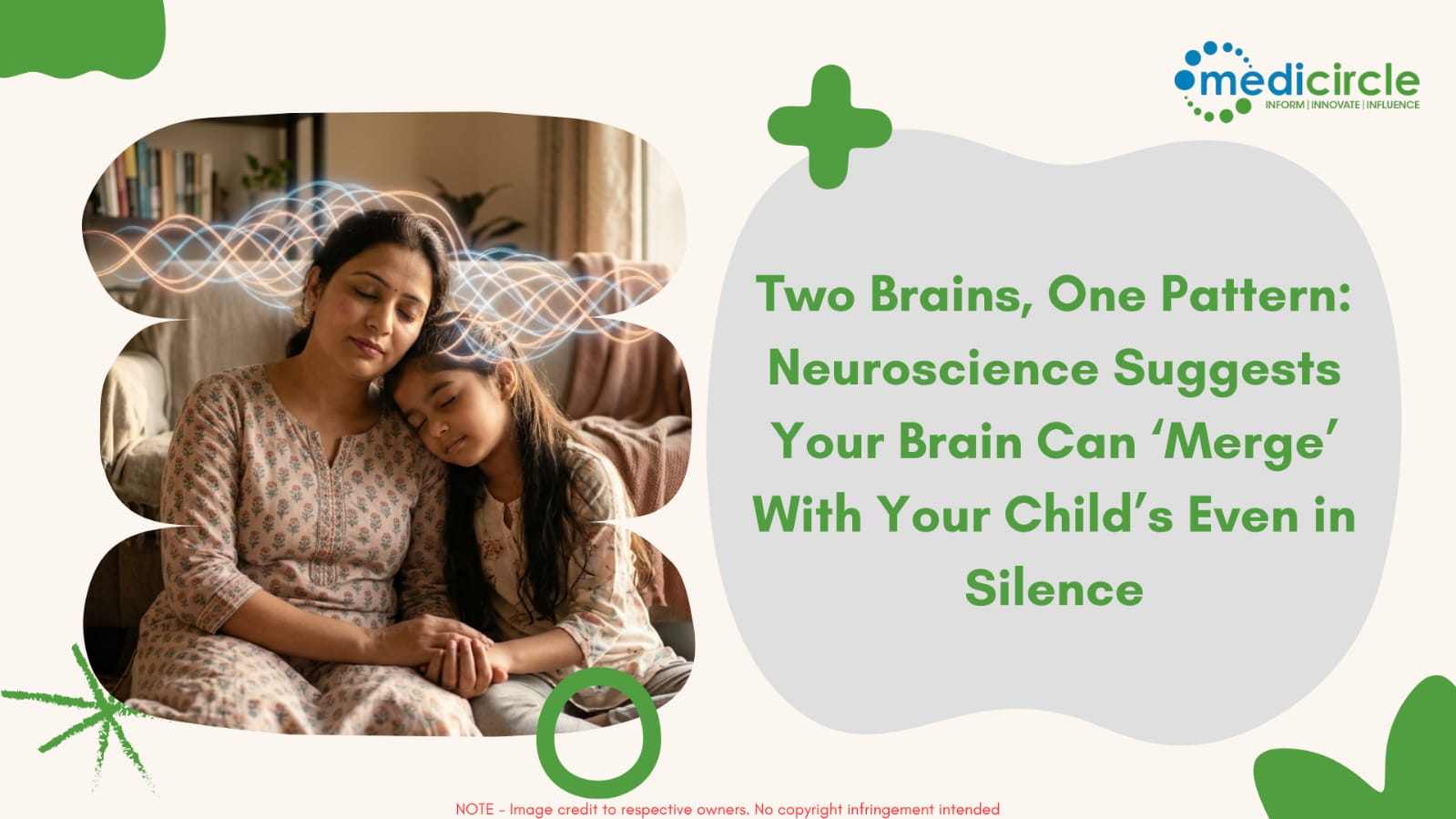
 The bonds that shape our lives are written into the very patterns of our brains. Words may differ from one language to another, but the biological foundation of connection remains universal.




For generations, parents have believed that strong emotional bonds with their children go far beyond words. A simple smile, a shared laugh, or a moment of play can create an invisible connection between a mother and her child. Now neuroscience is beginning to show that this connection may be more literal than we once imagined. Emerging research suggests that when parents and children interact, their brains can begin to operate in synchrony, reflecting shared patterns of neural activity that mirror the emotional and social harmony between them. What makes this discovery even more fascinating is that the bond appears to survive linguistic differences. Even when mothers speak to their children in a language that is not their native tongue, their brains still appear to align in remarkably similar ways.
A recent scientific investigation conducted by researchers at the University of Nottingham offers fresh insight into this phenomenon, often described by neuroscientists as interbrain synchrony. The study, published in Frontiers in Cognition, explored whether language differences between parents and children might disrupt the subtle neural connection that develops during social interaction. The findings suggest that this connection remains strong regardless of whether families communicate in their first language or in a second language learned later in life. In simple terms, the human brain appears to prioritize social bonding over linguistic perfection.
The idea of interbrain synchrony has gradually captured the interest of psychologists and neuroscientists studying human relationships. When two people engage in meaningful interaction such as talking, learning, singing, or playing together, their brains sometimes begin to show similar patterns of activity. Researchers describe this phenomenon as synchronized neural networks, where different brains display parallel rhythms of activation. This synchronization is believed to help individuals understand each other more effectively, coordinate behavior, and strengthen emotional connections.
Until recently, most studies examining this phenomenon focused on interactions between individuals who shared the same native language. Yet the modern world is increasingly multilingual. Millions of families across the globe communicate in more than one language at home. Children often grow up switching between languages depending on the environment, speaking one language at home and another at school. This dynamic raised an intriguing scientific question: could linguistic differences weaken the neural bond between parents and children?
To investigate this possibility, the research team observed bilingual mother-child pairs whose primary language was not English. Bilingual families represent an important but often overlooked population in developmental neuroscience. Despite the fact that millions of children worldwide grow up in multilingual households, many neuroscience studies still rely on participants who speak only one language. This gap has left researchers with limited understanding of how bilingualism shapes brain development and social interaction.
The team designed a controlled experiment involving fifteen bilingual mothers and their young children. Each pair participated in a series of play sessions conducted in a laboratory environment. During these sessions, the mothers and children engaged in simple games under three different conditions. In one scenario they played together while speaking their native language. In another they communicated entirely in English, which for both mother and child was a second language. In the third condition they played separately without interacting, sitting behind a screen that prevented visual contact.
To observe brain activity during these interactions, researchers used a technique known as functional near-infrared spectroscopy, commonly referred to as fNIRS. Participants wore lightweight caps fitted with sensors capable of measuring changes in blood oxygen levels within the brain. These signals provide valuable insight into neural activity, allowing scientists to monitor how different brain regions respond during social engagement. Unlike large MRI scanners, fNIRS devices are portable and quiet, making them particularly suitable for studying children in naturalistic settings.
The sensors focused on two specific brain regions known to play crucial roles in social behavior and communication. One was the prefrontal cortex, an area associated with decision-making, emotional regulation, and aspects of personality. The other was the temporoparietal junction, a region involved in social cognition, language processing, and the ability to understand other people’s thoughts and intentions.
When the data were analyzed, a clear pattern emerged. Brain synchrony between mothers and children increased significantly when they played together, regardless of the language they used to communicate. Whether the pair spoke their native language or switched to English, their brains displayed similar patterns of neural coordination. In contrast, when the mother and child played independently without interaction, the level of synchrony dropped noticeably.
The strongest alignment of brain activity appeared in the prefrontal cortex. This area is often described as the brain’s executive center, responsible for guiding complex behaviors, decision-making, and emotional expression. The synchrony observed in this region suggests that shared play and communication encourage mothers and children to coordinate their actions and emotions in real time. The temporoparietal junction also showed signs of synchrony, although the effect was somewhat less pronounced.
These results carry important implications for how scientists understand the relationship between language and emotional bonding. Many bilingual individuals report that using a second language can feel emotionally different from speaking their mother tongue. Some describe a sense of distance when expressing deep feelings in a language learned later in life. This experience has raised concerns among parents who worry that communicating with their children in a non-native language might weaken emotional connections.
The new findings offer reassuring evidence that such fears may be unfounded. Even when mothers used a language that was not their first, their brains still synchronized with those of their children during shared play. The neural signals associated with bonding and social interaction remained strong. In other words, the emotional bridge between parent and child appears to operate at a level deeper than vocabulary or grammar.
The results reinforce the idea that human communication extends beyond spoken words. Facial expressions, gestures, eye contact, and shared attention all contribute to social interaction. When a parent and child play together, these nonverbal signals may carry as much importance as language itself. The brain responds to the overall experience of interaction rather than focusing solely on linguistic details.
The research also highlights the broader cognitive advantages associated with bilingualism. Studies in cognitive neuroscience have shown that learning and using multiple languages can strengthen several aspects of brain function. Bilingual individuals often display improved executive control, greater mental flexibility, and enhanced ability to switch between tasks. These skills are thought to arise from the constant need to manage and navigate between two linguistic systems.
Children raised in bilingual environments therefore receive a unique form of cognitive training from an early age. Their brains learn to interpret subtle differences in language, context, and cultural cues. This experience can support the development of social intelligence, helping children understand diverse perspectives and navigate multicultural environments.
In recent years, researchers have also explored the potential link between bilingualism and long-term brain health. Some studies suggest that speaking multiple languages may help build cognitive reserve, a form of mental resilience that allows the brain to function effectively even in the presence of age-related changes. This has led scientists to investigate whether bilingualism could delay the onset of neurodegenerative conditions such as dementia. Although the evidence remains under investigation, the possibility has generated significant interest in the neuroscience community.
Within the context of parent-child relationships, bilingual communication may therefore offer benefits beyond cultural enrichment. By engaging with children in multiple languages, parents may support both emotional bonding and cognitive development. The synchrony observed in the Nottingham study suggests that the brain adapts easily to multilingual interaction, maintaining strong social connections even when languages shift.
Despite the promising findings, researchers acknowledge that the study involved a relatively small number of participants. Future investigations will need to examine larger and more diverse populations in order to confirm the results. Scientists are particularly interested in exploring families where parents have limited fluency in their second language or where children learn additional languages later in childhood. These scenarios could reveal how varying levels of linguistic proficiency influence brain synchrony.
Another avenue for research involves examining relationships beyond the family unit. Previous studies have shown that neural synchrony can occur between teachers and students, musicians performing together, or groups of people engaged in cooperative tasks. Understanding how this synchrony develops in educational settings could provide valuable insights into learning and communication.
Researchers are also curious about the role of nonverbal signals in generating neural alignment. Eye contact, body language, and shared attention may play powerful roles in synchronizing brain activity. By separating these cues from spoken language, future studies may clarify which elements of interaction contribute most strongly to the phenomenon.
The growing interest in interbrain synchrony reflects a broader shift in neuroscience. For many years scientists studied the brain as an isolated organ, focusing on neural processes occurring within a single individual. Today researchers increasingly recognize that human brains are designed for social connection. Our thoughts, emotions, and behaviors are constantly shaped by interactions with others.
In this sense, the synchrony observed between mothers and children may represent one of the most fundamental features of human development. From the earliest stages of life, infants rely on caregivers to regulate emotions, interpret the world, and learn patterns of communication. These early interactions help shape the neural networks that support learning, empathy, and social understanding.
The new findings suggest that language differences do not weaken this process. Even when words change, the deeper rhythms of connection remain intact. The brain seems capable of adapting to linguistic diversity while preserving the core mechanisms that allow humans to bond, cooperate, and understand one another.
In a world where migration and cultural exchange continue to reshape societies, multilingual families are becoming increasingly common. The reassurance offered by this research is therefore both scientific and deeply human. Parents do not need to worry that speaking in a second language will distance them from their children. The neural bridge between them appears resilient enough to cross linguistic boundaries.
Perhaps the most important message from this study is that communication extends far beyond vocabulary. Beneath every conversation lies a complex dance of neural activity, emotions, gestures, and shared attention. When a mother laughs with her child during play, their brains may be moving in rhythm, reflecting a connection that transcends grammar and accent.
The bonds that shape our lives are written into the very patterns of our brains. Words may differ from one language to another, but the biological foundation of connection remains universal. In that sense, every language spoken between parent and child becomes, in its own way, a language of love.





-23-300x250.png)

.jpeg)






.jpg)
.jpg)
.jpg)
.jpg)
.jpg)
.jpg)
.jpg)
.jpg)
.jpg)



