Tuesday, October 27, 2026
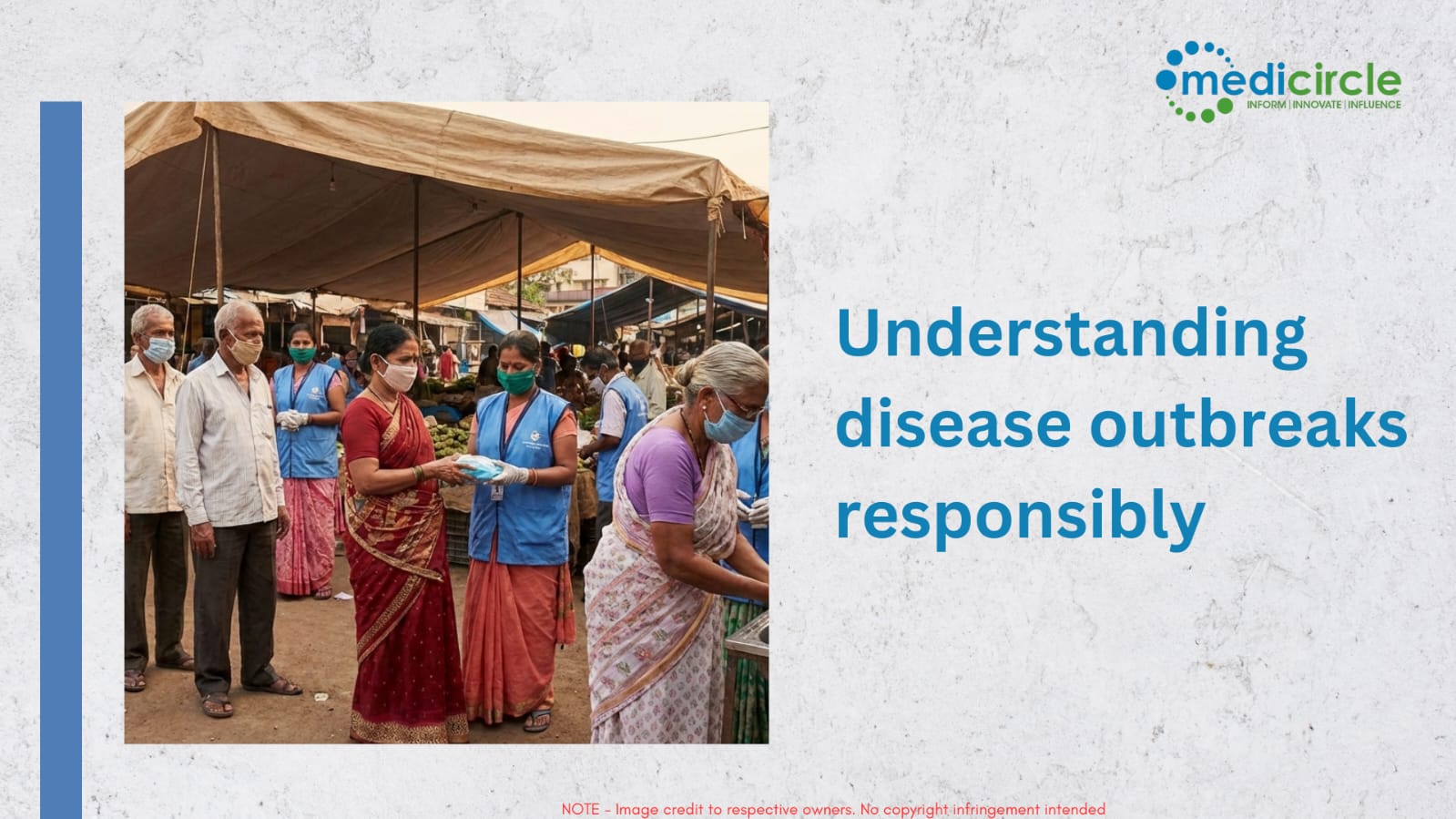
 Understanding disease outbreaks requires clear definitions, trust in surveillance systems, attention to root causes, and responsible individual action. Informed communities prevent panic, support vaccination, and strengthen collective health security.




You must have noticed how often health news grabs headlines these days. One week it is some virus in a neighboring district, the next week it is a sudden spike in cases somewhere else. Words like outbreak, epidemic, and endemic get thrown around casually on news channels and social media. For most people, these terms remain confusing. More importantly, they create worry. When a person hears about a disease spreading, the natural question arises about what to do. Another question follows about where to draw the line between being careful and giving in to panic. These questions matter because the way people respond to health news affects not just their own safety but the community around them.
Breaking down The Words:
Let us start with the basics. When health officials use the word outbreak, they have something specific in mind. The meaning goes beyond simply more people falling sick. An outbreak gets declared when the number of disease cases in a particular area rises above what is normally expected during that time of year. This explains why a single case of a rare disease like diphtheria can be called an outbreak, while twenty cases of common flu in December might just pass as routine activity.
The system responsible for tracking these patterns in India covers extensive ground. Since 2004, the Integrated Disease Surveillance Programme has gathered information from thousands of reporting sites across every district. Hospitals, clinics, and laboratories regularly send in data about suspected cases and confirmed infections. This network functions as an early warning system for the entire country. When something unusual appears, authorities receive notifications without much delay.
Not Every Situation Is Same:
People often wonder why some disease events remain contained while others spread everywhere. The difference comes down to scale and behavior. Consider endemic diseases first. These are conditions that stay present in a population at levels that experts can predict. Dengue in many parts of north India during monsoon season provides a good example. Residents know it arrives every year, hospitals make preparations, and the pattern repeats itself. No one calls it a crisis because the situation follows expectations.
Then comes the epidemic. This term describes a sudden rise in cases beyond what is considered normal, with spread across a wider area. Kerala has dealt with multiple Nipah virus outbreaks in recent years. Each time, the state responded with speed and determination. What deserves attention is how officials used lessons from COVID-19 to handle Nipah more effectively. Quarantine measures, contact tracing, isolation protocols, all borrowed from pandemic experience. This demonstrates how fighting one battle prepares a region for the next challenge.
When an epidemic crosses international boundaries and affects multiple countries, it becomes a pandemic. COVID-19 turned this term into household language, though no one wanted that education delivered in such a harsh manner.
Root Causes Run Deep:
If someone believes disease outbreaks start and end inside hospitals, that person should think again. Most outbreaks trace back to conditions present in the environment and society. Contaminated drinking water remains a major trigger across many parts of India. When monsoon rains flood drainage systems, sewage can mix with the water supply. Within days, diarrheal cases begin appearing at local clinics.
Temperature changes carry significance too. Mosquitoes that transmit dengue and malaria survive better in warmer conditions. Areas that never reported these diseases now record cases because mosquitoes have moved into new territories. Population movement adds another dimension to the problem. More people travelling means diseases travel right along with them. Deforestation pushes wild animals closer to villages, which increases the chances that viruses jump from animals to humans. These are not distant threats that might arrive someday. These are everyday realities that communities face right now.
What India Does Differently?
The country has built a disease tracking system that deserves more attention than it typically receives. What started with polio surveillance in the late nineties has grown into a massive network covering the entire nation. Today, over fifty thousand reporting sites feed information into central databases. Private hospitals and clinics contribute nearly sixty percent of this data, which matters because many Indians first visit private providers when they fall sick.
During COVID-19, this system showed its real value under pressure. The same people trained to investigate polio cases shifted their focus to tracking fever and rash cases. Laboratories originally set up for measles testing started processing coronavirus samples instead. This flexibility did not happen by accident or luck. It came from years of steady investment in basic surveillance infrastructure that could adapt to new threats.
International health agencies now point to India's digital disease tracking as a model that others can learn from and possibly replicate. The government has put significant money into global pandemic funds while building platforms that connect real-time data from village level all the way to national authorities.
Your Role Matters:
Here is something that often gets overlooked in discussions about disease control. The work does not happen only in government offices and laboratories where experts gather. A large part of it happens in neighborhoods, inside homes, and through daily habits that people practice. When an outbreak occurs, individuals face choices about how to respond. Some people panic and forward unverified messages on WhatsApp without checking facts. Some hide symptoms because they fear neighbors will avoid them afterwards. Others choose to cooperate with health workers, share accurate information, and follow basic precautions.
The World Health Organization has repeatedly stated that food safety, personal hygiene, and clean water remain the first line of defense against communicable diseases. These are not complicated medical procedures that require special training. These are simple things within everyone's reach. Washing hands properly with soap. Making sure drinking water stays clean before consumption. Not letting water collect in old tyres or pots where mosquitoes can breed. Getting children vaccinated according to the recommended schedule.
Vaccination deserves special attention in this conversation. India's Universal ImmunizationProgramme covers twelve vaccine-preventable diseases and reaches about twenty-six million children every year. When vaccination coverage drops for any reason, diseases thought to be controlled make unwelcome comebacks. Measles outbreaks happen exactly in those pockets where immunization lags behind targets. The connection remains that clear and direct.
Seeing the Bigger Picture:
The purpose of understanding outbreaks is not to create fear in people's minds. It is to build awareness that serves communities well when trouble arrives at the doorstep. Every outbreak teaches something valuable for the future. The Ebola epidemic in West Africa showed how weak health systems can turn manageable problems into devastating disasters. The Nipah responses in Kerala demonstrated that strong local leadership combined with community trust can stop viruses in their tracks. COVID-19 revealed both strengths and gaps in every country's preparedness, and India was certainly included in that global examination.
For ordinary citizens, the message comes through quite simply. When a person hears about a disease outbreak, the wise response involves pausing before reacting. Ask yourself where the information originated and who verified it. Follow guidance from health officials rather than random forwards circulating on social media. Understand that outbreaks are not punishments from above or conspiracies hatched in secret. They are events that happen when biological, environmental, and human factors align in unfortunate ways that can be studied and addressed.
Building a healthier society means everyone plays their part without waiting for instructions. The doctor working in the clinic contributes through patient care. The scientist in the laboratory contributes through research and testing. The worker keeping drains clean contributes through maintaining hygiene. The mother ensuring her child gets vaccinated contributes through prevention. The citizen who refuses to spread rumors during a health scare contributes through responsibility. Disease outbreaks test not just medical systems but the social responsibility that binds communities together.
As India moves toward stronger health security in the coming years, this collective awareness will matter more than any single policy or programme implemented by authorities. Outbreaks, after all, are not just medical events that concern only doctors and nurses. They are tests of how well people understand, trust, and support each other when faced with the invisible threat of a tiny virus or bacteria that respects no boundaries. Passing that test requires everyone's participation, not just the experts who appear on television screens.





-23-300x250.png)

.jpeg)






.jpg)
.jpg)
.jpg)
.jpg)
.jpg)
.jpg)
.jpg)
.jpg)
.jpg)