Tuesday, October 27, 2026
 Delhi has reached a point where denial is no longer an option. The sources are known. The science is clear. The health impacts are visible. What remains uncertain is the will to act decisively.




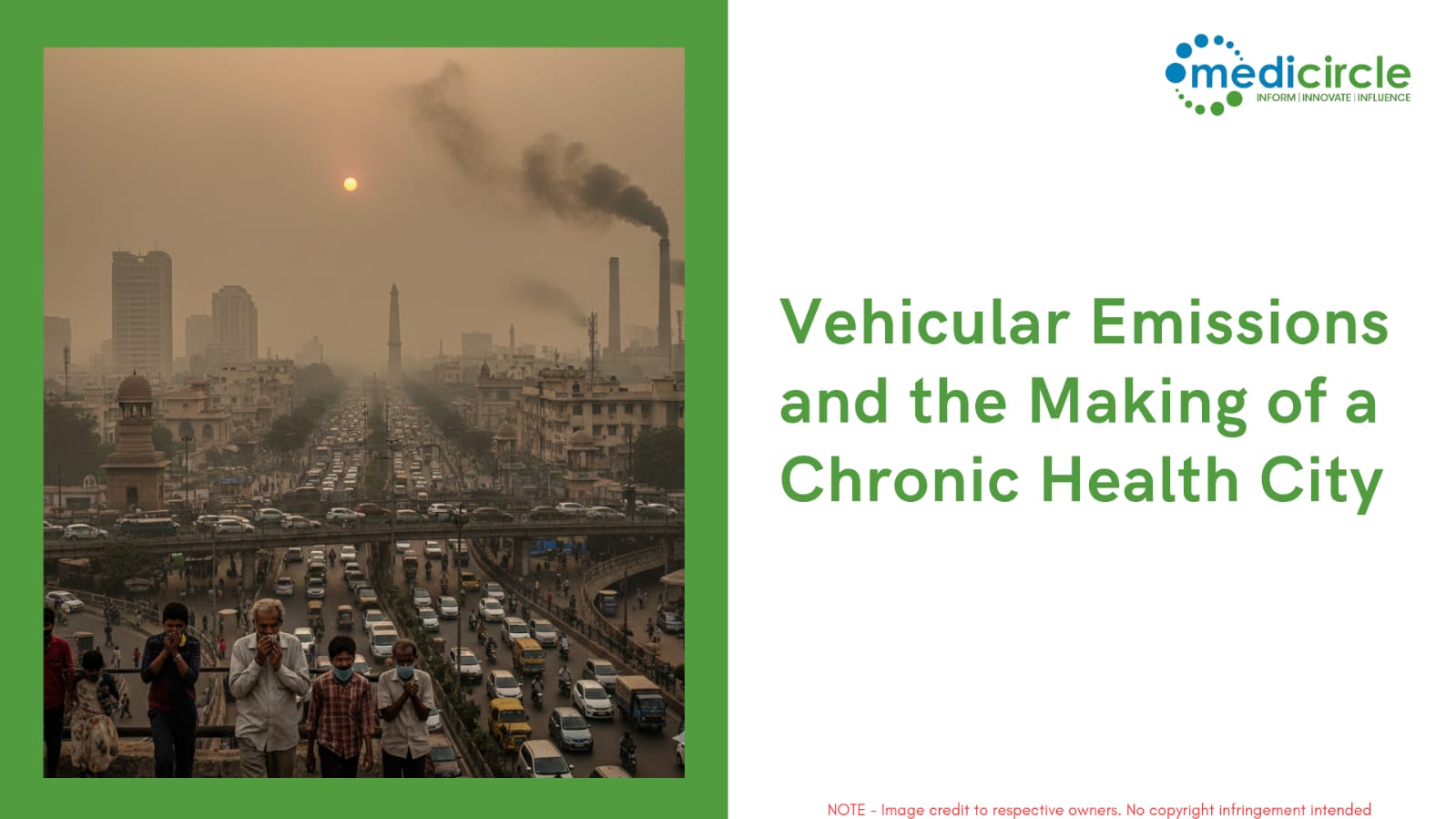
Every winter, Delhi wakes up to the same question wrapped in the same grey air: where is all this poison coming from, and why does it refuse to leave? For years, the answers have shifted depending on the season, the headlines, and the urgency of the moment. Sometimes it is blamed on farmers, sometimes on firecrackers, sometimes on weather patterns that appear conveniently out of human control. Now, a recent submission to the Supreme Court by Commission for Air Quality Management brings the focus back to an uncomfortable truth many city residents live with daily but prefer to overlook. The largest contributor to air pollution in Delhi NCR is not a distant field or an occasional festival. It is the traffic crawling outside our homes, offices, schools, and hospitals.
The Supreme Court had asked the CAQM earlier this month to examine the causes of pollution across the national capital region and make its findings public. What emerged from that exercise is less a revelation and more a confirmation of a long-ignored reality. Vehicular emissions remain the most dominant source of air pollution in Delhi NCR, particularly during the winter months when the city’s air loses its ability to disperse contaminants. Despite policy measures aimed at phasing out older vehicles and encouraging cleaner fuels, the transport sector continues to release large volumes of particulate matter, nitrogen oxides, and sulphur compounds into the atmosphere. These pollutants do not merely float and vanish. They settle deep into lungs, bloodstreams, and daily life.
Delhi’s relationship with vehicles is complicated. The city depends on them, resents them, and yet keeps adding more every year. Roads are choked with a mix of private cars, two-wheelers, buses, trucks, and commercial vehicles, running on petrol, diesel, and compressed natural gas. Diesel vehicles, in particular, remain a significant concern. Even as emission norms have improved on paper, real-world driving conditions tell a different story. Long traffic jams, frequent braking, idling engines, and poor road planning lead to inefficient fuel combustion. The CAQM report points out that vehicles stuck in congestion emit far more pollutants than those running at optimal speeds. In other words, Delhi’s traffic is designed to pollute.
For residents, this translates into a daily, invisible exposure that accumulates every day. Air pollution in Delhi NCR is not just a seasonal inconvenience or an aesthetic problem of smog-filled skylines. It is a public health crisis unfolding slowly, affecting respiratory health, cardiovascular function, pregnancy outcomes, and child development. Hospitals across the city see a predictable spike in asthma attacks, chronic obstructive pulmonary disease flare-ups, and heart-related emergencies every winter. Doctors have long warned that prolonged exposure to fine particulate matter increases the risk of stroke, lung cancer, and premature death. Yet, the engines keep running.
Vehicular pollution, however, does not act alone. The CAQM report places biomass burning as the second major contributor to winter pollution in Delhi NCR. This includes the open burning of wood, cow dung, agricultural waste, dry leaves, and even municipal solid waste. In many parts of the region, these practices continue due to lack of alternatives, weak enforcement, or sheer necessity. The smoke released from burning biomass is rich in fine particles and toxic gases that easily travel long distances. When combined with urban emissions, the result is a toxic cocktail that the city struggles to breathe through.
Stubble burning in neighbouring states such as Punjab, Haryana, and Uttar Pradesh has long been a flashpoint in the pollution debate. During peak harvest season, the CAQM acknowledges that crop residue burning can contribute up to 40 percent of pollution levels in the national capital region. Satellite images of fire counts often dominate news cycles, turning farmers into easy targets for public anger. While the impact of stubble burning is undeniable, experts caution against viewing it as the sole or even primary villain. It is a seasonal amplifier of an already polluted atmosphere, not the root cause of Delhi’s year-round air quality crisis.
Dust, an often underestimated factor, also plays a persistent role. Road dust kicked up by vehicles, soil erosion, construction and demolition activity, and poorly maintained infrastructure contributes significantly to particulate pollution. These particles may seem harmless compared to smoke, but they linger in the air and penetrate deep into the lungs. In a city that is constantly rebuilding itself, construction dust has become a permanent feature of the urban environment. Combined with vehicular movement, it creates a steady baseline of pollution that worsens dramatically in winter.
What makes Delhi’s winter pollution particularly severe is the role of secondary pollutants. Unlike primary pollutants, which are emitted directly from sources like vehicles or fires, secondary pollutants are formed in the atmosphere through chemical reactions. Gases such as sulphur dioxide, nitrogen oxides, ammonia, and volatile organic compounds interact under specific conditions of temperature, moisture, and sunlight to form fine particles like sulphates and nitrates. These secondary particulate matters are just as harmful, if not more so, than primary emissions.
During winter, the problem intensifies due to atmospheric changes. The mixing layer of the atmosphere, which helps disperse pollutants, drops significantly. Cold air near the surface traps warmer air above it, creating a lid that prevents pollutants from rising and dispersing. Low wind speeds mean there is little horizontal movement to carry contaminants away. As a result, pollution accumulates over Delhi NCR like a slow-moving fog that refuses to lift. This is why even routine activities suddenly become dangerous during peak winter months.
The CAQM report makes it clear that the sources of pollution are well known and scientifically established. What it does not do is offer a roadmap for immediate action. The document outlines causes, percentages, and contributing factors, but stops short of recommending concrete steps to address them. This absence is striking, especially given the urgency of the crisis and the repeated interventions by the judiciary. Knowing the problem without acting on it risks turning data into an exercise in futility.
There is, however, a forward-looking element in the report. The CAQM has announced that four institutes, led by the Automotive Research Association of India and The Energy and Resources Institute, with partners from IIT Delhi and IITM Pune, will work on developing a new emissions inventory for Delhi NCR. This study will use 2026 as the base year and aims to provide more accurate, updated data on pollution sources. Such inventories are crucial for evidence-based policymaking, as outdated data can lead to misplaced priorities and ineffective interventions.
Yet, while future studies are important, Delhi’s lungs are choking in the present. Air pollution does not wait for reports to be published or consultations to conclude. The health impacts are immediate and cumulative. Children growing up in polluted neighbourhoods show reduced lung capacity. Elderly residents face higher risks of hospitalisation. Pregnant women exposed to high pollution levels are more likely to experience complications. The economic cost of pollution-related illness, lost productivity, and healthcare expenditure runs into thousands of crores each year, silently draining the system.
Delhi’s air pollution crisis represents a failure of preventive medicine. Doctors can treat symptoms, prescribe inhalers, and manage complications, but they cannot write prescriptions for clean air. That responsibility lies with policymakers, urban planners, transport authorities, and, ultimately, citizens. Reducing vehicular emissions requires more than banning old cars. It demands serious investment in public transport, better traffic management, cleaner fuel transitions, and urban designs that prioritise people over vehicles.
Public participation, which the CAQM has invited through suggestions on its report, offers a small but meaningful opportunity. Citizens understand their neighbourhoods, commute patterns, and local challenges better than any centralised authority. Their inputs can highlight ground realities that data alone may miss. However, public consultation must be followed by transparent action. Otherwise, it risks becoming another procedural checkbox in a long list of missed chances.
Delhi NCR’s pollution problem did not appear overnight, and it will not disappear with a single policy announcement. It is the result of decades of unchecked urban growth, car-centric planning, weak enforcement, and fragmented governance across states. What the latest CAQM report does is strip away the ambiguity. It places vehicular emissions at the centre of the conversation, supported by evidence rather than opinion. The question now is whether the city is willing to confront this truth honestly.
Air pollution is often discussed in terms of numbers: AQI levels, micrograms per cubic metre, emission shares. Behind these numbers are real people struggling to breathe, families adjusting their lives around smog alerts, and doctors watching preventable diseases claim more lives each year. When a city’s air becomes a health hazard, it reflects choices made collectively and repeatedly.
Delhi has reached a point where denial is no longer an option. The sources are known. The science is clear. The health impacts are visible. What remains uncertain is the will to act decisively. Until that happens, every winter will bring the same headlines, the same court orders, and the same grey skies. And the city will continue to ask why it cannot breathe, even as the answer drives past in endless traffic jams




-23-300x250.png)

.jpeg)






.jpg)
.jpg)
.jpg)
.jpg)
.jpg)
.jpg)
.jpg)
.jpg)
.jpg)