Tuesday, October 06, 2026
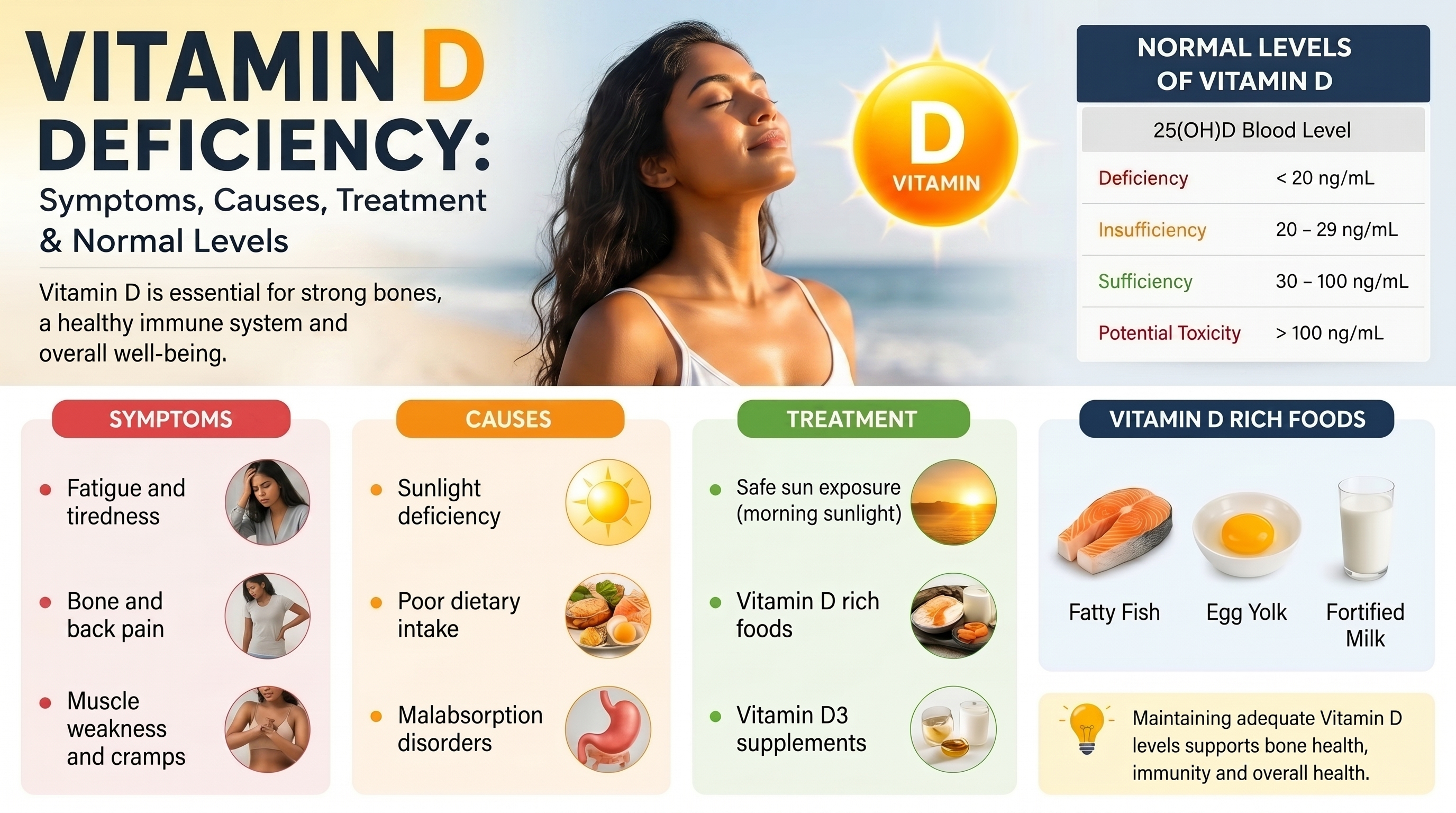
 Vitamin D deficiency is increasingly common and often linked to fatigue, low immunity, and bone discomfort. Understanding low vitamin D symptoms helps identify the issue early and manage it effectively.




Vitamin D and Its Role in the Body
Vitamin D is often called the “sunshine vitamin,” but its role goes far beyond sunlight exposure. It is essential for calcium absorption, bone strength, immune support, and even muscle function.
When vitamin d levels drop below the required range, the body begins to show subtle signs that can gradually affect daily health. Many people with low vitamin d do not realize it initially because symptoms are often mild and develop slowly.
In real life, someone working indoors for long hours may experience fatigue, muscle discomfort, or low mood without connecting it to a nutritional deficiency. This is how vitamin d deficiency symptoms often go unnoticed until they become more pronounced.
What Causes Vitamin D Deficiency?
Limited Sun Exposure and Lifestyle Patterns
The most common reason for vitamin d deficiency causes is insufficient sunlight exposure. Modern lifestyles, especially indoor work environments, reduce natural synthesis of vitamin D.
For example, individuals who spend most of their day indoors or avoid sunlight due to heat or skin concerns often develop low vitamin d levels over time.
Dietary Gaps and Absorption Issues
Vitamin D is present in limited foods, making it harder to meet daily requirements through diet alone. Additionally, certain digestive conditions can affect absorption.
Other contributing factors include:
- Lack of vitamin D-rich foods
- Increased need during pregnancy or aging
- Reduced absorption due to gut-related conditions
These factors collectively contribute to lack of vitamin d in the body.
Recognizing Low Vitamin D Symptoms
Early Signs That Are Easy to Miss
The challenge with low vitamin d symptoms is that they are often subtle and mistaken for general fatigue or stress.
Common early signs include:
- Persistent tiredness or low energy
- Mild muscle aches
- Reduced motivation
For example, a person may feel unusually tired despite adequate sleep, assuming it is due to workload rather than vitamin d deficiency tiredness.
Advanced and Severe Symptoms
As deficiency progresses, symptoms become more noticeable and may affect daily functioning.
- Bone pain or discomfort, especially in the lower back
- Muscle weakness or cramps
- Frequent illness due to weakened immunity
In severe cases, severe vitamin d deficiency symptoms may lead to conditions like bone softening or increased fracture risk.
Effects of Vitamin D Deficiency on Overall Health
Impact on Bones and Muscles
Vitamin D plays a key role in calcium absorption. When levels are low, calcium utilization is affected, leading to weakened bones.
This explains why calcium vitamin d deficiency symptoms often appear together, including bone pain and muscle weakness.
For example, individuals with long-term deficiency may experience discomfort while walking or climbing stairs.
Influence on Energy and Mood
The effects of vitamin d deficiency are not limited to physical health. It also impacts mood and mental well-being.
People with fatigue and vitamin d deficiency may feel:
- Low motivation
- Reduced concentration
- General tiredness throughout the day
This overlap makes it difficult to separate physical fatigue from mental fatigue.
Vitamin D Levels: What Is Normal?
Understanding Blood Levels
Vitamin D status is measured through a blood test known as 25 hydroxy vitamin d. This test reflects the amount of vitamin D stored in the body.
Typical interpretation includes:
- Deficient: very low levels
- Insufficient: below optimal
- Sufficient: within healthy range
The normal vitamin d level varies slightly by guidelines, but maintaining adequate levels is essential for long-term health.
Why Monitoring Matters
Regular testing helps identify low vitamin d levels early, especially in individuals with risk factors like limited sun exposure or dietary restrictions.
Treatment for Vitamin D Deficiency
Supplementation and Medical Guidance
The most effective vitamin d deficiency treatment often includes supplements. The dosage depends on the severity of deficiency.
For example, someone with very low levels may require higher initial doses followed by maintenance supplementation.
Common approaches include:
- Prescribed vitamin d deficiency medication
- Daily or weekly vitamin d deficiency supplement
- Monitoring levels over time
Dietary and Lifestyle Adjustments
In addition to supplements, lifestyle changes play a key role in management of vitamin d deficiency.
- Moderate sunlight exposure supports natural production
- Including foods like fortified dairy or fish helps improve intake
- Consistency in routine ensures better results
This combined approach helps restore and maintain healthy levels.
Vitamin D Deficiency and Hair, Skin, and Muscles
Connection with Hair Health
One of the lesser-known effects is vitamin d deficiency hair loss. While not the only cause, low vitamin D can affect hair follicle health.
People may notice:
- Increased hair shedding
- Slower hair growth
In many cases, vitamin d deficiency and hair loss improve once levels are corrected.
Skin and Muscle Symptoms
Vitamin d deficiency and skin issues may include dryness or reduced healing capacity. Muscle-related symptoms such as aches and weakness are also common.
For example, someone experiencing unexplained muscle pain may actually have muscle pain vitamin d deficiency rather than a physical injury.
Practical Self-Care and Prevention
Simple Daily Practices
Preventing low vitamin d is often easier than treating severe deficiency.
- Spend short periods in sunlight regularly
- Maintain a balanced diet with vitamin D sources
- Follow prescribed supplements when needed
When to Seek Medical Advice
If symptoms like fatigue, bone pain, or persistent tiredness continue, testing is important. Early detection helps avoid complications related to vitamin d deficiency treatment dose and prolonged deficiency.
Related Conditions and Overlaps
Vitamin D and B12 Deficiency Together
It is common to see vitamin b12 and vitamin d deficiency together, especially in individuals with dietary limitations.
This combination can amplify symptoms such as fatigue, weakness, and reduced concentration.
Bone Disorders Linked to Deficiency
Conditions like rickets in children and osteomalacia in adults are classic examples of disease caused by lack of vitamin d.
While less common today, they highlight the importance of maintaining adequate levels.
Conclusion: A Balanced Approach to Vitamin D Health
Vitamin D deficiency is not always obvious, but its impact can affect multiple aspects of health—from bones and muscles to energy and mood. Recognizing low vitamin d symptoms early allows for timely intervention and better outcomes.
With a combination of awareness, testing, and consistent lifestyle habits, maintaining healthy vitamin d levels becomes a manageable and sustainable part of overall well-being.
Here are your more elaborated, high-authority FAQs with deeper explanations, real-life clarity, and stronger SEO alignment:
FAQs
- What are the most common vitamin D deficiency symptoms?
The most common vitamin d deficiency symptoms include persistent fatigue, muscle weakness, bone discomfort, and low energy levels. These symptoms often develop gradually, which makes them easy to overlook.
In real-life situations, someone may feel tired even after getting proper sleep or experience body aches without any physical strain. Over time, these subtle signs can progress into more noticeable issues like difficulty performing daily activities or frequent illnesses. Recognizing these early signals of low vitamin d symptoms helps prevent long-term complications.
- What causes low vitamin D levels?
There are multiple vitamin d deficiency causes, but the most common is limited exposure to sunlight. Since vitamin D is naturally produced when skin is exposed to sunlight, indoor lifestyles significantly reduce this process.
Other causes include poor dietary intake, digestive conditions that affect absorption, aging, and increased nutritional demands during pregnancy. For example, someone working long hours indoors or avoiding sunlight may gradually develop low vitamin d levels without realizing it. Often, it’s a combination of these factors rather than a single cause.
- What is the normal vitamin D level?
The normal vitamin d level is typically assessed through a blood test called 25 hydroxy vitamin d. This test measures the stored vitamin D in the body and helps determine whether levels are deficient, insufficient, or sufficient.
While exact ranges may vary slightly, maintaining levels within the sufficient range is important for bone health, immunity, and overall well-being. Regular monitoring of vitamin d levels is especially useful for individuals at higher risk, such as those with limited sun exposure or dietary restrictions.
- Can vitamin D deficiency cause hair loss?
Yes, vitamin d deficiency hair loss is a possible effect, although it is not the only cause of hair fall. Vitamin D plays a role in supporting hair follicle health and growth cycles.
In practical terms, someone may notice increased hair shedding or slower regrowth without any obvious reason. When vitamin d deficiency and hair loss are linked, correcting the deficiency through proper treatment often helps improve hair health over time.
- How is vitamin D deficiency treated?
Vitamin d deficiency treatment usually involves a combination of supplements, dietary improvements, and lifestyle adjustments. The exact approach depends on how low the levels are.
For example, a person with mild deficiency may benefit from regular sunlight exposure and dietary changes, while someone with severe deficiency may require prescribed vitamin d deficiency medication or higher-dose supplements. Monitoring progress through blood tests ensures that vitamin d levels return to and stay within a healthy range.
- How long does it take to recover from vitamin D deficiency?
Recovery from low vitamin d depends on the severity of the deficiency and how consistently treatment is followed. Mild deficiencies may show improvement within a few weeks, while more severe cases can take a few months.
For instance, someone starting a vitamin d deficiency supplement may begin to feel better energy levels within weeks, but full restoration of levels may take longer. Consistency in supplementation and lifestyle habits is key to sustained improvement.
- Can low vitamin D cause fatigue?
Yes, there is a strong connection between fatigue and vitamin d deficiency. Low vitamin D levels can affect muscle function, energy production, and even mood, leading to persistent tiredness.
In real life, this may feel like waking up tired despite adequate sleep or lacking the energy to complete simple daily tasks. Unlike regular fatigue, this type of tiredness often does not improve with rest alone and may indicate underlying vitamin d deficiency symptoms.
- Should I take vitamin D supplements without testing?
While supplements are widely available, it is generally better to check vitamin d levels before starting them. This helps determine the correct dosage and avoids unnecessary intake.
For example, taking high doses without knowing your levels may not address the issue properly or could lead to imbalance over time. Testing ensures that vitamin d deficiency treatment is targeted and effective rather than guesswork.
- Can vitamin D deficiency affect bones?
Yes, one of the most significant effects of vitamin d deficiency is its impact on bone health. Vitamin D helps the body absorb calcium, which is essential for strong bones.
When levels are low, bones may become weak or soft over time, leading to discomfort or increased fracture risk. In real-life scenarios, people may notice back pain, joint discomfort, or difficulty in physical movement—often linked to calcium vitamin d deficiency symptoms.
- Is sunlight enough to maintain vitamin D levels?
Sunlight is one of the most natural ways to maintain vitamin d levels, but it may not always be sufficient. Factors such as limited outdoor time, skin coverage, pollution, and geographical location can reduce vitamin D synthesis.
For example, someone living in an urban environment with long indoor work hours may not get enough sunlight exposure. In such cases, combining sunlight with diet and vitamin d deficiency supplement support becomes necessary to maintain healthy levels.






.jpeg)
.jpg)
.jpg)
.jpg)
.jpg)
.jpg)
.jpg)


.jpg)
.jpg)
.jpg)
.jpg)
.jpg)
.jpg)