 Thursday, October 08, 2026
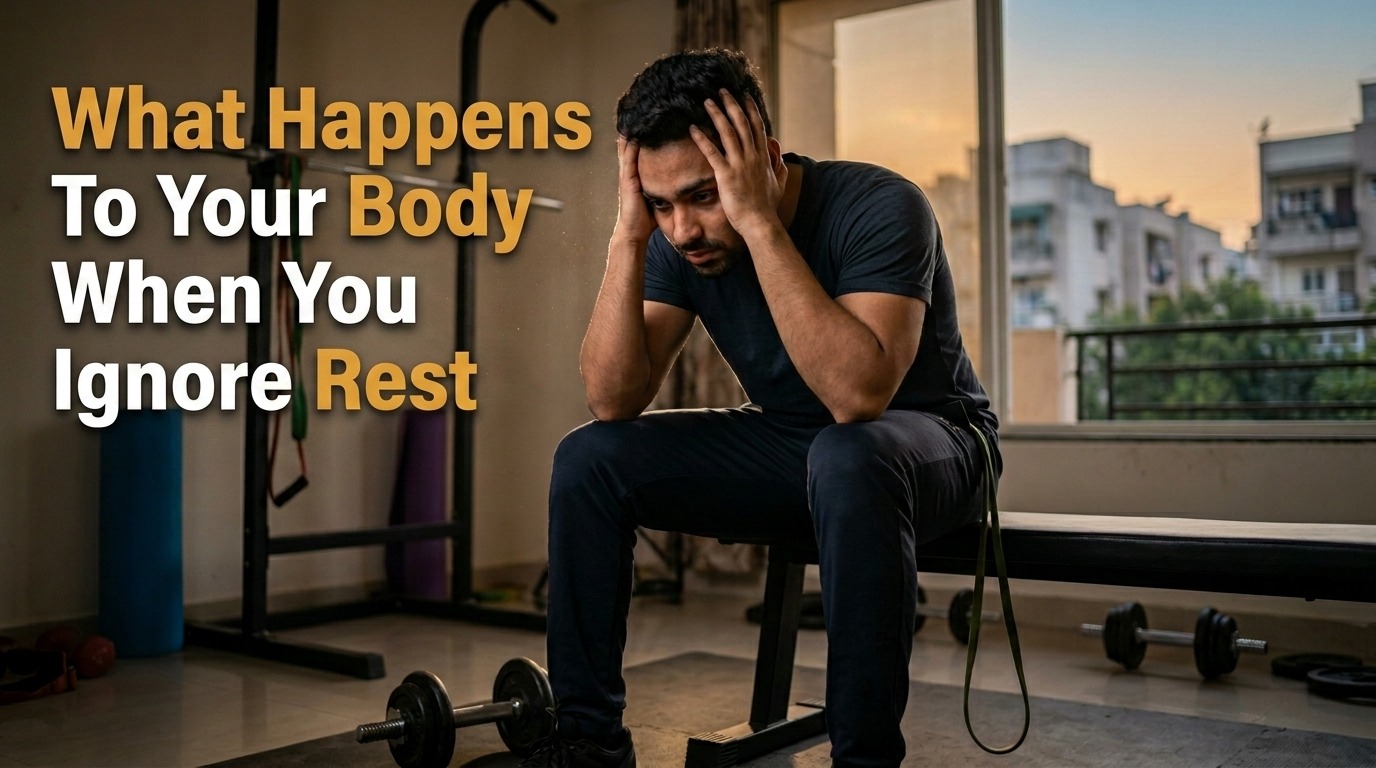
 Ignoring rest in a fitness routine disrupts the body’s natural recovery process, leading to accumulated fatigue and reduced performance over time.
Without adequate recovery, muscles fail to rebuild effectively, while hormonal imbalances and nervous system strain begin to impact energy, focus, and overall well-being.
Consistent lack of rest can ultimately result in burnout, where progress stalls and both physical and mental health decline.
Ignoring rest in a fitness routine disrupts the body’s natural recovery process, leading to accumulated fatigue and reduced performance over time.
Without adequate recovery, muscles fail to rebuild effectively, while hormonal imbalances and nervous system strain begin to impact energy, focus, and overall well-being.
Consistent lack of rest can ultimately result in burnout, where progress stalls and both physical and mental health decline.





It starts with good intention. You feel motivated, consistent, and disciplined. Skipping a break feels like progress. Working out every day seems like the fastest way to get results. But over time, something shifts. Energy dips, strength plateaus, and your body begins to resist instead of respond.
Ignoring rest does not slow you down immediately. It builds quietly, showing up in ways that are easy to overlook until they begin to affect how you feel every day.
Why Rest Is Not Optional In A Fitness Routine
There is a common belief that more effort always leads to better results. In reality, the body does not grow during workouts. It grows during recovery. This is where rest days become essential, not optional.
When you train, you create small amounts of stress in your muscles. Recovery allows your body to repair and rebuild stronger. Without enough recovery time, that process remains incomplete. Over time, this leads to fatigue rather than progress.
Questions like how many days should I workout in a week often focus on effort, but the real balance lies in effort and recovery together. Without that balance, even the most consistent routine can start working against you.
What Happens Inside Your Body Without Rest
The effects of skipping rest are not always visible at first. They develop gradually, affecting multiple systems in your body at the same time.
Your muscles experience continuous strain without proper muscle recovery time after workout. This leads to soreness that lingers longer and strength that does not improve as expected.
Your nervous system also begins to feel the pressure. Constant activity without recovery can lead to mental fatigue, reduced focus, and slower reaction times.
Hormonal balance is another area that gets affected. The impact of rest on hormones is significant. Without adequate rest, stress hormones like cortisol increase, while recovery-related hormones decrease. This imbalance affects energy, sleep, and even mood.
Over time, these changes show up as physical burnout symptoms, where your body feels tired even when you are not actively exercising.
The Signs Your Body Is Asking For Rest
The body rarely fails without warning. It signals discomfort in subtle ways before reaching a breaking point. Recognizing these signs early can help prevent long-term issues.
Some common signs of overtraining in the body include:
- Constant fatigue that does not improve with sleep
- Decreased performance despite regular workouts
- Persistent muscle soreness
- Irritability or lack of motivation
- Sleep disturbances
- Increased risk of minor injuries
These signs often get ignored because they do not feel urgent. But they indicate that the body is not getting enough recovery time between workouts.
When Activity Becomes Counterproductive
Staying active is important, but there is a difference between movement and overload. Many people worry about what happens if your body is not active, but the opposite problem is just as real.
When the body is constantly pushed without rest, it does not get the chance to reset. Instead of improving fitness levels, it begins to slow down progress. Strength gains become limited, endurance drops, and workouts start to feel harder instead of easier.
Even a simple 10 minute fitness routine, when done daily without recovery, can contribute to fatigue if intensity is not managed. The issue is not the duration of activity, but the absence of rest.
Why You Still Need Rest Even Without Soreness
A common misconception is that rest is only needed when the body feels sore. This leads to the question, should i take a rest day even if im not sore.
The answer lies in understanding how recovery works. Not all fatigue is physical. The nervous system and internal processes also require rest. You may feel fine on the surface, but your body could still be under strain.
Skipping rest based on how you feel can lead to delayed fatigue. This is where the effects of no rest days become visible after a few weeks, not immediately.
How Rest Supports Muscle Growth And Performance
Rest is not inactivity. It is part of the process that drives improvement. The sleep and muscle repair connection plays a key role here. During rest, especially deep sleep, the body releases hormones that support tissue repair and growth.
This is also where how rest improves muscle growth becomes clear. Without recovery, muscles do not rebuild effectively, which limits progress even with consistent training.
In structured routines like a whole body workout at home, rest becomes even more important because multiple muscle groups are engaged in a single session. Without proper recovery, overall fatigue builds faster.
Finding The Right Balance Between Activity And Rest
There is no single answer to how many days should I workout in a week, but most balanced routines include both activity and rest.
A practical approach often includes:
- 3 to 5 workout days depending on intensity
- 1 to 2 rest days for recovery
- Active recovery days with light movement such as walking or stretching
This balance allows the body to stay active without crossing into overtraining. It also helps maintain consistency without burnout.
Case Studies: When Rest Changes The Outcome
Case Study 1: When consistency turns into fatigueRohit followed a strict routine with daily workouts, believing that missing a day would slow his progress. Initially, he saw improvements, but within weeks, his energy dropped. His workouts felt heavier, and recovery became slower.
He did not experience sharp pain, just constant fatigue. It was only after introducing rest days into his routine that his energy levels stabilized and his performance began to improve again.
Case Study 2: Misunderstanding soreness and recoveryNeha avoided rest because she rarely felt sore. She assumed her body was handling the workload well. However, she began experiencing poor sleep and low motivation.
Her routine lacked recovery time between workouts, even though she felt physically fine. After adjusting her schedule and adding rest, her sleep improved, and her workouts felt more effective.
Case Study 3: Balancing home workouts with recoveryAman followed a daily whole body workout at home, combining strength and cardio. Over time, he noticed that his progress had stalled. He was active, but not improving.
By reducing frequency and allowing proper muscle recovery time after workout, his strength and endurance gradually returned.
FAQs
1. What happens if you skip rest days regularly?Skipping rest days can lead to fatigue, slower recovery, and reduced performance over time.
2. How many days should I workout in a week for best results?How many days should I workout in a week depends on intensity, but 3 to 5 days with proper rest is generally effective.
3. Should I take a rest day even if I am not sore?Yes, should i take a rest day even if im not sore is important because recovery is not always visible through soreness.
4. What are signs of overtraining in the body?Common signs of overtraining in the body include fatigue, poor sleep, and decreased performance.
5. Can short workouts still require rest days?Even a 10 minute fitness routine can require rest if done consistently without recovery.
6. What happens if your body is not active at all?While what happens if your body is not active includes reduced fitness, overactivity without rest can be equally harmful.
7. How does rest improve muscle growth?How rest improves muscle growth is linked to recovery and repair processes that happen during rest and sleep.
8. What is the role of sleep in recovery?The sleep and muscle repair connection supports tissue recovery and hormone balance.
9. Are home workouts enough for fitness?A whole body workout at home can be effective when balanced with proper recovery.
10. How do I know if I need more rest?If you notice fatigue or reduced performance, it may indicate insufficient recovery time between workouts.
Conclusion
Ignoring rest may feel like dedication, but over time it limits progress rather than improving it. The body needs time to recover, rebuild, and adapt. By including rest days and understanding the balance between effort and recovery, you allow your routine to work with your body instead of against it.






.jpeg)










.jpg)
.jpg)
.jpg)
.jpg)
.jpg)
.jpg)


.jpg)