 Tuesday, October 27, 2026
 As India continues to modernise its healthcare system, such decisions will shape public trust and international credibility.




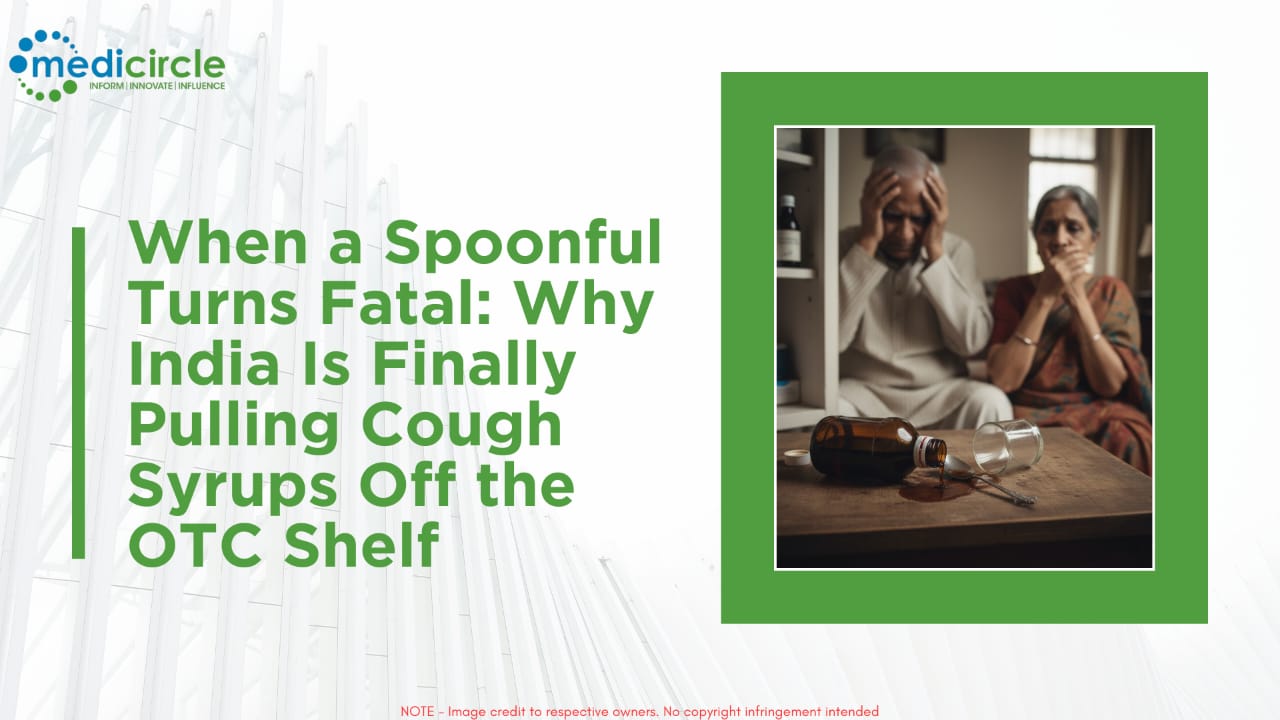
For decades, cough syrups have sat quietly in Indian homes, bought casually from neighbourhood chemists, shared among family members, and often taken without a second thought. They were seen as gentle remedies, trusted by parents and elders, and treated almost like household essentials. That sense of comfort is now being challenged. A series of tragic incidents involving children, rising concerns around quality and misuse, and renewed regulatory scrutiny have pushed the Union Health Ministry to take a decisive step that could fundamentally change how syrup formulations are sold and consumed in India.
In a draft notification issued late December, the Ministry signalled its intention to remove syrups from the list of drugs exempted under Schedule K of the Drugs Rules, 1945. This move would effectively end their over-the-counter status and place them firmly under prescription control. For a country where cough syrups are among the most commonly used medicines, this is not a routine regulatory tweak. It is a statement, a warning, and perhaps a long-overdue correction.
The trigger for this shift is deeply rooted in loss and accountability. In recent months, at least 24 children in Madhya Pradesh lost their lives after consuming a contaminated cough syrup that was later found to be adulterated with diethylene glycol. Another child in Rajasthan reportedly died after consuming an unprescribed formulation containing dextromethorphan. These were not isolated laboratory errors or obscure manufacturing lapses. They were human tragedies that exposed gaps in oversight, awareness, and access.
Within regulatory circles, cough syrups have long been viewed as a grey area. Unlike tablets or injections, syrups are often perceived as milder, especially when marketed for cold and cough relief. Many formulations, however, contain potent active ingredients, sedatives, or opioids that can be dangerous if misused, overdosed, or given to children without medical supervision. Several experts have consistently pointed out that many syrups are not designed for paediatric use, yet are frequently administered to children by caregivers who assume they are safe.
The Union Health Ministry’s draft notification proposes omitting “syrup” as a class of drugs under Schedule K of the Drugs Rules, 1945. Schedule K currently allows certain medicines to be exempt from the stricter provisions of manufacturing and sale under the Drugs and Cosmetics Act. These medicines can be sold over the counter and, in some cases, even dispensed by non-pharmacists. Antiseptics, antacids, and contraceptives fall under this category. Cough syrups, until now, have enjoyed similar treatment.
This exemption is now under serious question. Senior drug regulators have acknowledged that syrup formulations have been under scrutiny for some time, and the recent child deaths acted as a catalyst rather than a surprise. The proposal aligns with recommendations made by the Drugs Consultative Committee, an advisory body under the Central Drugs Standard Control Organisation, which deliberated on the issue during its 67th meeting. The committee was briefed on recent contamination cases and concluded that exemptions granted to cough syrups under Entry 13 of Schedule K should be withdrawn.
The notification is currently open for public and stakeholder comments for 30 days which is a standard process in regulatory reform. Yet the direction is clear. If implemented, syrups would no longer be freely available without a doctor’s prescription. Chemists would be legally bound to dispense them only against valid medical advice. For patients and families, this would mean an extra step, perhaps an extra visit to a clinic, but also an added layer of safety.
The decision arrives against the backdrop of India’s broader struggle with medicine quality and antibiotic misuse. Public trust in drug safety has been shaken before, especially after international incidents where Indian-made cough syrups were linked to child deaths in countries such as Uzbekistan. Those episodes drew global attention to manufacturing practices, supply chain integrity, and regulatory enforcement. While investigations and corrective actions followed, the reputational damage lingered. Domestically, the recent incidents have made it harder to ignore the risks posed by unregulated access to liquid formulations.
Cough syrups present unique challenges. Their liquid form makes them easier to adulterate. Ingredients such as diethylene glycol, sometimes used illegally as a cheaper substitute for pharmaceutical-grade solvents, can have fatal consequences, particularly in children. The taste and ease of consumption also increase the risk of accidental overdose. In some cases, syrups containing codeine or dextromethorphan have been misused for recreational purposes, especially among adolescents and young adults.
Health experts argue that removing syrups from the OTC list is a logical and necessary step. Prescription control would discourage casual use, reduce stockpiling at home, and ensure that a qualified medical professional evaluates symptoms before recommending treatment. It could also curb misuse and abuse, as access would be monitored and documented. Regulators believe this change will make it significantly harder for contaminated or substandard products to circulate unchecked.
The move reflects a shift from convenience-driven access to safety-driven regulation. India has often walked a tightrope between accessibility and control, especially in healthcare. Easy access to medicines has been seen as a way to compensate for gaps in healthcare infrastructure. However, the cost of that convenience becomes painfully evident when it leads to preventable deaths.
For the pharmaceutical industry, this development is both a challenge and an opportunity. Manufacturers will face stricter scrutiny, higher compliance costs, and possibly reduced sales volumes for syrup-based products. At the same time, it pushes the industry towards better quality control, transparent sourcing, and responsible marketing. Companies that invest in compliance and patient safety may find greater trust and long-term sustainability.
Pharmacists and retailers will also need to adapt. Over-the-counter sales of cough syrups contribute to daily revenue for many small pharmacies. Prescription-only status may initially affect footfall and sales. Yet it also reinforces the pharmacist’s role as a healthcare professional rather than a mere seller of medicines. Clear rules reduce ambiguity and legal risk for retailers.
For parents, the change sends a strong message. Treating a child’s cough is not a matter of picking up a bottle from the shelf. It requires understanding the cause, the appropriate medicine, and the correct dosage. The deaths that prompted this policy discussion underline how devastating the consequences of assumption and self-medication can be.
Critics may argue that the move could inconvenience patients, especially in rural or underserved areas where access to doctors is limited. This concern is not without merit. Any regulatory reform must be accompanied by parallel efforts to strengthen primary healthcare, improve doctor availability, and expand telemedicine services. Without these supports, prescription requirements could unintentionally delay treatment. Policymakers will need to balance enforcement with accessibility.
Yet the broader signal is hard to miss. India is acknowledging that certain medicines, long treated as harmless, demand greater respect and caution. The debate around cough syrups is part of a larger conversation about rational drug use, patient education, and regulatory responsibility. It aligns with recent public health messaging that warns against self-medication and stresses the importance of professional guidance.
The draft notification may still evolve based on stakeholder feedback, but the intent is unmistakable. By reconsidering the OTC status of syrups, the Union Health Ministry is drawing a line between convenience and caution. It is saying that when it comes to medicines, especially those consumed by children, assumptions can be deadly and regulation is not a burden but a safeguard.
As India continues to modernise its healthcare system, such decisions will shape public trust and international credibility. The humble cough syrup, once taken lightly, has become a symbol of why vigilance matters. In the end, this policy shift is less about restricting access and more about restoring faith in medicines, protecting the most vulnerable, and reminding society that safety must always come before habit.




-23-300x250.png)

.jpeg)







.jpg)
.jpg)
.jpg)
.jpg)
.jpg)
.jpg)
.jpg)
.jpg)
.jpg)

