Tuesday, October 27, 2026
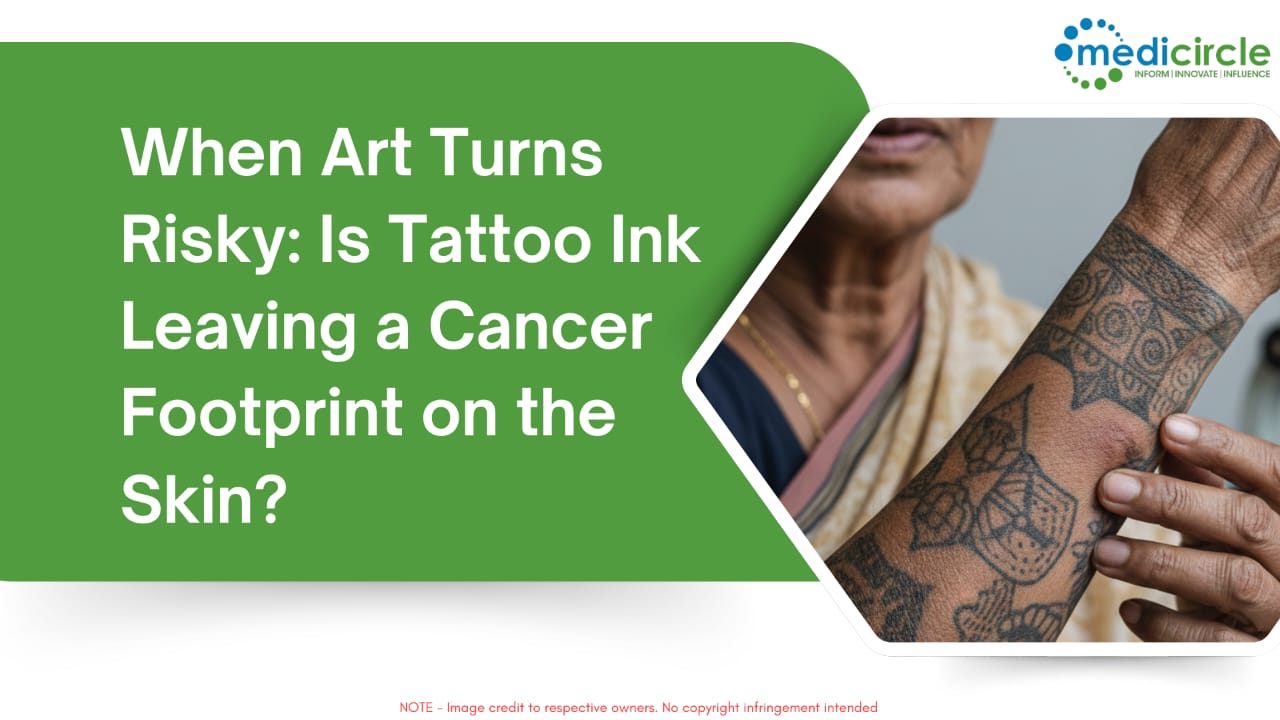
 The findings raise questions about ink safety standards, labelling, and long-term surveillance. As tattoos become lifelong companions for millions, their biological footprint deserves closer scrutiny.




Tattoos have long crossed the boundary from rebellion to routine. What was once considered daring is now deeply woven into personal identity, fashion, culture, and even medicine. From delicate symbols hidden behind the ear to bold sleeves worn with pride, body art has become part of everyday life for millions. Yet as tattoos settle comfortably into the mainstream, a difficult and unsettling question is beginning to surface in public health conversations: could ink on the skin be altering the body’s long-term relationship with disease, especially skin cancer?
A recent scientific investigation by Christel Nielsen, Associate Professor, Epidemiology, Lund University has added fuel to this debate by pointing towards a possible link between tattoos and melanoma, the most dangerous form of skin cancer. The findings do not claim that tattoos cause cancer. They do something subtler, and perhaps more important. They raise concern, demand attention, and challenge long-held assumptions about the harmlessness of permanent ink.
Melanoma is often associated with ultraviolet exposure from sunlight or tanning beds. It develops from melanocytes, the pigment-producing cells in the skin, and while it is less common than other skin cancers, it is far more aggressive. Early detection saves lives. Delayed diagnosis can be fatal. Squamous cell carcinoma, another skin cancer linked to sun damage, is generally slower growing and far less deadly. Both share UV exposure as a major risk factor, yet they behave very differently in the body.
The study in question observed something striking. Individuals with tattoos appeared to have a significantly higher chance of developing melanoma compared to those without tattoos. At the same time, there was no similar rise in squamous cell carcinoma. This contrast alone makes the findings hard to dismiss. If UV exposure were the only explanation, both cancers should show a similar pattern. The divergence suggests that something else may be at play.
Tattoos are often assumed to sit quietly within the skin, decorative but biologically passive. Science suggests otherwise. Tattoo ink is not an inert substance. Once injected, the body recognises it as foreign. Immune cells rush to contain it. Some pigment particles remain trapped in the skin, creating the visible design. Others travel through the lymphatic system and lodge in lymph nodes, where they can remain for years or even decades.
This movement of ink inside the body has raised new questions about chronic immune activation and low-grade inflammation. Long-standing inflammation has been linked to cancer development in several organs. Whether tattoo pigments can create such an environment is still unclear, but the possibility can no longer be ignored.
What makes research in this area especially difficult is human behaviour. People who choose to get tattoos are not randomly selected from the population. They may differ in lifestyle, sun exposure, smoking habits, socioeconomic status, or healthcare access. These factors independently influence cancer risk. Untangling cause from coincidence requires careful study design and detailed data.
In this case, researchers took an indirect but effective route. Instead of following tattooed individuals for decades, they examined people who already had skin cancer and looked backward to assess tattoo history. This approach allows scientists to detect associations more efficiently, especially for conditions that take many years to develop and occur relatively infrequently.
The strength of the study lies in its depth. Participants were not simply asked whether they had tattoos. They were questioned about when the tattoos were done, how large they were, where they were placed, and whether they were decorative or medical. Importantly, researchers also accounted for sun exposure at work and during leisure, tanning bed use, smoking, education, income, marital status, skin type, pigmentation, age, and sex. These details matter. Without them, results can be misleading.
After adjusting for these factors, the pattern remained. Tattooed individuals showed a higher likelihood of melanoma. The risk appeared more pronounced in those who had been tattooed for a longer time, suggesting that duration of exposure may be relevant. Interestingly, tattoo size did not seem to influence risk. Larger tattoos did not correspond to higher melanoma rates, a finding that surprised many scientists.
One explanation could lie in how people estimate their tattoos. Self-reported size is often inaccurate. Another possibility is behavioural. Individuals with large or visible tattoos may be more cautious about sun exposure, deliberately covering their skin to protect their artwork. Reduced UV exposure could offset any biological risk associated with ink itself. This highlights how human behaviour can mask or mimic biological effects in health research.
The absence of a link between tattoos and squamous cell carcinoma adds another layer of complexity. If tattoo ink were simply making skin more vulnerable to UV damage, both cancers should be affected. The selective association with melanoma points towards mechanisms beyond surface-level sun injury. It suggests that immune responses, pigment interactions, or cellular pathways unique to melanocytes may be involved.
Tattoo inks vary widely in composition. They are not regulated uniformly across countries. Many pigments contain metals, aromatic hydrocarbons, or compounds that can break down under sunlight into potentially toxic by-products. Laser tattoo removal can further fragment these substances, introducing them into the bloodstream. The long-term impact of these processes is still poorly understood.
Some earlier research from other regions has suggested a protective effect of tattoos against melanoma, particularly with larger designs. However, those studies often lacked detailed information on skin type or UV exposure. Without controlling for these variables, conclusions can be misleading. A person who avoids sun to preserve tattoo colour may naturally reduce melanoma risk, independent of the tattoo itself.
This is where careful epidemiology becomes essential. Associations do not equal causation. A single study cannot settle the debate. What it can do is highlight gaps in knowledge and prompt better questions. The current evidence does not justify fear or alarm. It does justify awareness.
For people with tattoos, the message is not to regret personal choices or rush into medical tests. It is to remain vigilant. Skin self-examination, routine dermatology visits, and strict sun protection remain the most effective defences against skin cancer. Sunscreen, protective clothing, and avoidance of tanning beds are as important for tattooed skin as for any other.
Tattoos are now common across age groups, professions, and social backgrounds. Yet most medical records do not note whether a patient has tattoos. This omission makes long-term research harder and delays understanding of potential risks. Including tattoo status in routine health documentation could significantly improve future studies and public health planning.
For regulators, the findings raise questions about ink safety standards, labelling, and long-term surveillance. As tattoos become lifelong companions for millions, their biological footprint deserves closer scrutiny.
Public health progress often begins with uncomfortable questions. Smoking was once fashionable. Asbestos was once celebrated. In both cases, early warnings were easy to dismiss until evidence became overwhelming. Tattoos are not comparable in scale or certainty, but the lesson remains relevant. Popularity does not guarantee harmlessness.
At the same time, it is important to resist oversimplification. Tattoos are deeply personal. They carry emotional, cultural, and psychological significance. Any discussion of risk must respect individual autonomy and avoid moral judgement. The goal of research is not to police bodies but to empower informed choice.
Melanoma rates continue to rise globally, driven largely by lifestyle changes, sun exposure patterns, and longer life expectancy. Understanding every possible contributor matters. Even a modest increase in risk can have population-level consequences when millions are exposed.
The emerging conversation around tattoos and melanoma is not about certainty. It is about curiosity backed by data. It is about recognising that the skin is not just a canvas but a living organ, deeply connected to the immune system and the environment. When we alter it permanently, even for art, we should be willing to ask what follows.
As science continues to explore the biology of tattoo pigments, immune responses, and long-term outcomes, one truth stands clear. Awareness is not alarmism. Questioning is not condemnation. And knowledge remains the strongest form of protection, whether from the sun above or the ink beneath the skin.
Source: theconversation.com




-23-300x250.png)

.jpeg)








.jpg)
.jpg)
.jpg)
.jpg)
.jpg)
.jpg)
.jpg)
.jpg)
.jpg)