When Birth Becomes a Battlefield: The Assam Case that Shakes Faith in C-Section Deliveries

▴ C-Section Deliveries
No matter how many mothers and newborns leave the hospital safely, the risk to even one life from a lapse in protocol demands scrutiny.

Hello! If you're looking for high-quality genericmedications, fast delivery and excellent customer service, ourstore is the right choice for you. With over 20 years of onlineexperience, we guarantee safe, effective products that are alwaysin stock. Delivery within 48 hours, free shipping from $200, and 100% money-back guarantee if your order doesn't arrive on time.

👉 Order now at BestCheapPills and discover exclusive discounts for registeredcustomers!
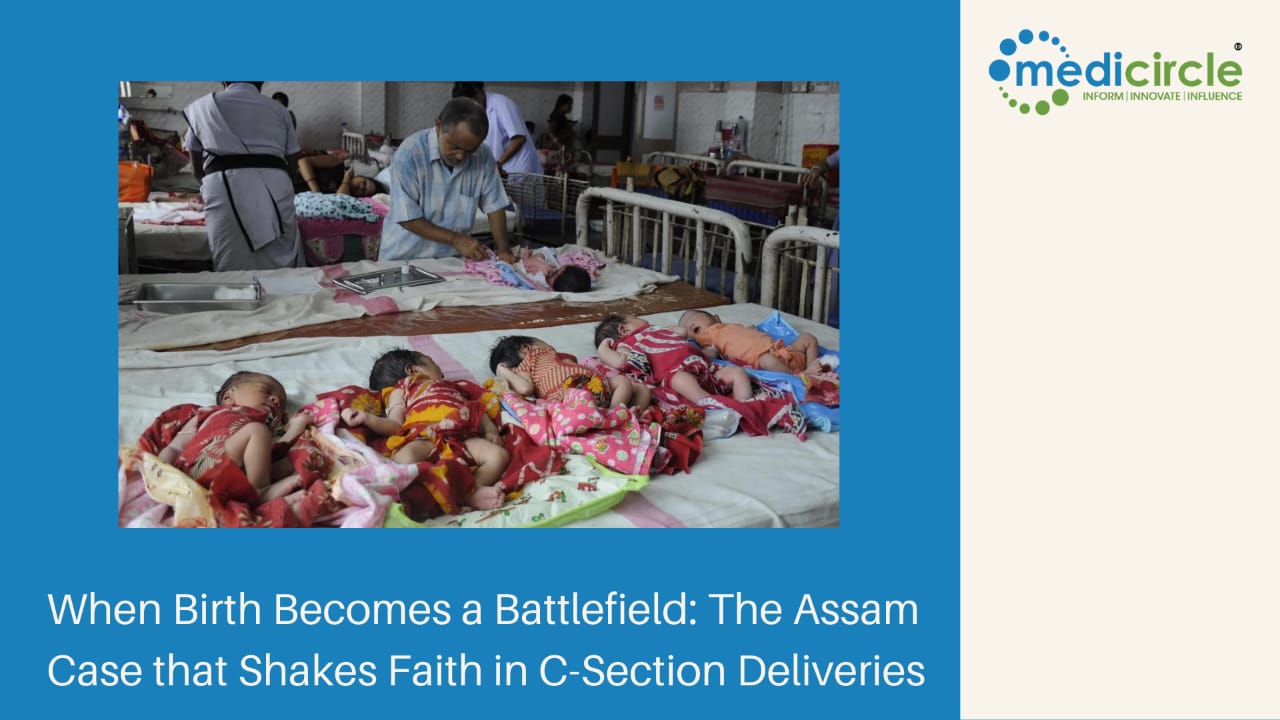
In Morigaon Civil Hospital of Assam, an extraordinary story has unsettled the medical community and triggered a national debate on safety, ethics, and the meaning of responsibility in obstetric care. At the heart of the storm is Dr. Kantheswar Bordoloi, a senior gynaecologist with years of experience, who is now facing scrutiny for conducting twenty-one caesarean section deliveries within a single shift that lasted less than ten hours. What began as an emergency situation has now transformed into a sharp conversation about whether efficiency can ever replace the sanctity of meticulous care, and how far doctors can be pushed in India’s overburdened public hospitals.

From 3:40 in the afternoon on September 5 to 1:50 the next morning, the operating theatre at Morigaon Civil Hospital witnessed one C-section after another, with scarcely enough time to pause between cases. The administration, alarmed by the sheer volume, issued a formal show-cause notice demanding detailed explanations. Officials asked whether sterilisation protocols were strictly followed, if foetal distress cases were properly recorded, whether neonatal care units were adequately staffed, and whether medical documentation was up to standard. For any healthcare professional, these are not just routine checks, they are the pillars that ensure mothers and newborns survive childbirth without unnecessary risks. The concern is that in the pursuit of speed, these pillars may have been weakened.

The response from Dr. Bordoloi has been one of calm defiance. He argued that there was nothing unusual about what he did, explaining that an uncomplicated caesarean section can be completed in as little as fifteen minutes. With two operating tables available, sterilisation could occur simultaneously while the next patient was being prepared. In his view, he was simply managing emergencies as they arrived, and the high number of surgeries was a coincidence rather than negligence. To further defend his position, he pointed out that nineteen of the twenty-one mothers and their babies had already been discharged in stable condition, and only two remained under hospital care. For him, this was not evidence of recklessness, but of efficiency in the face of a flood of urgent cases.

And yet, beneath this defence lies an uncomfortable truth. In healthcare, speed is not the only measure of competence. A caesarean delivery is major abdominal surgery, and while experienced gynaecologists may become adept at performing it swiftly, the procedure demands absolute vigilance in infection control, anaesthesia management, and post-operative care. Each patient is different; each case carries its own subtle complexities. To perform twenty-one of these within a single shift stretches not only the stamina of a surgeon but also the capacity of the nursing staff, anaesthetists, and sterilisation teams. It is not a one-man feat but a collective burden, and the risk of errors, however unintended, inevitably rises with such volume.

The incident in Assam resonates at a time when caesarean section deliveries in India are already under intense scrutiny. The country has witnessed a dramatic rise in the rate of C-sections over the past three decades. From just 17 percent of births in 1998–99, the figure now stands above 21 percent, with certain urban pockets reporting rates as high as 50 to 70 percent. Research shows that women from wealthier families, with better education and access to regular antenatal checkups, are far more likely to deliver via caesarean. What was once a life-saving intervention in complicated pregnancies has, in many places, turned into a default option sometimes driven by patient preference, sometimes by institutional convenience, and sometimes by financial incentives.

This trend has not gone unnoticed in global literature. The Lancet, in 2018, described the rise of C-sections worldwide as a looming “caesarean epidemic.” The journal cautioned that while caesarean sections undoubtedly save lives in cases of obstructed labour, placenta complications, or foetal distress, their widespread use without strict medical justification carries serious implications. Women undergoing unnecessary caesareans face higher risks of infection, delayed recovery, complications in subsequent pregnancies, and in rare cases, maternal death. For newborns, the surgery has been linked with altered immunity, respiratory distress, and possible long-term associations with conditions like asthma or obesity. Although causation remains debated, the correlation highlights the need for restraint and caution.

India’s healthcare system finds itself caught in this dilemma. On one side, doctors like Dr. Bordoloi are lauded by some for their stamina and dedication in crisis moments, taking on workloads that many in better-equipped environments would refuse. On the other, they are held accountable for not adhering strictly to documentation and infection-control protocols. The question becomes: should a doctor be faulted for working beyond human limits in an under-resourced hospital, or should the system be faulted for allowing such a situation to arise in the first place?

What makes the Assam episode even more sensitive is its timing. Just weeks before, the state witnessed the arrest of a fake doctor, Pulok Malakar, who had been performing caesareans and gynaecological surgeries for over a decade with forged certificates. His exposure by Assam’s anti-quackery unit sent shockwaves across the region, leaving the public shaken about the authenticity of those entrusted with their lives. Against this backdrop, news of a legitimate senior gynaecologist performing twenty-one surgeries in a row inevitably sparked suspicion and intensified calls for tighter monitoring. Trust, once fractured, is difficult to restore, and every new controversy adds weight to the public’s doubts.

The administrative notice served to Dr. Bordoloi specifically pointed out that preoperative and postoperative records were poorly maintained. For a hospital, records are not mere paperwork; they are legal and medical safeguards. They document how a patient’s case was assessed, what anaesthesia was given, how sterilisation was ensured, and what postoperative advice was delivered. Without them, the chain of accountability collapses. If complications arise later be it infection, haemorrhage, or neonatal distress, the absence of clear records makes it nearly impossible to establish whether standard protocols were followed. This is not only a medical concern but a legal one, exposing both doctors and institutions to liability.

The debate is not limited to Morigaon or even Assam. It reflects a national crisis in maternal health. India, despite remarkable progress in reducing maternal mortality over the last two decades, still records thousands of preventable deaths each year. Many of these occur not because of lack of skilled doctors, but because of systemic gaps like overcrowded hospitals, limited surgical theatres, shortage of anaesthetists, and inadequate nursing staff. In such an environment, even the most competent gynaecologist is stretched thin. The sheer workload forces compromises that no amount of personal dedication can fully mitigate.

It is also worth examining the psychological strain on doctors themselves. To perform major surgery repeatedly over hours without rest is not just a test of skill but of endurance. Fatigue clouds judgment, slows reflexes, and reduces attentiveness to subtle signs of complications. Aviation studies have shown how human error increases sharply when professionals operate under exhaustion; the same holds true in medicine. The pressure to keep operating, knowing that each delay could risk another mother’s life, pushes doctors into ethical grey zones where the line between courage and recklessness becomes blurred.

The rise in C-sections also demands a closer look at societal expectations. Many families now view caesarean delivery as safer or more convenient, believing it spares the mother pain and ensures a predictable timeline for birth. Private hospitals, incentivised by higher charges for surgical delivery, sometimes encourage the procedure even when vaginal delivery is possible. Public hospitals, though not driven by profit, face a different challenge: high patient load, limited beds, and urgent timelines often push doctors to recommend caesareans as the faster alternative. In both settings, the decision is increasingly shaped by external pressures rather than purely medical need.

India requires stronger monitoring systems to track the rates and reasons for C-sections in every district hospital. Regular audits of operation theatre protocols, sterilisation measures, and documentation should be mandatory, with digital tools deployed to reduce paperwork gaps. More importantly, the state must invest in increasing the number of trained obstetricians, anaesthetists, and nurses so that no single doctor is ever pushed to perform twenty-one surgeries in a single shift again.

At the same time, patients and families need better education about childbirth options. Vaginal delivery, when safe, remains the gold standard, and should not be dismissed as old-fashioned or inconvenient. Caesarean delivery, while life-saving, must be reserved for when it is medically indicated. Public awareness campaigns, along with strict institutional guidelines, can help restore balance and prevent the drift towards a caesarean epidemic.

Dr. Bordoloi’s defence that he acted quickly and efficiently under pressure will resonate with many doctors across India who silently shoulder similar burdens without recognition. Yet, his case also exposes the non-negotiable need for protocol, documentation, and transparency. Heroism in medicine cannot come at the cost of safety. Efficiency cannot replace evidence. And no matter how many mothers and newborns leave the hospital safely, the risk to even one life from a lapse in protocol demands scrutiny.


This controversy will eventually reach a conclusion whether through disciplinary action, acquittal, or systemic reform. But long after the headlines fade, the larger questions it raises will remain: How much can we ask of one doctor in a crumbling system? How do we reconcile rising demand for C-sections with the need for restraint? And how do we protect the most sacred trust in healthcare and the belief that every birth will be handled with the utmost care, not just speed?

The case of twenty-one caesareans in Assam is not merely about one doctor. It is about the shape of maternal health in India, the ethics of modern obstetrics, and the fragile balance between human endurance and institutional responsibility. Birth is not a factory process; it is the threshold of life. And in that delicate threshold, every decision matters not just for the numbers, but for the lives that depend on them.


Source: independent.co

Tags : #CaesareanDebate #HealthcareEthics #SafeMotherhood #BirthWithoutRisk #ObstetricCare #PublicHealthIndia #CSectionAwareness #MedicalAccountability #TrustInHealthcare #PatientSafetyFirst #EthicsInMedicine #HospitalAccountability #MaternalHealth #HealthcareSystem #smitakumar #medicircle

Related Stories

Loading Please wait...

-Advertisements-


Trending Now

Cholesterol Explained: Good vs Bad Cholesterol and What It Means for Your HeartJuly 11, 2026
Role of Technology in Hospitals: How Indian Healthcare is Being ReshapedJuly 11, 2026
175 years after ancestors left UP, Indo-Trinidadian infant receives rare liver transplant at Apollo DelhiJuly 10, 2026
Fortis Escorts Faridabad Strengthens Advanced Care Ecosystem with Launch of: Fortis Cancer Institute Institute of Neurosciences Centre of Excellence in Critical Care and ECMOJuly 10, 2026
India’s first focused health AI Conclave unites doctors and AI expertsJuly 10, 2026
University of Leeds Opens Applications for MSc Biotechnology with Business Enterprise for Indian StudentsJuly 10, 2026
How Doctors Are Changing the Face of Indian HealthcareJuly 10, 2026
Medical Innovations to Watch in 2026: How Technology Is Reshaping Healthcare in IndiaJuly 10, 2026
Government of India Notifies Polymatech Electronics’ Semiconductor and Electronic Components SEZ at Nava Raipur, ChhattisgarhJuly 09, 2026
Iswarya Fertility Center Raises Over INR 350 Crore from OrbiMed AsiaJuly 09, 2026
Happiest Health Announces Launch of Speciality Clinics Happiest Paediatrics, Happiest Orthopaedics, Happiest Gynaecology, Happiest Endocrinology & Your Personal PhysicianJuly 09, 2026
Cetaphil launches new AM/PM Antioxidant Serum Duo in India July 09, 2026
THIP Partners with ISSRF to Launch Digital Patient Education Programme for EndometriosisJuly 09, 2026
Blood Tests Everyone Should Understand: A Complete Guide for Indian AdultsJuly 09, 2026
CT Scan vs MRI: Understanding the Difference and Choosing the Right Diagnostic Imaging TestJuly 09, 2026
Robotic Surgery in Modern Urology and Gynecology: Precision, Recovery, and SafetyJuly 08, 2026
Apollo Hospitals Gives Filipino Twin Brothers a New Lease of Life Through Rare Twin Liver TransplantsJuly 08, 2026
Fibroheal Raises ₹14 Crore to Fuel Next Phase of Growth and Entry in Developed MarketsJuly 08, 2026
Veda Rehabilitation & Wellness Opens Himalayan Mental Health Recovery Retreat in Sikkim for Addiction Recovery and Mental WellbeingJuly 08, 2026