When Glass Becomes a Weapon: The Rare Surgery That Saved Life and Sight in Lucknow

▴ Rare Surgery
The man whose life and eyesight were saved may return to his auto, but he carries with him a story that should remind us all of how fragile life is and how crucial it is to demand safety and excellence at every stage.

Hello! If you're looking for high-quality genericmedications, fast delivery and excellent customer service, ourstore is the right choice for you. With over 20 years of onlineexperience, we guarantee safe, effective products that are alwaysin stock. Delivery within 48 hours, free shipping from $200, and 100% money-back guarantee if your order doesn't arrive on time.

👉 Order now at BestCheapPills and discover exclusive discounts for registeredcustomers!
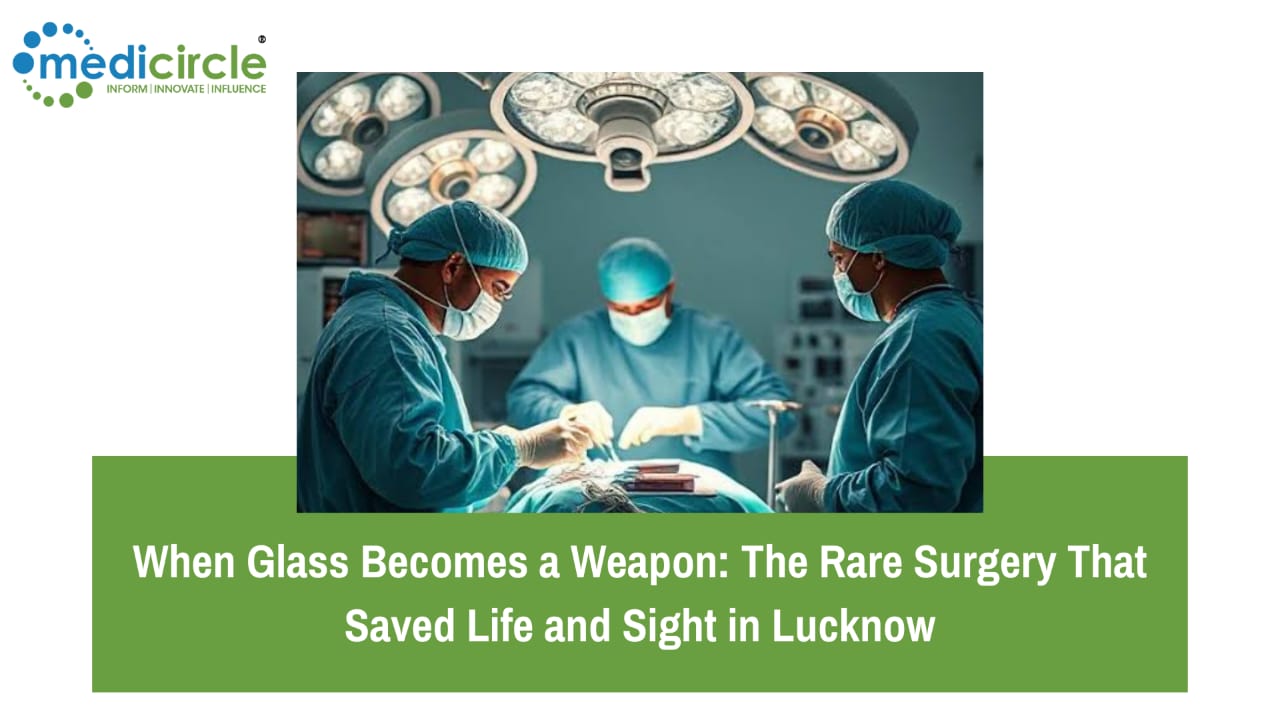
It takes only a moment for life to change forever. For an auto driver in Lucknow, that moment came on an ordinary day when his newly purchased second-hand vehicle collided and its windscreen shattered. For many, a cracked glass would mean inconvenience, repairs, and perhaps a few minor cuts, but this time the consequences were extraordinary. The windscreen was not made of safety glass, which usually breaks into tiny harmless pieces, but of a duplicate version that splits into razor-sharp, large fragments. One of these menacing shards, almost six centimeters long, did not stop at grazing the face or damaging the skin. It pierced directly through the man’s eye, crossed the protective orbital tissues, tore through the sinus, and penetrated deep into his brain. What began as a road mishap soon turned into a medical nightmare where life, vision, and brain functions hung by a thread.

Such stories often remain untold or forgotten in the vast web of medical news, but this one deserves attention because it captures both the dangers of substandard materials in everyday use and the astounding capabilities of modern medicine when performed by skilled doctors who rise to challenges most would find impossible. The surgery took place at the prestigious King George’s Medical University (KGMU) in Lucknow, where a joint team of neurosurgeons, anesthesiologists, and ophthalmologists came together for one of the rarest and most complex operations performed in recent years. In an environment where even small surgical errors can cost lives, the team not only saved the man’s life but also preserved his eyesight, a feat almost unimaginable given the nature of the injury.

When the auto driver was admitted, his condition posed risks that went far beyond a typical trauma case. The sharp piece of glass had breached the natural barriers of the body, raising the immediate possibility of cerebrospinal fluid leakage, a complication that can lead to severe infection, meningitis, and life-threatening brain damage. Surgeons had to consider not just the removal of the visible fragment but also the hidden, microscopic shards that could remain embedded and later create infections or neurological harm. Every movement of the surgical instrument had to be measured, every cut precise, because any wrong step could damage delicate brain tissue or cause irreversible blindness.

The story reflects two important realities of healthcare in India. On one hand, there is the unfortunate and often ignored issue of counterfeit and duplicate materials flooding the market. The use of unsafe glass instead of certified safety glass in vehicles is not just an economic shortcut; it is a gamble with human lives. On the other hand, there is the inspiring example of Indian doctors working in public institutions who repeatedly show that expertise, training, and collaboration can overcome seemingly insurmountable odds. The incident is not just about one man’s survival but a reminder of how essential it is to uphold safety standards in daily life and how crucial it is for hospitals to be equipped to handle rare emergencies.

Under the guidance of Professor BK Ojha from the department of neurosurgery, Professor Abhijeet Kaur from ophthalmology, and Professor Monica Kohli from anesthesia, the surgical team meticulously planned every step. Their task was complicated by the dual involvement of both eye and brain. The sharp fragment had to be removed without letting it slip further or causing a hemorrhage. Anesthesia had to be managed in a way that maintained the patient’s stability while giving surgeons the delicate window they needed. Post-operative care had to anticipate swelling, infection, or sudden deterioration. It was not one specialty that saved the man; it was the combination of neurosurgery, ophthalmology, and anesthesia that blended into a symphony of life-saving precision. Doctors Ankur Bajaj, Mitrajeet, and Sahil from neurosurgery, along with Dr Brijesh Pratap Singh from anesthesia and Dr Gautam and Dr Priyanka from ophthalmology, formed the backbone of the team that worked relentlessly to ensure success.

In today’s healthcare conversations, we often hear about infrastructure, policies, insurance coverage, or digital health, but rarely do we pause to reflect on the human stories inside operating rooms. This incident forces us to think differently. Imagine the life of an auto driver, a man who may earn a few hundred rupees daily, suddenly faced with a catastrophic injury caused not by fate alone but by substandard manufacturing choices. Imagine his family, who must have been devastated by the thought of losing him or seeing him blind, suddenly given hope by the extraordinary skills of a medical team. These are not stories that circulate widely on social media, yet they represent the pulse of healthcare in India.

For the medical fraternity, this case is a testament to the importance of interdisciplinary teamwork. Neurosurgeons alone could not have navigated the risk to the eye. Ophthalmologists alone could not have handled the brain penetration. Anesthesiologists alone could not have managed the critical stability needed for such a delicate operation. It was only through joint decision-making, shared expertise, and constant vigilance that this rare success became possible. The patient not only survived but retained vision, a rare combination of outcomes that adds to the brilliance of the achievement.

The larger public too must learn from this story. Patients and their families often underestimate the silent role of anesthesia, or they focus only on the visible surgeon. But in truth, behind every successful surgery lies a team of specialists who coordinate like different sections of an orchestra. It is the harmony of skills that turns near-death into survival. In this case, the silent work of ensuring no cerebrospinal fluid leakage, managing intraoperative stability, and preventing post-operative complications mattered as much as the surgical extraction of the glass.

In healthcare journalism, we often discuss epidemics, lifestyle diseases, new drugs, and global health policies. Yet real inspiration sometimes comes from isolated cases that remind us of the depth of medical skill available in India. KGMU has long been recognized as a hub of medical education and complex care, and this case once again places it on the map for extraordinary achievement. It also highlights the need to invest in tertiary care institutions, where rare and complicated cases are handled. Without such institutions, many patients with similar injuries would face inevitable death or permanent disability.

We must raise awareness about such incidents. Safety in vehicles must be as much a health priority as vaccines or nutrition. Regulation of duplicate products must be seen as a public health issue, not just a matter of consumer rights. Hospitals must continue to strengthen interdisciplinary teams that can step up when rare emergencies occur. And perhaps most importantly, citizens must realize that every small decision, whether in purchasing a product or demanding accountability, shapes the larger landscape of health and safety.

In the end, this rare surgery in Lucknow is not just a medical success story. It is a reminder that healthcare is not confined to hospitals. It is tied to every aspect of daily life from the quality of glass in a vehicle to the expertise of doctors in trauma centers. It is about prevention, preparedness, and precision. The man whose life and eyesight were saved may return to his auto, but he carries with him a story that should remind us all of how fragile life is and how crucial it is to demand safety and excellence at every stage.


One broken glass could have ended his world, but the brilliance of medical science and the courage of doctors ensured it became instead a story of survival, vision, and hope.

Tags : #MedicalMiracle #LifeSaved #Neurosurgery #Ophthalmology #TraumaCare #SurgicalExcellence #HealthcareHeroes #KGMU #IndianHealthcare #PatientSurvival #MedicalTeamwork #RoadSafetyMatters #SayNoToFakeProducts #SafetyStandards #HealthcareIndia #smitakumar #medicircle

Related Stories

Loading Please wait...

-Advertisements-


Trending Now

Cholesterol Explained: Good vs Bad Cholesterol and What It Means for Your HeartJuly 11, 2026
Role of Technology in Hospitals: How Indian Healthcare is Being ReshapedJuly 11, 2026
175 years after ancestors left UP, Indo-Trinidadian infant receives rare liver transplant at Apollo DelhiJuly 10, 2026
Fortis Escorts Faridabad Strengthens Advanced Care Ecosystem with Launch of: Fortis Cancer Institute Institute of Neurosciences Centre of Excellence in Critical Care and ECMOJuly 10, 2026
India’s first focused health AI Conclave unites doctors and AI expertsJuly 10, 2026
University of Leeds Opens Applications for MSc Biotechnology with Business Enterprise for Indian StudentsJuly 10, 2026
How Doctors Are Changing the Face of Indian HealthcareJuly 10, 2026
Medical Innovations to Watch in 2026: How Technology Is Reshaping Healthcare in IndiaJuly 10, 2026
Government of India Notifies Polymatech Electronics’ Semiconductor and Electronic Components SEZ at Nava Raipur, ChhattisgarhJuly 09, 2026
Iswarya Fertility Center Raises Over INR 350 Crore from OrbiMed AsiaJuly 09, 2026
Happiest Health Announces Launch of Speciality Clinics Happiest Paediatrics, Happiest Orthopaedics, Happiest Gynaecology, Happiest Endocrinology & Your Personal PhysicianJuly 09, 2026
Cetaphil launches new AM/PM Antioxidant Serum Duo in India July 09, 2026
THIP Partners with ISSRF to Launch Digital Patient Education Programme for EndometriosisJuly 09, 2026
Blood Tests Everyone Should Understand: A Complete Guide for Indian AdultsJuly 09, 2026
CT Scan vs MRI: Understanding the Difference and Choosing the Right Diagnostic Imaging TestJuly 09, 2026
Robotic Surgery in Modern Urology and Gynecology: Precision, Recovery, and SafetyJuly 08, 2026
Apollo Hospitals Gives Filipino Twin Brothers a New Lease of Life Through Rare Twin Liver TransplantsJuly 08, 2026
Fibroheal Raises ₹14 Crore to Fuel Next Phase of Growth and Entry in Developed MarketsJuly 08, 2026
Veda Rehabilitation & Wellness Opens Himalayan Mental Health Recovery Retreat in Sikkim for Addiction Recovery and Mental WellbeingJuly 08, 2026