Tuesday, October 06, 2026
 By training future doctors to see, hear, and respect transgender patients, we lay the groundwork for a healthcare system that embodies dignity for all.




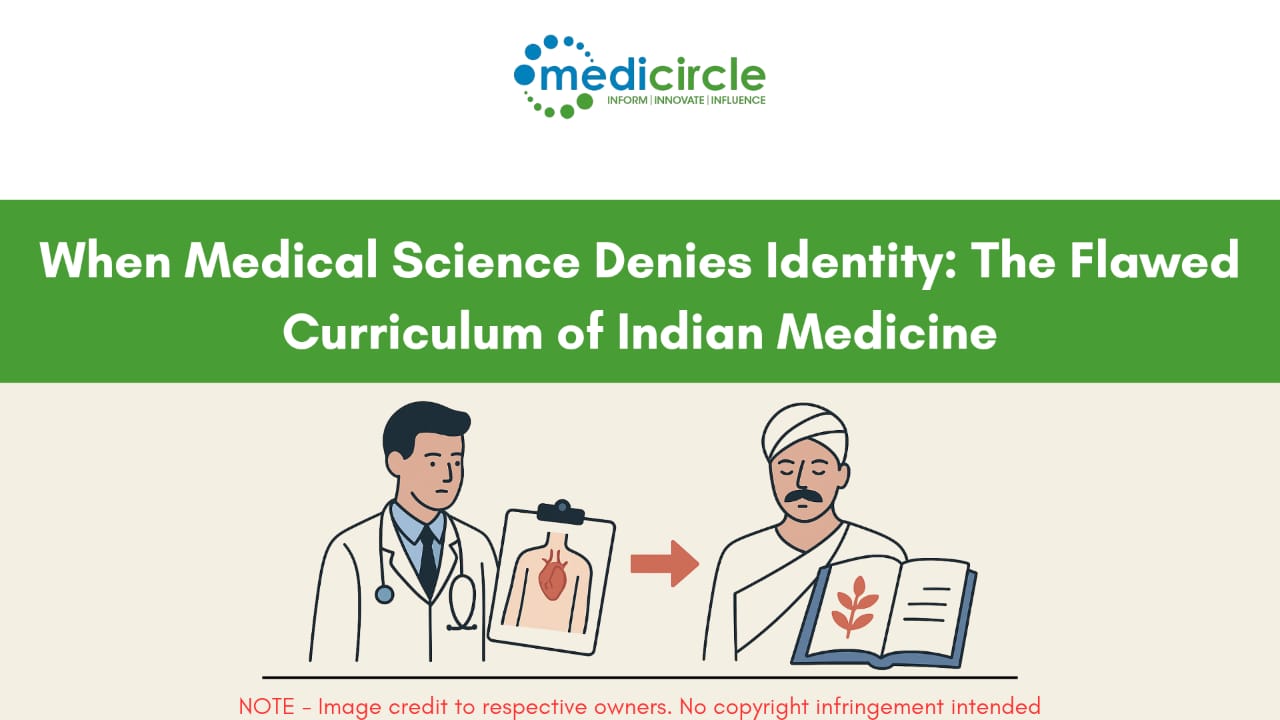
The corridors of Indian medical colleges have long echoed with the pride of producing some of the world’s finest doctors. Yet beneath this legacy lies a silence that has cost countless lives, dignity, and trust. This silence is about transgender healthcare. Despite progressive laws, despite rising visibility, despite a society inching toward inclusion, medical education in India has not caught up. A recent study, published in Advances in Physiology Education, shines a sharp light on this gap, exposing how the absence of trans-affirmative competencies in the curriculum leaves an entire community without respectful, evidence-based care. The findings demand a moral reckoning and a policy shift that can no longer be delayed.
Transgender people in India live in a reality where even stepping into a clinic is often fraught with anxiety. Disrespectful questions, mocking tones, refusal of service, or sheer ignorance about gender-affirming healthcare are not rare exceptions; they are routine experiences. When health systems are meant to heal but instead wound, the damage is both physical and psychological. This is why the debate about curriculum reform is not about “adding a chapter” but about dismantling deep-rooted prejudice. The study demonstrates that the seeds of inclusion must be sown in the very first years of medical training, not left for optional workshops or later specialisations.
India does not lack the legal framework. The Transgender Persons (Protection of Rights) Act, 2019, explicitly prohibits discrimination in healthcare and guarantees the right to medical services without bias. Yet laws on paper have little power when the people responsible for implementing them like doctors, nurses and health administrators are not trained to recognise transgender identities as valid and deserving of care. This dissonance is why transgender individuals continue to face barriers to life-saving interventions like hormone therapy, gender-affirming surgeries, or even routine reproductive health check-ups. Too often, they are pushed into unsafe alternatives through unqualified providers, a choice born of desperation rather than preference.
The research, led by Indian academics and physicians deeply invested in inclusive medicine, offers more than criticism. It presents a roadmap. For the first time in India, trans-affirmative competencies were integrated into the MBBS physiology curriculum. Physiology, being the bedrock of medical education, sets the tone for how future doctors perceive the human body. If this foundation continues to teach gender as a rigid binary, then all subsequent training inherits the same flaw. The study’s innovation was in reframing physiology to reflect the gender spectrum as a natural variation rather than an abnormality, planting a more compassionate lens in the minds of young students.
What is remarkable is not only the content but the method. Instead of relying solely on lectures and textbook notes, the educators used tools from health humanities i.e. poetry that spoke of lived experiences, films that captured the vulnerability of being misgendered in a clinic, and participatory theatre that invited students to role-play scenarios of care and discrimination. This creative pedagogy evoked empathy. The result was a cohort of students who did not simply learn facts but began to understand the human consequences of neglect. Over an 11-month period, nearly 17 hours of gender-inclusive training was delivered without disrupting existing schedules, disproving the common excuse that curricula are “too packed” to include new competencies.
The response from students and facilitators was overwhelmingly positive. Over 92 percent of students engaged with the modules, a figure far higher than global averages in similar studies. Facilitators, too, admitted that far from being a burden, the inclusion enhanced their teaching. They acknowledged that the competencies were appropriate for first-year MBBS students, setting a tone for their medical journey that values inclusion. If such outcomes are possible in a pilot study, the question then arises: why is the National Medical Commission still hesitating?
The NMC, which governs medical education in India, has faced criticism for backtracking on LGBTQI content in the Competency-Based Medical Education framework, first in 2019 and again in 2024. These repeated U-turns are not mere bureaucratic glitches; they reflect an institutional reluctance to confront social prejudice. Each delay perpetuates harm, leaving doctors unprepared and patients unsafe. It is a reminder that silence is not neutral, it actively contributes to marginalisation.
The urgency becomes clearer when we look at the numbers. According to the 2011 Census, India has nearly half a million people who openly identified as transgender. The actual number is likely far higher, given the stigma around disclosure. This population is not small, not invisible, and certainly not undeserving of dedicated healthcare. From hormone replacement therapy to mental health support, from gender-affirming surgeries to reproductive health, their needs are diverse and pressing. Yet services remain scarce, fragmented, and often prohibitively expensive. The lack of trained professionals compounds the crisis.
Consider the ethical dimension. Medicine prides itself on the principle of “do no harm.” But when curricula erase or ignore entire identities, harm is inevitable. Patients report being laughed at when they ask for care, misdiagnosed because doctors lack knowledge, or denied treatment because of moral judgements. Such experiences not only worsen health outcomes but erode trust in the system altogether. For a community already facing social stigma, healthcare becomes yet another battlefield, when it should be a refuge.
There is also a professional dimension. India aspires to be a global leader in healthcare, sending doctors across continents and attracting patients from around the world through medical tourism. In such a landscape, can Indian medical education afford to remain outdated on LGBTQI health? Global standards are shifting. Medical schools in many countries are redesigning their curricula to include gender diversity, recognising that inclusive training is a marker of quality. By lagging, India risks not only its reputation but also its moral responsibility to its own citizens.
What the study highlights beautifully is that inclusion is possible without overhauling the system. It is not about tearing apart the MBBS structure but about weaving in perspectives that reflect reality. If 17 hours can make such a difference, imagine the potential of a scaled-up, nationwide integration. Imagine a generation of doctors who enter their internships already sensitive to the needs of transgender patients. Imagine clinics where no one has to explain their existence before receiving treatment. That vision is within reach if policymakers choose courage over complacency.
Voices from within the medical fraternity are growing louder. Dr Satendra Singh, who co-authored the study, has been vocal about the NMC’s failures and has consistently argued that physiology, as a foundational subject, must embrace the gender spectrum. Dr Aqsa Shaikh, another co-author and herself a transgender woman, frames the change as a shift from dehumanisation to human-centred care. Their leadership is not just academic it is deeply personal, rooted in lived experience and professional commitment. Their call to action is clear: inclusion cannot wait for “someday.” The cost of delay is measured in suffering.
Beyond the medical schools, society must also recognise what is at stake. Healthcare access is not a luxury; it is a right. Denying transgender people competent care is not an isolated act of prejudice but a systemic violation of that right. And systemic problems require systemic solutions. Curriculum reform is one piece of that puzzle, but it is a powerful one. By training future doctors to see, hear, and respect transgender patients, we lay the groundwork for a healthcare system that embodies dignity for all.
The challenge, of course, lies in willpower. Resistance often comes dressed as practicality: the curriculum is already overloaded, students are under pressure, faculty lack training. But as this pilot shows, these barriers are surmountable. What is really at play is whether institutions are willing to confront their own biases, to let go of comfort zones, and to acknowledge the humanity of those historically pushed to the margins. True reform rarely comes without discomfort, but that discomfort is the soil in which progress grows.
For transgender people, the stakes are life itself. For medical education, the stakes are credibility. For society, the stakes are justice. At this juncture, the question is simple: will Indian medicine remain complicit in marginalisation, or will it finally embrace its duty to heal without discrimination?
The study has given us proof that change is possible. The law has given us the mandate. The community has given us the call. What remains is for the institutions of power to act with the urgency that justice demands.





.jpeg)
.jpg)
.jpg)
.jpg)
.jpg)
.jpg)
.jpg)


.jpg)
.jpg)
.jpg)
.jpg)
.jpg)
.jpg)