 Thursday, October 08, 2026
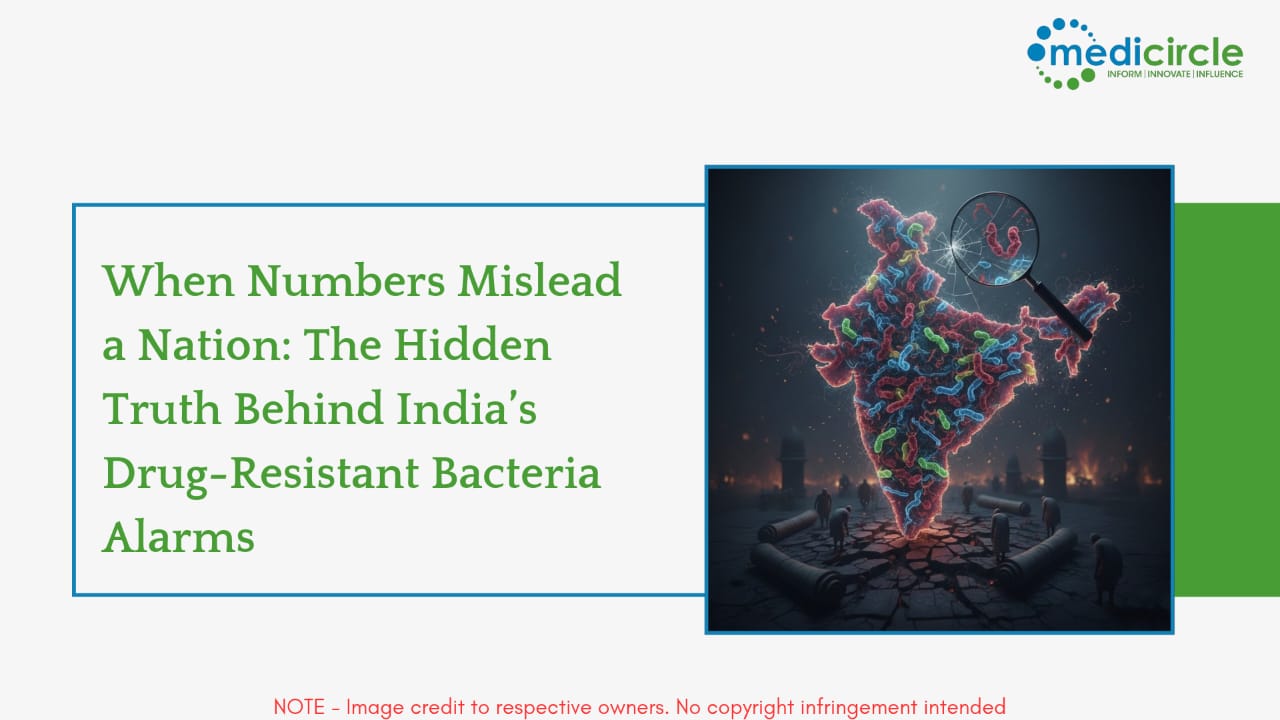
 Data is powerful, but only when handled with care. Misused data becomes a weapon that wounds more than it heals.




The conversation around antimicrobial resistance in India has intensified again, stirred by headlines that paint a dramatic picture of dangerous bacteria taking over hospitals. The recent Lancet study comparing multidrug-resistant organism colonisation among ERCP patients drew attention because India appeared with a high percentage beside its name. It was enough to make people believe that Indian hospitals are drowning in superbugs and that patients undergoing complex procedures are at extraordinary risk. But when we look closer, a very different story emerges that demands more nuance, more clarity, and far more responsible public communication.
The number that triggered concern i.e. over 80% colonisation among ERCP patients in India, sounds frightening. Yet that figure reflects a group of patients already living with multiple illnesses, repeated hospital visits, and high exposure to antibiotics. These are individuals who often carry resistant bacteria simply because their medical journeys are long and complicated. Colonisation does not mean infection. Colonisation does not mean treatment failure. And colonisation most certainly does not mean the general population shares the same risk. This distinction is often the first casualty when scientific findings travel from lab reports to lay discussions.
India’s disease patterns, population density, and healthcare demands create a different environment compared to Europe or the US, making direct comparisons misleading. Even the researchers emphasised that regional context must be respected. Yet the headlines that followed gave an impression that the Indian healthcare system was spiralling into a crisis, that infections were surging, and that invasive procedures such as ERCP were becoming more dangerous on Indian soil. But that narrative collapses the moment one examines the actual clinical outcomes. There was no increase in mortality. No surge in ERCP-related infections. No signal suggesting that Indian patients were less safe during the procedure than patients in other participating countries.
The most surprising part of the study which is the part that conveniently ignored in most discussions is that India recorded lower MRSA and VRE rates than many high-income countries. Methicillin-resistant Staphylococcus aureus and vancomycin-resistant Enterococci have long been feared globally because they are notoriously hard to treat. Yet India’s numbers are significantly lower, hinting that infection control measures for gram-positive organisms are far more effective than many assume. This reinforces the need to view antimicrobial resistance through a wide-angle lens instead of judging an entire system through a single data point.
One of the senior experts who reviewed the findings reminded that AMR surveillance is a moving landscape. Trends shift based on population health, antibiotic behaviour, diagnostic access, infection prevention practices, and hospital environments. A single cross-sectional snapshot cannot claim to represent the entire nation. But this is exactly what tends to happen. Scientific work gets flattened into sensational interpretations. Nuance disappears. Public anxiety rises. International comparisons get thrown around without context. Meanwhile, the real conversation i.e. the one about consistent surveillance, responsible antibiotic use, and hospital infection control gets lost in the noise.
What makes this episode important for India’s healthcare ecosystem is the reminder that data needs interpretation, not assumptions. Colonisation is a biological event, not a verdict. It signifies that the bacteria exist on the body’s surfaces. It does not confirm disease. It does not reflect treatment outcomes. It cannot predict how the bacteria will behave in every patient. And it certainly does not define the strength or weakness of a country’s healthcare system.
India’s antimicrobial resistance challenges are real, and stakeholders across the country acknowledge them openly. Hospitals deal with higher burdens of infectious diseases. Many patients reach tertiary care centres only after long delays and multiple rounds of antibiotics outside formal settings. This means resistant organisms are often encountered, but they are not new and they are not unexpected.
Another crucial layer that often gets ignored is access. India performs a massive number of ERCP procedures annually, many in government hospitals serving large populations with diverse comorbidities. The exposure patterns of such patients differ from those in countries with lower patient volumes or more controlled referral pathways. A study that includes these patients will inevitably show differences in colonisation patterns and that is not a marker of poor quality, but a reflection of healthcare realities.
The Indian healthcare community has made major developments in combating certain resistant organisms over the past decade. Infection control committees in many hospitals are more active than ever. Surveillance systems have expanded. Hospitals have dedicated stewardship teams to monitor antibiotic use. MRSA rates have dropped sharply across several states, and VRE containment strategies are working effectively. Yet these achievements often go unrecognised because the public hears only about the scary numbers. The positive progress rarely trends on social media. Quiet success does not make headlines.
It is important to remember that antimicrobial resistance is not simply a medical issue, it is an ecosystem one. It touches sanitation, community healthcare access, diagnostics, primary care awareness, pharmacy behaviour, and even socio-economic structures. Blaming an entire country on the basis of one data point is not only inaccurate, it is unfair to thousands of clinicians who work tirelessly to maintain safe care environments under immense pressure.
The recent discussion should become an opportunity to communicate better with the public. People deserve to know that colonisation rates in a specific high-risk group should not influence their trust in hospitals. They deserve to understand the difference between carrying bacteria and being infected by those bacteria. They deserve awareness, not fear. And they deserve honest reporting that separates scientific findings from dramatic speculation.
For policymakers, this is the time to reinforce laboratory networks and invest in local AMR mapping systems that reflect India’s true diversity. National guidelines must keep evolving, and stewardship programs must receive the support they need. Only then can decisions be made with local evidence that is scientifically relevant and socially responsible.
For the public, this is an opportunity to build a healthier understanding of antimicrobial resistance. AMR is not a distant threat whispered inside medical conferences. It is a real, growing challenge that affects daily life. But it is also manageable when the right practices come together including hygiene, vaccination, early diagnosis, responsible antibiotic use, and trust in the healthcare system.
India’s story with AMR is not a story of helplessness. It is a story of complexity. And complexity should never be reduced to a single alarming number. When research is misinterpreted, the damage distorts public perception and undermines years of progress. That is why scientific literacy matters, especially in healthcare journalism. Data is powerful, but only when handled with care. Misused data becomes a weapon that wounds more than it heals.
In the end, antimicrobial resistance is a shared global challenge, not a scoreboard of nations. No country wins by pointing at another. The only way forward is through collaboration, transparency, and scientific integrity. If the story is told right, India’s healthcare community stands not as a cautionary tale, but as an example of resilience in a world fighting evolving microbes.





.jpeg)








.jpg)
.jpg)
.jpg)
.jpg)
.jpg)
.jpg)


.jpg)
.jpg)
.jpg)