When Public Health Becomes Private Profit: The Price of Dialysis in India’s Cities

▴ Price of Dialysis
The Public-Private Partnership model may seem like a practical solution on the surface, but unless it is guided by strict safeguards, subsidies, and accountability, it risks becoming a mechanism for exclusion.

Hello! If you're looking for high-quality genericmedications, fast delivery and excellent customer service, ourstore is the right choice for you. With over 20 years of onlineexperience, we guarantee safe, effective products that are alwaysin stock. Delivery within 48 hours, free shipping from $200, and 100% money-back guarantee if your order doesn't arrive on time.

👉 Order now at BestCheapPills and discover exclusive discounts for registeredcustomers!
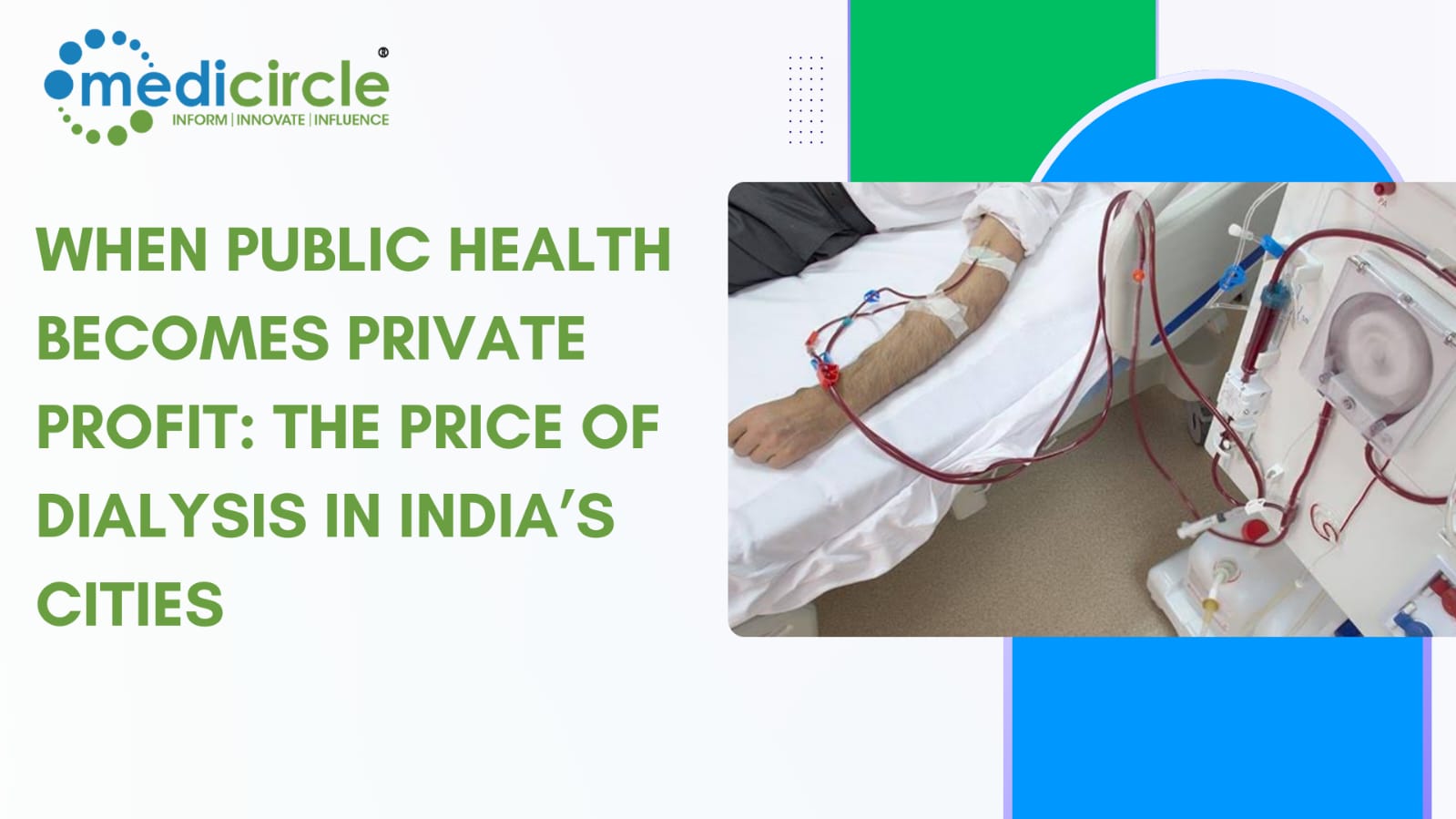
Eight months after the hemodialysis unit at Dharavi’s Loknete Eknathrao Gaikwad Urban Health Centre fell silent, the machines have started to operate again. But for many patients who depend on these lifelines, the return of the service comes with a sharp twist. The centre has been revived under a Public-Private Partnership model, where treatment is no longer entirely in the hands of the city’s municipal healthcare system. For those fortunate enough to hold yellow or orange ration cards or coverage under the Mahatma Jyotiba Phule Jan Arogya Yojana, dialysis will remain free. For everyone else, a session now carries a price tag of one thousand rupees. In Dharavi, one of Asia’s largest informal settlements where a large part of the population lives hand-to-mouth, this fee represents more than just a medical bill. It is the difference between survival and despair.

Hemodialysis is not a one-time medical event. It is a relentless, repetitive procedure that patients with kidney failure must undergo multiple times every week, often for years, if not for the rest of their lives. Each session involves filtering waste and excess fluid from the blood, a task the failing kidneys can no longer perform. The treatment is exhausting, but more than that, it is expensive. For those who need it, skipping sessions is not an option. When municipal hospitals take on this responsibility, the poorest patients have a chance at survival. When private entities step in, questions about affordability and equity immediately rise. The move by the Brihanmumbai Municipal Corporation, in partnership with Lokmanya Tilak Municipal General Hospital at Sion, to outsource dialysis operations in Dharavi is therefore more than just an administrative shift. It is the frontline of a larger debate over the soul of India’s public healthcare system.

The tender process that handed over this service to a private operator promises continuity of care and a guarantee that doctors from Sion hospital will continue to provide medical expertise. The private partner, meanwhile, manages the operational and administrative side. On paper, this sounds like efficiency at work. It saves the municipal body from dealing with logistical hurdles while ensuring patients still receive treatment. Yet for activists, healthcare workers, and patient groups, the concern is about what happens when a service designed to be universally accessible begins to introduce financial barriers. Critics argue that such moves slowly turn public hospitals into spaces where care is free for some, unaffordable for many, and profitable for others.

The example of Dharavi is especially significant because the locality is home to some of Mumbai’s most vulnerable citizens. Migrant workers, daily wage earners, and families without ration cards or state insurance coverage form a substantial portion of its population. For them, paying ₹1,000 per dialysis session is not simply difficult, it is impossible. Even those with slightly better financial footing may find the cumulative costs unbearable, since dialysis is not a monthly treatment but a weekly, sometimes thrice-weekly commitment. Over time, the expenses multiply into tens of thousands of rupees, draining families who are already living precariously.

Healthcare activists such as Dr. Abhay Shukla of Jan Swasthya Abhiyan have called out this model as disguised privatisation. The argument is not new, but it grows more urgent as municipal bodies increasingly hand over essential services to private players under various labels like PPP models, collaboration schemes, or civic health partnerships. The essence remains the same: treatments once offered as part of the public healthcare mandate are being reframed as shared responsibilities with commercial interests. In practice, this often means the poorest patients bear the burden while private operators ensure profitability.

The defenders of the new model claim that outsourcing will keep services running smoothly, save costs for the BMC, and allow hospitals to focus on their core medical responsibilities. Yet the truth on the ground tells another story. Healthcare is not just about running machines efficiently or balancing budgets. It is about ensuring that every citizen, regardless of income, has access to life-saving care. When efficiency comes at the cost of exclusion, the very foundation of public health is shaken.

The Dharavi case is not isolated. The BMC has already begun implementing similar arrangements across other suburban hospitals, including those in Kandivali, Ghatkopar, Bandra, Kurla, Mulund, and Borivali. These institutions, built over decades with taxpayer money, are now witnessing a gradual handover of critical services like hemodialysis units, cardiology departments with catheterisation labs, sonology and radiology services, CT and MRI scans, even blood banks. The contracts run for three decades, with a mid-point review after ten years, signaling a long-term shift in the philosophy of municipal healthcare. For citizens, this translates into a new reality: diagnostic scans that once cost a fraction of private market rates will now be priced at ₹1,200 per session. Subsidised care, previously accessible to all, is now reserved for those holding ration cards. For the rest, essential health services are becoming commodities.

At the centre of this transformation lies a difficult question of what should the role of the state be in ensuring healthcare access? Should municipal corporations be providers of care, building and maintaining public hospitals as safety nets for the masses? Or should they be facilitators, outsourcing operations while retaining nominal control? In theory, partnerships between public and private actors can bring innovation, resources, and efficiency. In practice, however, such arrangements often dilute accountability. When a dialysis machine malfunctions or when patients are turned away because they cannot pay, responsibility becomes blurred. Is it the hospital’s fault, the private operator’s failure, or the system itself that has failed?

For patients, these distinctions are meaningless. What they experience is the harsh reality of treatment slipping out of reach. In Dharavi, families already live in precarious conditions such as overcrowded homes, poor sanitation, irregular incomes, and limited access to consistent healthcare. For them, the dialysis centre was more than a medical facility; it was a rare guarantee of support. Its temporary closure for eight months was already a heavy blow. Its reopening under a model that introduces costs for many is a bittersweet reprieve.

The wider implications of such policies are troubling. As lifestyle diseases such as diabetes and hypertension rise across urban India, kidney failures are becoming increasingly common. This makes dialysis not a niche requirement but an essential service for a growing portion of the population. If access becomes conditional on ration cards or insurance coverage, the system risks leaving behind thousands who fall between the cracks. Migrants, informal workers, and those who live without documentation are precisely the groups most vulnerable to such exclusion. The very purpose of municipal healthcare is to act as a buffer for the most vulnerable, stands eroded when policies prioritize partnerships over universal access.

There is also the symbolic dimension of trust. Public hospitals in India, despite their challenges, represent a promise that no one will be denied care because of poverty. Every time a service is handed to private players, a small part of that promise is broken. Citizens begin to see municipal hospitals less as sanctuaries of equity and more as semi-private spaces where affordability is conditional. Once this trust erodes, the divide between those who can pay and those who cannot widens, leading to deeper inequalities in health outcomes.

The argument is not that private involvement in healthcare is inherently wrong. Private hospitals and diagnostic centers play a significant role in India’s medical landscape. But when public facilities built with taxpayer funds begin to mimic the pricing models of the private sector, it raises ethical concerns. Public-private partnerships should complement public healthcare, not replace its essential functions. For life-saving treatments such as dialysis, the state must remain the primary guarantor of access.

The civic authorities claim that these partnerships are necessary due to manpower shortages, rising operational costs, and the need for modernization. Yet this explanation overlooks the possibility of strengthening public capacity directly. Instead of handing over dialysis units, the BMC could have invested in training more technicians, upgrading equipment, and improving supply chains. Such measures may not yield immediate financial relief, but they preserve the integrity of the public health system in the long run. Outsourcing, by contrast, offers short-term convenience at the risk of long-term inequity.

The unfolding scenario in Mumbai serves as a warning for other Indian cities grappling with similar challenges. As urban populations expand, the demand for critical services like dialysis, cancer treatment, and advanced diagnostics will only rise. If municipal bodies increasingly lean on private partnerships, healthcare in cities may drift towards a two-tier system: one for the documented poor and one for everyone else, priced closer to private rates. This vision is far from the inclusive, universal healthcare ideal that India aspires to.

The story of Dharavi’s dialysis centre, then, is not just about a medical service restarting after eight months. It is about the choices a society makes when balancing budgets, efficiency, and human lives. It is about whether healthcare is treated as a public good or a market commodity. It is about whether a city chooses to stand by its most vulnerable citizens or slowly leaves them behind. And most importantly, it is about the silent suffering of patients whose lives now hang between the rhythm of machines and the burden of bills.

If there is a lesson to be drawn, it is that healthcare systems must be designed around people, not profit margins. The Public-Private Partnership model may seem like a practical solution on the surface, but unless it is guided by strict safeguards, subsidies, and accountability, it risks becoming a mechanism for exclusion. For patients battling kidney failure, affordability is as critical as the treatment itself. Any policy that forgets this truth risks turning public health into private profit and in that transformation, countless lives may be lost.

Tags : #HealthcareForAll #RightToHealth #PublicHealth #HealthcareJustice #MumbaiHealth #AffordableCare #HealthcareEquality #PeoplesHealthFirst #StopHealthPrivatisation #smitakumar #medicircle

Related Stories

Loading Please wait...

-Advertisements-


Trending Now

Cholesterol Explained: Good vs Bad Cholesterol and What It Means for Your HeartJuly 11, 2026
Role of Technology in Hospitals: How Indian Healthcare is Being ReshapedJuly 11, 2026
175 years after ancestors left UP, Indo-Trinidadian infant receives rare liver transplant at Apollo DelhiJuly 10, 2026
Fortis Escorts Faridabad Strengthens Advanced Care Ecosystem with Launch of: Fortis Cancer Institute Institute of Neurosciences Centre of Excellence in Critical Care and ECMOJuly 10, 2026
India’s first focused health AI Conclave unites doctors and AI expertsJuly 10, 2026
University of Leeds Opens Applications for MSc Biotechnology with Business Enterprise for Indian StudentsJuly 10, 2026
How Doctors Are Changing the Face of Indian HealthcareJuly 10, 2026
Medical Innovations to Watch in 2026: How Technology Is Reshaping Healthcare in IndiaJuly 10, 2026
Government of India Notifies Polymatech Electronics’ Semiconductor and Electronic Components SEZ at Nava Raipur, ChhattisgarhJuly 09, 2026
Iswarya Fertility Center Raises Over INR 350 Crore from OrbiMed AsiaJuly 09, 2026
Happiest Health Announces Launch of Speciality Clinics Happiest Paediatrics, Happiest Orthopaedics, Happiest Gynaecology, Happiest Endocrinology & Your Personal PhysicianJuly 09, 2026
Cetaphil launches new AM/PM Antioxidant Serum Duo in India July 09, 2026
THIP Partners with ISSRF to Launch Digital Patient Education Programme for EndometriosisJuly 09, 2026
Blood Tests Everyone Should Understand: A Complete Guide for Indian AdultsJuly 09, 2026
CT Scan vs MRI: Understanding the Difference and Choosing the Right Diagnostic Imaging TestJuly 09, 2026
Robotic Surgery in Modern Urology and Gynecology: Precision, Recovery, and SafetyJuly 08, 2026
Apollo Hospitals Gives Filipino Twin Brothers a New Lease of Life Through Rare Twin Liver TransplantsJuly 08, 2026
Fibroheal Raises ₹14 Crore to Fuel Next Phase of Growth and Entry in Developed MarketsJuly 08, 2026
Veda Rehabilitation & Wellness Opens Himalayan Mental Health Recovery Retreat in Sikkim for Addiction Recovery and Mental WellbeingJuly 08, 2026