
When Rats Enter the ICU: A Chilling Reality of India’s Healthcare Neglect

▴ India’s Healthcare Neglect
Healthcare is a promise, and that promise must never be broken by something as preventable as a rat bite.

Hello! If you're looking for high-quality genericmedications, fast delivery and excellent customer service, ourstore is the right choice for you. With over 20 years of onlineexperience, we guarantee safe, effective products that are alwaysin stock. Delivery within 48 hours, free shipping from $200, and 100% money-back guarantee if your order doesn't arrive on time.

👉 Order now at BestCheapPills and discover exclusive discounts for registeredcustomers!
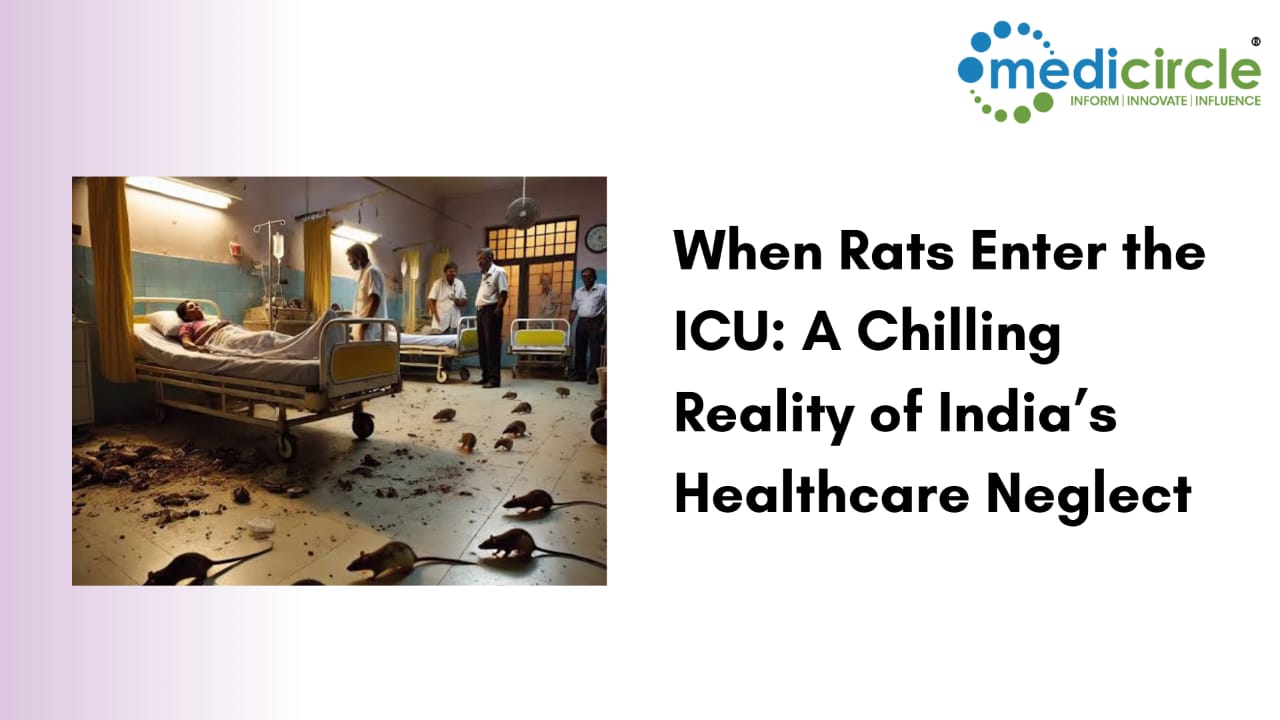
In a country where we often speak about medical advancements, digital health innovations, and the growth of super-specialty hospitals, it is shocking to even imagine that the most vulnerable patients i.e. newborns fighting for their lives in a neonatal intensive care unit could be subjected to something as primitive and horrifying as rat bites. Yet, this is not a tale from a distant past or a neglected corner of society. This unfolded at Indore’s premier Maharaja Yeshwant Rao (MY) Hospital, the largest hospital in Madhya Pradesh, where two fragile newborn babies admitted to the neonatal ICU with congenital anomalies were bitten on their tiny fingers by rats.

The very idea is enough to shake one’s conscience. Parents hand over their newborns to a hospital with faith that medical science, sterile environments, and trained professionals will provide the best chance of survival. Instead, what they encountered was a reality no parent should ever have to face. Rodents roaming freely in a facility that is supposed to represent the highest standards of care. The babies have since been shifted to another facility and are receiving continuous medical supervision, but the scar this incident leaves is deeper than a physical wound. It is a reminder that even in the era of medical excellence, basic hospital hygiene is often compromised in India.

Dr. Ashok Yadav, the medical superintendent of the hospital, acknowledged the incident and admitted that the staff should have been more alert to the rat menace. He also revealed that the hospital has been struggling with rodent infestation for several years, despite conducting eradication drives. Old surrounding structures, persistent rodent populations, and now monsoon rains have aggravated the problem, pushing rats into the hospital’s wards. With rat catchers proving ineffective and even glue traps in short supply in local markets, the problem is spiraling into a crisis that puts patients at risk.

This single shocking incident speaks volumes about systemic lapses. India has been striving to build an image of world-class healthcare. We speak of medical tourism, robotic surgeries, and organ transplants, yet in our largest state-run hospitals, patients are still battling diseases of neglect: unhygienic wards, rodent infestations, and poor infection control. A neonatal intensive care unit is meant to be the most sterile corner of a hospital, where premature and sick infants are shielded from infections that could take their lives. If rodents can enter and bite infants in such a protected space, it indicates a collapse in basic infrastructure and monitoring.

The anger and outrage over this incident are justified, but the real question is whether this outrage will lead to meaningful change. Healthcare crises in India often make headlines for a few days, spark debates, and then fade into silence, until another tragedy forces the conversation again. Behind each of these headlines are families whose lives are forever altered. Imagine the trauma of the parents of those newborns who were already dealing with the anxiety of congenital health conditions, and then having to face the horror of their infants being attacked by rats within hospital walls.

Hospitals are meant to inspire trust. They are supposed to be sanctuaries where people turn in their most desperate hours, believing that they or their loved ones will be safe. Yet, when basic hygiene and pest control cannot be ensured, the word “safe” loses all meaning. This is not just about one hospital in Indore; it is about the state of public health infrastructure across India. Similar incidents have been reported in other states in the past with rodents chewing through oxygen pipes, lizards found in food served to patients, stray dogs wandering into hospital corridors. Each of these episodes is not an isolated accident but a symptom of deeper neglect.

One cannot ignore the context of overcrowding and resource shortages in public hospitals. MY Hospital is the largest in Madhya Pradesh, which means it carries a tremendous patient load. Doctors are overburdened, nurses are stretched thin, and infrastructure struggles to keep up with demand. In such conditions, pest control and routine maintenance are often pushed down the priority list, overshadowed by the more immediate pressures of managing patients and emergencies. But when maintenance and hygiene are treated as secondary, the results are catastrophic, as seen in this case.

The hospital authorities have promised to launch another round of eradication programs. Yet the question remains: how effective can such drives be if they are not sustained and if the root causes are not addressed? Temporary rat-catching campaigns are not solutions to a persistent infestation. The hospital requires structural changes like renovation of old wards, sealing of entry points for rodents, strict daily monitoring, and accountability for lapses. Hygiene and pest control should be considered as critical to patient care as medicines and ventilators. After all, a hospital that cannot keep rats away from its ICU cannot claim to provide safe treatment.

Beyond infrastructure, this is also about governance. India has numerous committees and regulatory bodies that outline standards for hospital infection control and sanitation. Guidelines exist on how wards should be maintained, how pest control should be done, and how hygiene must be monitored. But guidelines on paper are meaningless unless they are enforced with vigilance. There must be independent monitoring systems that regularly check hospitals for hygiene standards, just as medical councils inspect them for academic and treatment quality. Accountability should not end at apologies or statements of concern, it should translate into visible reforms.

The tragedy also forces us to reflect on a larger irony in India’s healthcare system. Private hospitals advertise state-of-the-art facilities and charge lakhs for specialized treatments, while government hospitals, which cater to the majority of India’s population, often struggle with cleanliness and basic patient safety. This creates a dangerous divide. The poor and middle-class citizens, who cannot afford private care, are left with no option but to seek treatment in state-run hospitals, regardless of their conditions. When incidents like rat bites happen, it underlines not just hospital negligence but also the social inequality that defines access to healthcare in India.

There is also a cultural angle that cannot be ignored. In India, discussions about healthcare often revolve around numbers, how many doctors per thousand population, how many new medical colleges, how many beds. Yet, very little attention is given to the lived experiences of patients. Hygiene, dignity, empathy, and safety are not quantified easily, but they are the very heart of healthcare. For the parents in Indore, the number of doctors or beds in MY Hospital did not matter. What mattered was that their infants were safe, and that basic expectation was cruelly shattered.

As the incident continues to spark outrage, it is vital to use this moment as a turning point. Pest control in hospitals should not be treated as a one-time event but as an ongoing commitment. Staff should be trained not just in medical care but also in infection prevention and monitoring. Civil society, media, and patient advocacy groups must keep the pressure alive, demanding accountability and reforms rather than letting the issue fade away.

Hospitals should also embrace transparency. If there are problems like rodent infestation, they should not be hidden until an incident forces them into the spotlight. Instead, hospitals should openly acknowledge challenges and invite collaborations with local authorities, health experts, and even communities to solve them. After all, healthcare is not just about curing illnesses; it is about building trust. And trust can only be restored through honesty and action.

The story of the two newborns at MY Hospital is not just about rat bites. It is about what those bites symbolize: neglect, failure of systems, and the betrayal of patient trust. It is a reminder that healthcare cannot be judged only by high-tech equipment or grand buildings. True healthcare begins with the basics like cleanliness, safety, empathy, and respect for human life. Until these basics are prioritized, India will continue to face healthcare scandals that shock the nation but leave families scarred forever.

The cries of those newborns, though unheard by the world, must echo as a call for change. They must push administrators, doctors, and policymakers to rethink what it means to provide care. A hospital is not truly a place of healing until it ensures that its patients, especially the most vulnerable, are shielded from harm. If we cannot protect a newborn in an ICU from rats, what does it say about our promises of advanced healthcare?

The parents of the bitten newborns may never forget the horror they endured, but perhaps their painful experience can become the spark for a larger awakening. If this tragedy pushes us to demand cleaner, safer, more accountable hospitals, then their suffering will not be in vain. India owes this to every patient who walks into a hospital with faith. Healthcare is a promise, and that promise must never be broken by something as preventable as a rat bite.


Because when rats enter the ICU, it is not just about rodents. It is about the cracks in a system that has forgotten the value of human dignity. And unless those cracks are repaired with urgency, India’s dream of true healthcare for all will remain a distant illusion

Tags : #HospitalNegligence #PatientSafety #HealthcareAccountability #PublicHealthCrisis #HospitalHygiene #HealthcareReform #TrustInHealthcare #MedicalNegligence #HealthForAll #HealthcareSystem #ProtectOurPatients #HealthcareInIndia #HospitalSafety #RightToHealth #HealthCrisisIndia #PublicHealthIndia #HospitalReform #HealthcareAwareness #PatientRights #smitakumar #medicircle

Related Stories

Loading Please wait...

-Advertisements-


Trending Now

Cholesterol Explained: Good vs Bad Cholesterol and What It Means for Your HeartJuly 11, 2026
Role of Technology in Hospitals: How Indian Healthcare is Being ReshapedJuly 11, 2026
175 years after ancestors left UP, Indo-Trinidadian infant receives rare liver transplant at Apollo DelhiJuly 10, 2026
Fortis Escorts Faridabad Strengthens Advanced Care Ecosystem with Launch of: Fortis Cancer Institute Institute of Neurosciences Centre of Excellence in Critical Care and ECMOJuly 10, 2026
India’s first focused health AI Conclave unites doctors and AI expertsJuly 10, 2026
University of Leeds Opens Applications for MSc Biotechnology with Business Enterprise for Indian StudentsJuly 10, 2026
How Doctors Are Changing the Face of Indian HealthcareJuly 10, 2026
Medical Innovations to Watch in 2026: How Technology Is Reshaping Healthcare in IndiaJuly 10, 2026
Government of India Notifies Polymatech Electronics’ Semiconductor and Electronic Components SEZ at Nava Raipur, ChhattisgarhJuly 09, 2026
Iswarya Fertility Center Raises Over INR 350 Crore from OrbiMed AsiaJuly 09, 2026
Happiest Health Announces Launch of Speciality Clinics Happiest Paediatrics, Happiest Orthopaedics, Happiest Gynaecology, Happiest Endocrinology & Your Personal PhysicianJuly 09, 2026
Cetaphil launches new AM/PM Antioxidant Serum Duo in India July 09, 2026
THIP Partners with ISSRF to Launch Digital Patient Education Programme for EndometriosisJuly 09, 2026
Blood Tests Everyone Should Understand: A Complete Guide for Indian AdultsJuly 09, 2026
CT Scan vs MRI: Understanding the Difference and Choosing the Right Diagnostic Imaging TestJuly 09, 2026
Robotic Surgery in Modern Urology and Gynecology: Precision, Recovery, and SafetyJuly 08, 2026
Apollo Hospitals Gives Filipino Twin Brothers a New Lease of Life Through Rare Twin Liver TransplantsJuly 08, 2026
Fibroheal Raises ₹14 Crore to Fuel Next Phase of Growth and Entry in Developed MarketsJuly 08, 2026
Veda Rehabilitation & Wellness Opens Himalayan Mental Health Recovery Retreat in Sikkim for Addiction Recovery and Mental WellbeingJuly 08, 2026
















