 Thursday, October 08, 2026
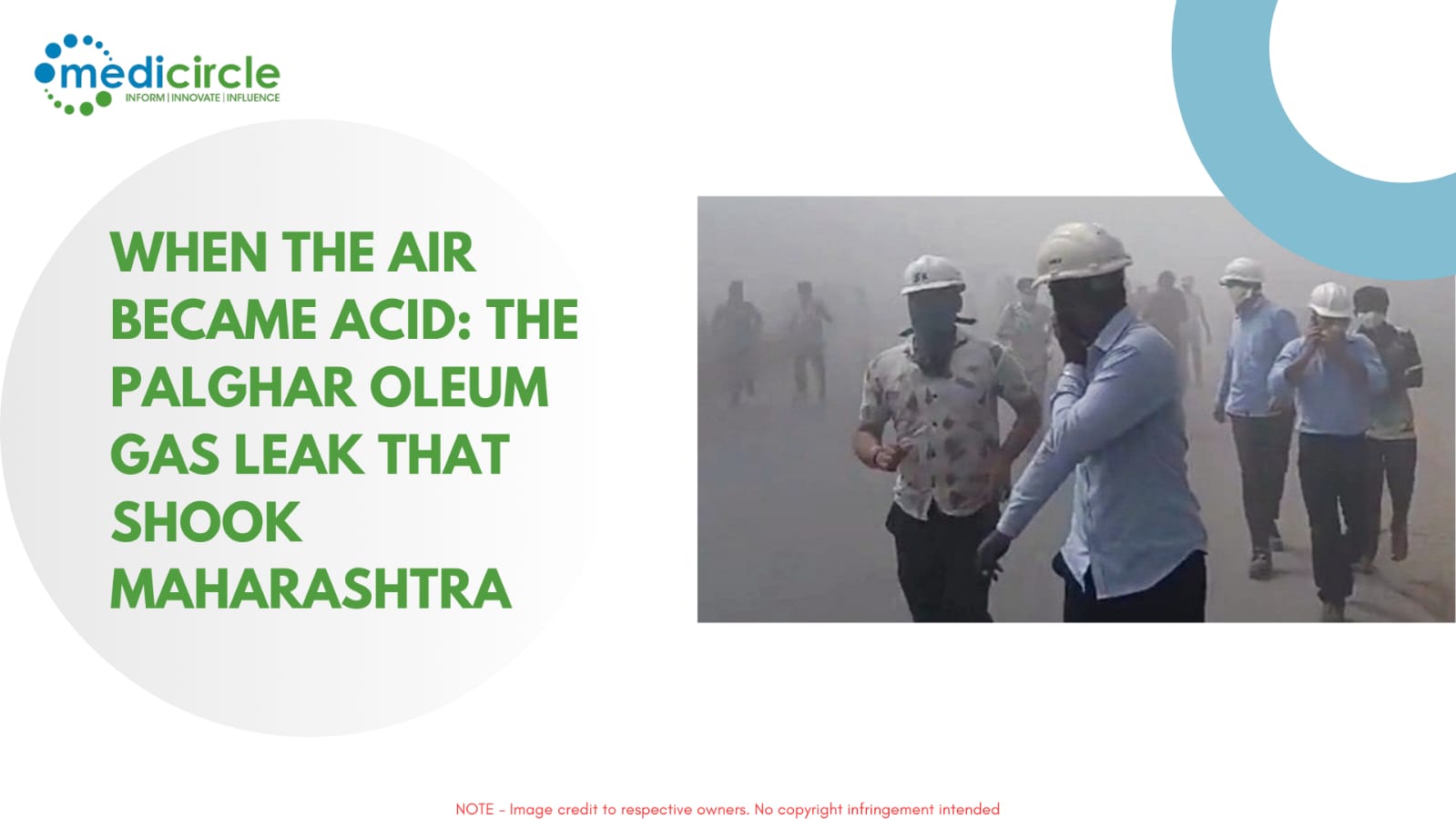
 Chemical exposure incidents, even when controlled swiftly, expose the fragile interface between industry and habitation.




At two in the afternoon, classrooms in Boisar were moving through an ordinary school day. Workers in nearby factories were finishing routine tasks. Shopkeepers were counting the slow drift of customers typical of a weekday afternoon. Then the air changed. A sharp, choking sensation crept into throats. Eyes began to sting. Within minutes, a thick white haze rolled across parts of the industrial belt in Palghar district, unsettling thousands and forcing a hurried evacuation that would expose how thin the line is between industrial growth and public safety.
On March 2, 2026, a significant oleum gas leak was reported from a chemical manufacturing unit operated by Bhageria Industries Ltd. in the Boisar MIDC area on the outskirts of Mumbai. Oleum, often described as fuming sulphuric acid, is a highly corrosive and hazardous industrial chemical. Stored in large tanks for manufacturing processes, it is essential to certain industries. Yet when containment fails, the consequences can be swift and alarming.
According to district authorities, the leak originated from a 2,500-litre oleum tank inside the facility. Strong winds carried the fumes outward, forming a visible white cloud that drifted across nearby areas within a radius estimated at several kilometres. Panic spread faster than the gas itself. Residents shut doors and windows. Workers abandoned assembly lines. Parents rushed toward schools, only to find that evacuation procedures were already underway.
More than 2,600 people were moved out of precautionary zones. Among them were nearly 1,600 students from Tarapur Vidyamandir, escorted away from their classrooms to safer locations. Over 1,000 factory workers from the affected unit and neighbouring industrial establishments were also evacuated. In moments like these, numbers tell one part of the story; the other part is written in the faces of children stepping into buses under uncertain skies and labourers standing outside gates, unsure whether to return home or wait for instructions.
Oleum is not a household chemical. It is an industrial compound used in dye production, explosives, and various chemical processes. When exposed to moisture in the air, it releases dense fumes that can irritate the eyes, skin, and respiratory tract. In high concentrations, exposure may lead to severe chemical burns or lung injury. The sight of white vapour alone is enough to create fear, particularly in densely populated industrial corridors where residential clusters stand close to factories.
Palghar district has emerged over the years as a significant industrial hub in Maharashtra. The Boisar MIDC zone houses multiple chemical and manufacturing units. Industrialization has brought employment and economic activity to the region. It has also created a landscape where hazardous materials are stored and transported daily, often within a few kilometres of schools, markets, and homes.
When the leak was reported, the district administration activated its disaster management protocol. National Disaster Response Force teams were deployed to the site. Specialists from the Bhabha Atomic Research Centre joined the response, alongside local fire brigade personnel. The early hours of containment were challenging. High concentrations of fumes made it difficult for responders to approach the leaking tank safely.
Equipped with self-contained breathing apparatus, chemical experts and NDRF personnel eventually traced the source of the leak. Sandbags were placed strategically around the affected tank in an effort to suppress vapour release and limit the spread. The scene was a reminder that disaster response requires precision, coordination, and training. A single miscalculation in such environments can escalate exposure risks.
Health officials later confirmed that three individuals reported minor eye irritation and were taken to hospitals for evaluation. No severe injuries were recorded. On paper, that outcome appears reassuring. Yet public health experts know that the absence of immediate casualties does not automatically erase concern. Chemical exposure incidents demand follow-up monitoring to ensure delayed respiratory or ocular complications do not emerge in the days that follow.
The district collector, Dr. Indu Rani Jakhar, stated that the situation was under control and urged residents to remain indoors and follow official advisories. Law enforcement authorities appealed for calm, emphasizing that containment measures were in place. In the age of instant messaging and social media, rumours can intensify fear. Clear communication becomes as important as physical containment.
Incidents like the Palghar oleum gas leak raise deeper questions about industrial safety standards, environmental health monitoring, and emergency preparedness in rapidly expanding industrial zones. Maharashtra is one of India’s most industrialized states. Chemical manufacturing contributes significantly to the state’s economy. However, economic output cannot be separated from occupational safety and community health safeguards.
Industrial safety audits are mandated under various environmental and factory regulations in India. Hazardous chemical storage requires adherence to strict guidelines, including maintenance checks, leak detection systems, and staff training in emergency response. When a major leak occurs, it prompts scrutiny of whether routine inspections were adequate and whether early warning systems functioned effectively.
Public health planning must account for the reality that industrial accidents can expose not just workers but entire communities. Schools located near industrial belts require evacuation protocols tailored to chemical hazards. Local hospitals need preparedness plans for chemical exposure management, including availability of protective equipment and trained personnel.
The Palghar incident also highlights the importance of environmental health surveillance. Air quality monitoring systems in industrial clusters can provide early detection of abnormal emissions. Transparent reporting mechanisms build community trust. When residents feel informed, panic decreases and cooperation improves.
Occupational health remains a critical yet often underemphasized component of India’s healthcare narrative. Workers in chemical plants face daily exposure risks. Personal protective equipment, regular health check-ups, and emergency drills are not optional luxuries; they are safeguards that protect livelihoods and lives. The Boisar episode serves as a reminder that safety culture must be continuous rather than reactive.
There is also a broader urban planning question. As cities expand and industrial corridors grow, zoning regulations must ensure adequate buffer zones between hazardous units and residential areas. In many parts of India, rapid development has blurred these boundaries. Schools, housing colonies, and marketplaces sometimes sit within short distances of chemical facilities. When accidents occur, evacuation becomes logistically complex.
The psychological impact of such incidents should not be underestimated. For children evacuated from classrooms under a cloud of chemical fumes, the memory may linger long after the air clears. Anxiety, fear of recurrence, and mistrust of nearby factories can shape community sentiment. Health communication strategies must therefore extend beyond immediate advisories and address long-term reassurance.
Environmental activists often argue that India’s industrial safety enforcement requires strengthening. Industry representatives counter that compliance standards have improved significantly over the past decades. The truth likely lies between these positions. What remains indisputable is that hazardous chemical management demands constant vigilance.
Oleum exposure primarily affects mucous membranes. Immediate symptoms may include burning eyes, throat irritation, coughing, and shortness of breath. Severe exposure can cause chemical pneumonitis. Emergency response guidelines typically emphasize rapid evacuation from the exposure zone, removal of contaminated clothing, flushing of affected skin or eyes with water, and medical evaluation. Community awareness about such first-aid measures can reduce harm during initial moments.
The Palghar gas leak did not escalate into a mass casualty event. That fact is fortunate. Yet near-miss incidents often carry lessons as valuable as disasters. They reveal vulnerabilities in infrastructure, communication chains, and risk perception. They also offer an opportunity to reinforce preventive systems before a more severe accident occurs.
Industrial growth and public health must move in tandem. Maharashtra’s chemical sector provides employment and fuels economic momentum. Safeguarding surrounding communities ensures that development does not come at the expense of health security. Transparent investigations into the cause of the leak will be essential. Whether it was equipment failure, maintenance oversight, or procedural lapse, identifying the root cause can prevent recurrence.
The Palghar incident should prompt renewed dialogue among policymakers, industry leaders, environmental experts, and healthcare professionals. Strengthening industrial safety audits, investing in advanced leak detection technology, conducting regular evacuation drills, and enhancing community awareness programs can collectively build resilience.
For residents of Boisar, the white cloud has dispersed. Schools have resumed routine. Factory gates have reopened. Yet the episode lingers as a cautionary tale. When hazardous chemicals are part of daily industrial operations, preparedness cannot be episodic. It must be embedded in governance.
Chemical exposure incidents, even when controlled swiftly, expose the fragile interface between industry and habitation. The responsibility to protect lives rests on multiple shoulders including corporate management, regulatory authorities, disaster response agencies, and local administrations. Effective coordination among these stakeholders determines whether a leak remains an incident or becomes a tragedy.
In the coming weeks, detailed assessments will likely examine safety compliance records and containment protocols. For the broader public, the takeaway should be clear. Industrial safety is a health issue. Environmental monitoring is a healthcare investment. Emergency preparedness is preventive medicine on a community scale.
When the air turns toxic, it forces society to confront uncomfortable truths. Economic progress without robust safety frameworks can place communities at risk. The Palghar oleum gas leak may have resulted in only minor medical complaints, but it delivered a major warning. Vigilance, transparency, and accountability must define the next chapter of industrial development in India.






.jpeg)








.jpg)
.jpg)
.jpg)
.jpg)
.jpg)
.jpg)


.jpg)
.jpg)
.jpg)