 Thursday, October 08, 2026
 The real tragedy is that this crisis is preventable. The evidence is robust. The damage is measurable. What remains missing is the will to redesign policies around the realities of PM2.5. India cannot afford to underestimate the threat anymore.




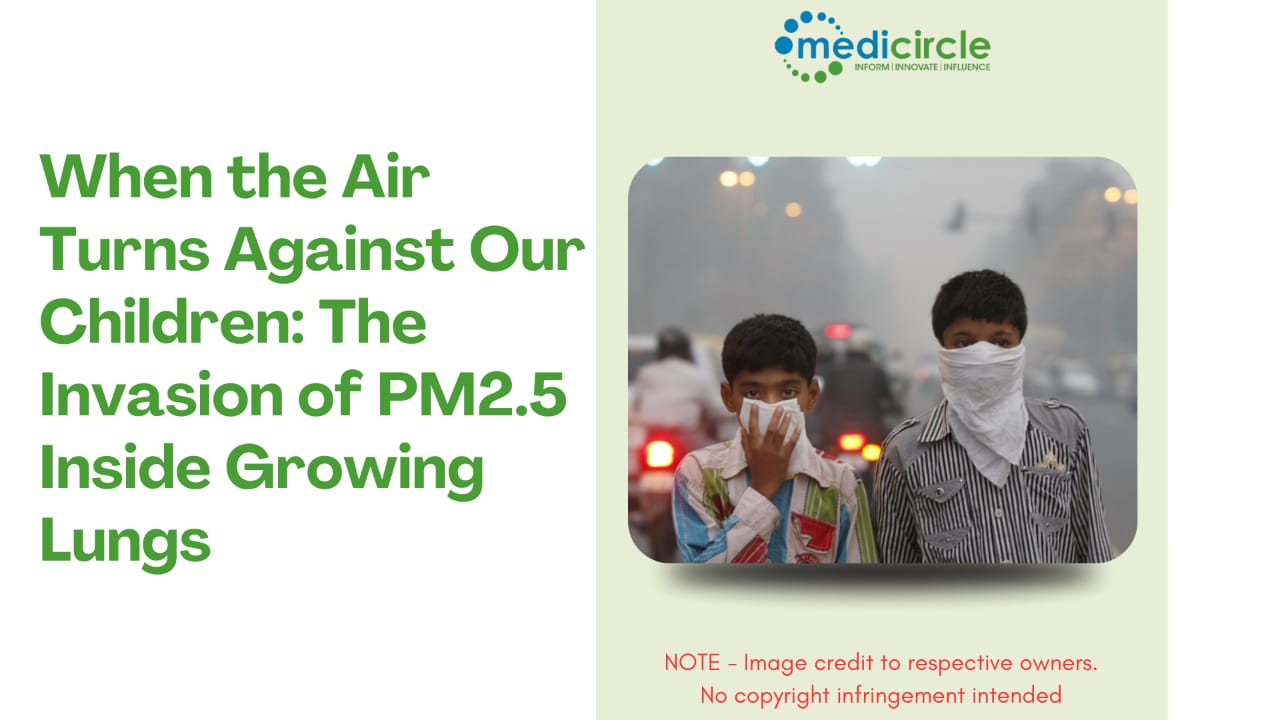
There are stories we hear, stories we ignore, and stories that must shake us awake. The toxic air our children breathe each day belongs to the last category. Every parent worries about exam scores, screen time, nutrition, and school admission lists, but the threat creeping deepest into a child’s body comes from a direction most families cannot see i.e. the polluted air settling quietly inside their lungs. We speak endlessly about air pollution, but the true danger lies in how these microscopic particles behave once they enter the human body, especially the young and fragile one. Recent scientific evidence reveals a truth that feels almost cruel: the smallest particles are reaching the deepest corners of children’s lungs, where they remain trapped for the longest time.
PM2.5, the fine particulate matter that floats invisibly around us, has emerged as the most ruthless of all pollutants. Unlike larger particles that get caught in the nose or throat, PM2.5 slips past the body's natural filters, travels through the airways, and embeds itself in the most delicate regions of the lungs still developing in children, regions whose damage may never fully repair. The behaviour of PM2.5 is what makes it such a dangerous pollutant, and recent peer-reviewed studies are now showing us exactly how deeply and aggressively it settles inside young lungs.
A study conducted by air-quality researchers has mapped how PM2.5 travels inside infants, school-going children, and adults. The numbers tell a disturbing story: children face the highest deep-lung deposition levels, meaning that a major portion of the air they inhale ends up lodging in the pulmonary region which is the inner landscape of the lungs responsible for oxygen exchange. In scientific terms, deep deposition is where the pollutant settles in the tiniest air sacs, far beyond the reach of the body’s natural ability to cough it out. Once PM2.5 reaches this zone, it stays longer, causes persistent inflammation, and can influence health far into adulthood.
The study highlights a shocking detail, children around eight years old show the highest accumulation of these fine particles. The deposition rate is close to 40%, which implies that almost half of what they inhale reaches the deepest corners of their lungs. Infants, though younger, show a deposition rate of about 30%. In adults, the numbers drop, but the risk remains. This consistency across age groups reflects a haunting truth: PM2.5 behaves in the same destructive way regardless of the city, weather, or surroundings. Children in Chennai and children in Delhi inhale differently, but what enters their lungs behaves almost identically.
The key reason children suffer more lies in their physiology. Their lungs are growing. Their airways are narrower. Their breathing rate is faster. Their tissues are softer and more receptive to damage. Every breath becomes an invitation for pollutants to enter, settle, and stay. The combination of delicate anatomy and polluted surroundings becomes a slow-burning threat, much worse than what adults face. The air becomes an enemy long before a child learns to identify right from wrong.
For PM10, the larger particles, the risk is low because they get trapped in the upper respiratory pathways i.e. the head region, nose, throat, and trachea. But PM2.5 and the even smaller PM1 do not follow this path. They cross the checkpoints, slip past the barriers, and settle deep inside the lungs. According to deposition studies, 28%–53% of PM2.5 sits in the pulmonary region across infants, children, and adults. The lower lung lobes also bear a majority of the burden, absorbing almost two-thirds of the total pollutant load. These findings offer a scientific explanation for why children in polluted cities show higher rates of respiratory infections, asthma, chronic cough, reduced lung capacity, and long-term vulnerabilities.
The slower the body clears these particles, the longer the damage continues. PM2.5 is removed far more slowly than PM10, which means every particle that settles inside a child’s lung stays for extended periods, often causing inflammation, oxidative stress, tissue injury, and long-term changes that could last a lifetime. This delayed clearance is one of the reasons why doctors are witnessing respiratory issues in younger age groups, something that was once uncommon in children without pre-existing health problems.
Despite the evidence, policy responses across Indian cities are yet to align with the problem. Many current air-quality measures still prioritise PM10, focusing on dust control measures like water sprinkling, construction site covers, and road cleaning. While dust is a problem, it is not the villain responsible for the dangerous levels of PM2.5 choking cities like Delhi during winter. Pollution data from Central Pollution Control Board bulletins show that PM2.5 dominates Delhi’s air for most days of the winter season. More than two-thirds of the particulate pollution load comes from PM2.5, not PM10. Yet the measures implemented on the ground remain heavily dust-oriented, missing the real sources that contribute to this fine particulate rise.
The sources that feed PM2.5 are related to combustion i.e. emissions from vehicles, industrial units, power plants, waste burning, and biomass burning. These processes release ultra-fine particles directly into the air. They cannot be swept away by brooms or controlled by covering construction debris. They require bold, targeted interventions, backed by strict monitoring and enforcement, something that India’s pollution management ecosystem has struggled to implement consistently.
Air pollution policies must acknowledge the nature of PM2.5: it is small, aggressive, and persistent. Unlike dust, it behaves more like smoke, carrying chemical components capable of penetrating deep tissues. When PM2.5 becomes the dominant pollutant as it has in most major Indian cities, policy must shift accordingly. Physicians, researchers, and clean-air advocates have been pointing out for years that PM2.5-specific action plans are the need of the hour for public health protection.
Children’s health should have been the starting point of environmental policymaking, not an afterthought. Their exposure windows are wider, they breathe closer to the ground, and they have more years ahead to experience the health consequences of early lung damage. If PM2.5 is settling in their lungs at such high levels, the resulting effects may shape an entire generation’s respiratory health profile. This is not just a medical concern but a societal one where the economic burden of chronic diseases, reduced productivity, and compromised quality of life begins with the air they inhale today.
India stands on the edge of a defining moment with NCAP 2.0 (National Clean Air Programme 2.0). This is not just another policy update; it is an opportunity to correct course and put PM2.5 at the heart of action plans. Air quality strategies that fail to centre PM2.5-specific measures are bound to fall short. It is time to admit that dust-control strategies alone cannot rescue the lungs of millions of children. Combustion-driven pollution must be treated as an everyday emergency.
We need cleaner vehicles, stricter industrial emissions control, better waste management, and aggressive reduction of biomass burning. We need air-quality monitoring that captures real trends instead of chasing misleading metrics. We need public awareness campaigns that explain what PM2.5 does inside the body, not just what the Air Quality Index number means. Most importantly, we need to acknowledge that progress cannot be claimed unless every Indian child breathes cleaner air.
The invisible invasion of PM2.5 inside young lungs is not a distant threat anymore. It is happening today, in every school playground, in every morning walk to the bus stop, in every bedtime breath. Children inhale more air per kilogram of body weight, making each pollutant more potent inside their bodies. For them, pollution is not a seasonal inconvenience; it is a constant, lifelong exposure. When fine pollutants settle deep inside their lungs, they are not just inhaling toxic particles they are inhaling a future filled with health risks they never asked for.
The real tragedy is that this crisis is preventable. The science is clear. The evidence is robust. The damage is measurable. What remains missing is the will to redesign policies around the realities of PM2.5. India cannot afford to underestimate the threat anymore. The lungs of its children carry the weight of decisions that adults make today.
If the air has turned against our children, then every conversation about pollution, policy, and public health must begin with this truth. The story unfolding inside their lungs is silent, but it is serious. And unless we change the air they breathe, the harm will echo across generations. That is the warning science gives us and its a warning we must not ignore.





.jpeg)










.jpg)
.jpg)
.jpg)
.jpg)
.jpg)
.jpg)


.jpg)