Tuesday, October 06, 2026
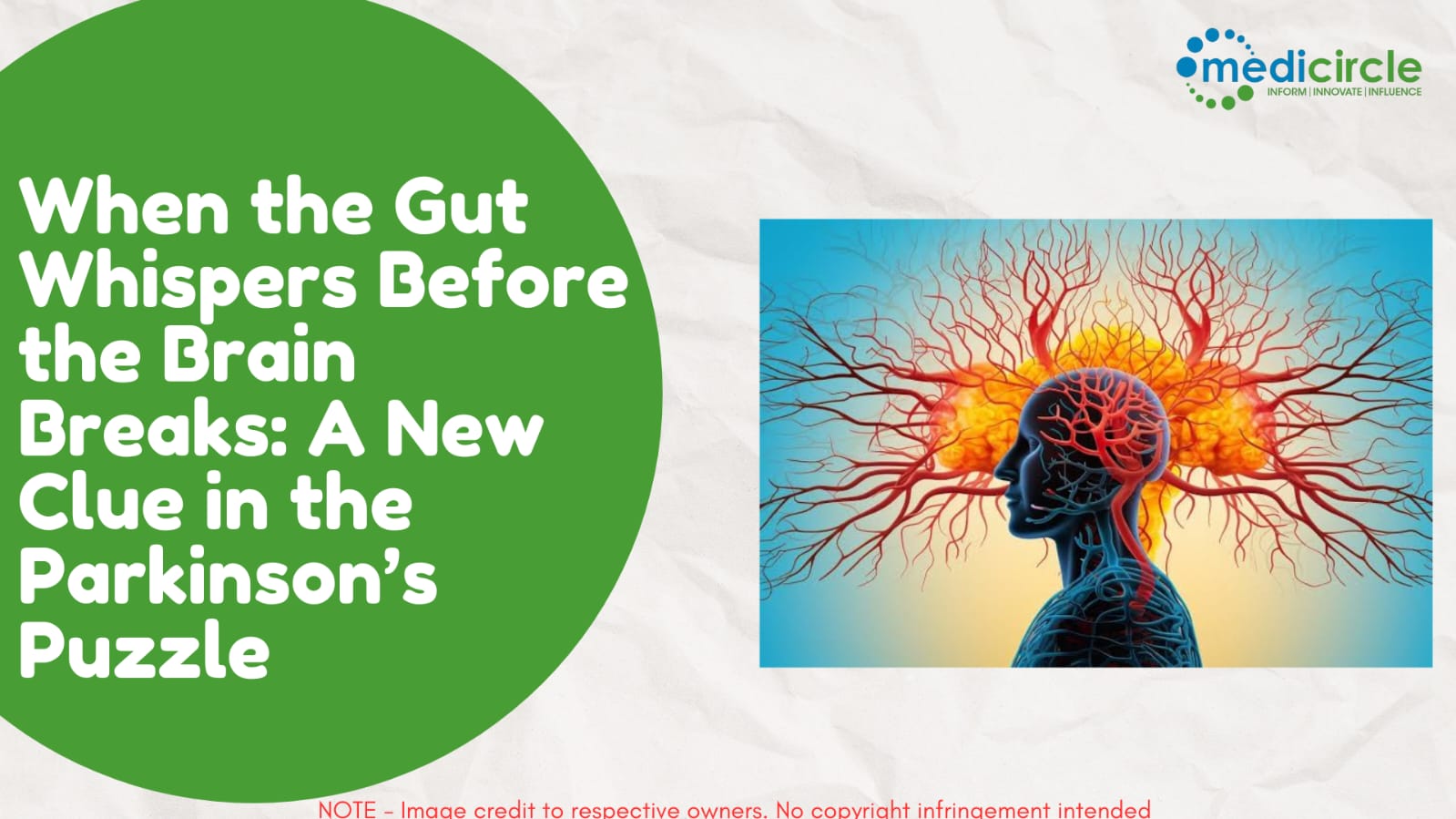
 As the world continues exploring the remarkable connection between microbes and the brain, the hope is that one day, patients will face a future where progression can be slowed, symptoms can be softened, and quality of life can be preserved for longer.




For decades, the world believed Parkinson’s disease began in the brain, slowly stealing movement, balance, and eventually independence. But science is beginning to tell a different story. The gut, once dismissed as a simple digestive system, is now emerging as a central player in the early stages of Parkinson’s, long before tremors, stiffness, or memory changes appear. The latest research has added a surprising twist to this unfolding narrative, pointing towards two humble nutrients (vitamin B2 and vitamin B7) as possible keys to slowing down this relentless disease.
The curiosity around the gut–brain connection is not new, but what researchers are now uncovering is far more profound than anyone expected. A group of scientists led by Hiroshi Nishiwaki at Nagoya University discovered patterns in the gut microbiome that may influence the onset and progression of Parkinson’s disease. Their study, published in 2024, has sparked discussions around the world because it hints at a therapeutic possibility that is far simpler than we imagined. In a condition where patients often rely on years of medication, complicated treatment plans, and symptom management, the idea that certain B vitamins could play a meaningful role feels both hopeful and surprising. Yet the science behind this possibility is anything but simplistic.
Parkinson’s disease touches nearly 10 million people across the world. In India alone, doctors see rising numbers every year, with patients often reaching hospitals at advanced stages. What makes this disease particularly distressing is how long it brews unnoticed. Many people later diagnosed with Parkinson’s recall that they first struggled with digestive issues, sleep disturbances, or vague discomfort nearly two decades before their motor symptoms surfaced. Constipation, loss of smell, early fatigue, these quiet signals often appear years before the tremors. For a long time, these clues were treated as unrelated, but modern science insists they may be the very first whispers of Parkinson’s.
Previous studies have shown that the gut microbiome (trillions of microbes living inside us) changes significantly in people who eventually develop Parkinson’s. Nishiwaki’s team wanted to understand these changes more deeply, so they analysed stool samples from 94 patients in Japan and compared them with samples from healthy individuals. They then studied similar datasets from China, Taiwan, Germany, and the United States. What they found was striking. While the specific microbial species differed across countries due to diet, environment, and genetics, the effect of these microbes pointed toward the same pathways, especially pathways that produce riboflavin (vitamin B2) and biotin (vitamin B7).
These vitamins are more important than we realize. Riboflavin plays a critical role in energy production and cellular repair, while biotin helps maintain metabolism and supports nerve health. When gut bacteria lose the ability to support these vitamins, the body feels the impact. The researchers observed that people with Parkinson’s had lower levels of these vitamins and, as a result, lower levels of short-chain fatty acids and polyamines i.e. molecules that help build a healthy mucus barrier in the intestines. When this protective layer weakens, the gut becomes more permeable, allowing harmful substances to seep into areas they should never reach.
This is where the chain reaction begins. Our world is filled with chemicals such as pesticides, herbicides, industrial pollutants, and household cleaning agents. When the intestinal barrier loses its strength, these toxins have easier access to the nerve fibres that line the gut. Over time, this exposure can trigger the production of abnormal α-synuclein proteins, which can travel along the vagus nerve and eventually settle in the brain. When these proteins accumulate in the region responsible for dopamine production, Parkinson’s symptoms begin to surface. This concept, once hypothetical, is now supported by mounting scientific evidence.
What makes the recent findings remarkable is their simplicity. If the lack of riboflavin and biotin contributes to this chain of damage, could restoring these vitamins help slow the disease? Nishiwaki believes this is a possibility worth exploring. In fact, earlier research from 2003 had already shown that high doses of riboflavin improved motor functions in Parkinson’s patients who stopped consuming red meat. This sparks an intriguing question: If gut changes start long before major symptoms, could early vitamin supplementation slow down the process?
Vitamins alone are not the full story, of course. Parkinson’s is far too complex to be linked to one cause or one cure. But the gut microbiome seems to play a far bigger role than we ever imagined. As scientists continue to study the bacteria inside us, they are finding fascinating connections that go beyond Parkinson’s. For instance, some people digest high-fibre foods with remarkable efficiency because their gut microbes generate methane, giving them more energy from the same meal. This discovery helps explain why two people can follow identical diets yet experience completely different results.
Other research published recently revealed that the gut microbiome may also influence sleep. Scientists in China and the United States found that certain microbial communities can affect how well we rest at night. Meanwhile, a separate study from Cambridge identified bacteria capable of absorbing PFAS, popularly known as "forever chemicals" because they linger in our environment for years. These pollutants appear in everything from water to food packaging, and the idea that some gut microbes can trap them inside their cells has opened a new line of thought about how our internal ecosystem protects us.
In every direction, the microbiome seems to reveal new layers of influence. It shapes immunity, metabolism, mood, and now possibly the onset of neurodegenerative diseases. Yet it is fragile, dynamic, and deeply connected to what we eat, how we sleep, and the environment we live in. This makes the gut an important area for preventive healthcare, especially in conditions like Parkinson’s where early warning signs often go unnoticed.
If the findings from Nishiwaki’s team hold true, they could change the future of Parkinson’s care. Instead of waiting for tremors to begin, doctors might evaluate gut health decades earlier. Gut microbiota profiling, once considered niche, may soon become an essential screening tool. By understanding which microbial communities are imbalanced, clinicians may be able to personalize supplementation strategies. Patients with low levels of riboflavin and biotin could be guided toward targeted therapies, potentially slowing progression long before debilitating symptoms emerge.
The idea that simple nutritional support might offer relief in a disease long viewed as unstoppable is powerful, but it must be approached with scientific caution. Parkinson’s is influenced by genetics, environmental exposure, lifestyle, aging, and now the microbiome. No two patients experience the exact same journey. Some cases may be deeply tied to toxin exposure, while others may develop due to age-related changes in neurons. Some people show strong gut involvement early in life, while others exhibit primarily brain-dominated pathology. This complexity is why scientists emphasize the need for personalized treatment strategies rather than universal solutions.
Still, the potential impact of these findings cannot be ignored. If even a subset of patients benefit from B-vitamin supplementation, it could improve quality of life, delay symptom progression, and reduce dependence on more aggressive treatments. In a disease where early intervention makes all the difference, this possibility feels both meaningful and urgent.
The bigger takeaway from this growing body of research is the call to protect our gut health. The human microbiome thrives on diversity, fibre-rich diets, adequate sleep, and smaller exposure to harmful chemicals. Our modern lifestyle often disrupts these delicate balances, reducing microbial richness and weakening the very defences our body relies on. As the science becomes clearer, it becomes evident that safeguarding the gut may have long-term benefits for brain health as well.
We are entering a new chapter in our understanding of Parkinson’s disease, one where the story does not begin with a failing brain but with a struggling gut. The early whispers come through digestive changes, subtle vitamin shortages, and microbial imbalances that begin shaping the future long before symptoms catch our attention. This new perspective gives healthcare professionals a chance to intervene earlier, patients a chance to understand their risks better, and researchers a pathway toward gentler, more effective therapies.
If the gut truly holds early clues to Parkinson’s, then listening to those whispers could redefine the fight against this disease. As the world continues exploring the remarkable connection between microbes and the brain, the hope is that one day, patients will face a future where progression can be slowed, symptoms can be softened, and quality of life can be preserved for longer. It may start with something as simple as restoring the vitamins that our gut once produced with ease, a simple step in a complicated puzzle, yet one that could make a world of difference.





.jpeg)
.jpg)
.jpg)
.jpg)
.jpg)
.jpg)
.jpg)


.jpg)
.jpg)
.jpg)
.jpg)
.jpg)
.jpg)