 Tuesday, October 27, 2026
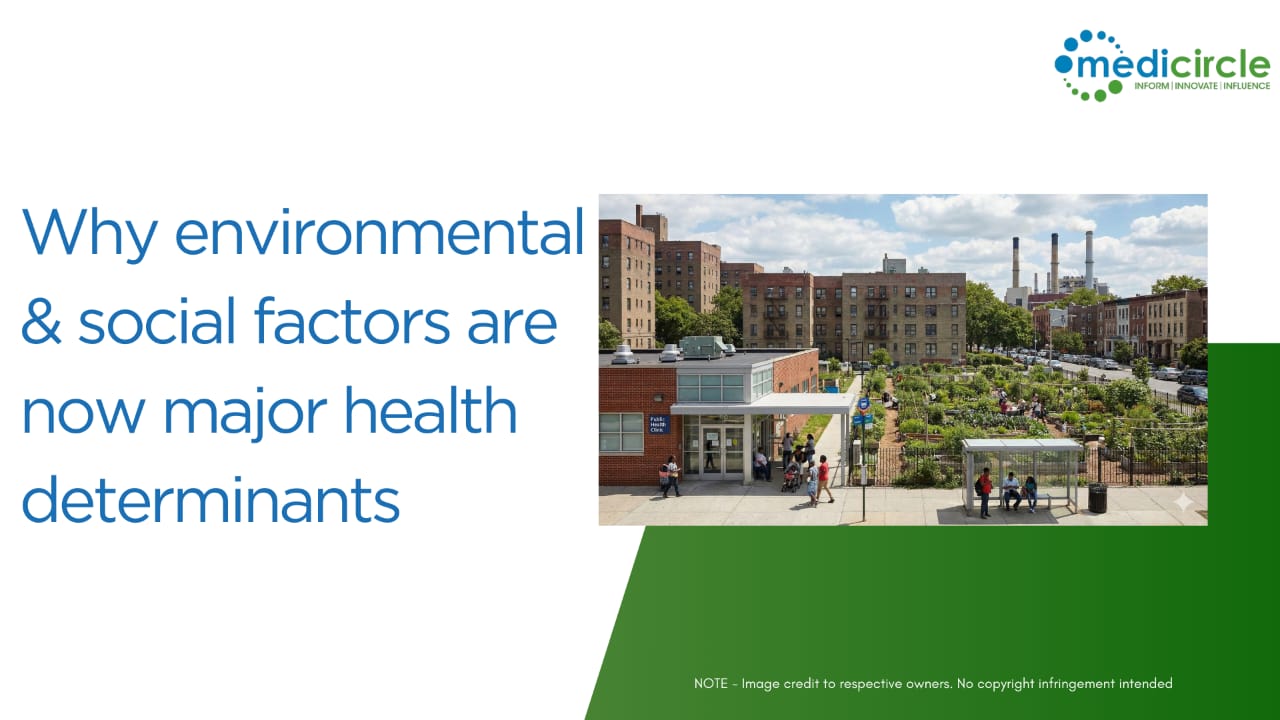
 Our health is shaped far more by where we live, work and connect than by medical care alone. Understanding these everyday conditions is key to improving true well-being.




For years, we have been handed a simple formula for good health: eat your vegetables, take a brisk walk and listen to your doctor. And while these actions matter, this picture is incomplete. It places the entire burden on individual choice, overlooking the powerful, invisible forces that shape our well-being long before we ever sit in a doctor’s office.
A quiet revolution is reshaping modern medicine. Experts are now turning their gaze beyond the clinic’s walls, recognizing that where we live, work and connect can be more decisive for our health than our genes or even the medical care we receive. This is not just theory; it is a fundamental rethink of what it means to be healthy.
The roots of well-being:
So, what are these powerful forces? They are called the social and environmental determinants of health. In plain language, they are the conditions of your everyday life that you might not even think to mention to your doctor. The World Health Organization describes them as the circumstances into which we are born, grow, live, work and age. They are shaped by economic policies, social norms and political decisions, creating a stark map of health outcomes across neighborhoods and communities.
Imagine building a house. The healthcare system is like a skilled repair crew, fixing leaks and mending walls. But if the foundation, the social and economic ground on which the house stands, is cracked or unstable, problems will keep surfacing, no matter how well the repairs. This foundation is built from key pillars:
Your financial health: This is not just your salary. It is job security, the burden of medical bills and whether a health crisis could push you into poverty.
Your physical surroundings: The safety of your home, the air you breathe, the quality of your water and your access to parks and green spaces.
Your community fabric: Your level of education, the strength of your social connections and the support you can rely on in tough times.
Your path to care: The real-world ability to get quality, affordable healthcare when you need it, without endless barriers.
Startling research suggests that these social and economic factors might influence nearly half of our health outcomes. In contrast, the clinical healthcare we often focus on most intensely accounts for only about 10 to 20 percent of the factors that keep a population healthy. The prescription, it seems is written long before we reach the pharmacy.
Story of medicine and money:
Statistics tell one story, but human experience tells another. Consider a patient, let us call her Priya, battling a serious illness. Her oncologist prescribes a cutting-edge medication, a beacon of hope. Then comes the crushing reality: the cost. Faced with an impossible choice, Priya might start splitting pills to make them last, gambling with the treatment’s efficacy to keep other basic needs, like rent or her children’s education within reach. Her survival is suddenly dictated not by medical science alone, but by brutal economic pressure.
This story reveals a painful paradox. In the very ecosystem where Priya struggles, hospitals and nursing homes, sealed, unused packages of life-saving medicine are often discarded as waste due to regulations or changing treatments. The barrier is not a shortage of medicine, but a system that allows it to be unaffordable for some and wasteful for others. Priya’s dilemma is a direct, human consequence of a social determinant in action.
How area affects your health:
You might wonder, how does something as broad as neighborhood translate to a personal health report? The connections are direct and visceral.
The air in an industrial belt or a congested city corridor, laden with pollutants, directly drives higher rates of asthma, bronchitis and heart strain.
Living in a food desert, an area without access to fresh, affordable produce, fuels the fire of diabetes, obesity and hypertension.
The relentless stress of financial insecurity or living in an unsafe environment constantly floods the body with cortisol, contributing to inflammation, high blood pressure, anxiety and depression.
The COVID-19 pandemic acted as a harsh spotlight, brutally illuminating these existing fault lines. It showed us how cramped housing, jobs that could not be done from home and unequal access to care stacked the odds against marginalized communities. The virus did not create these inequities; it simply exposed the cracks in our societal foundation that were already there.
Practical path ahead:
Confronting these vast, interconnected challenges can feel paralyzing. Where does one even begin? Meaningful change often starts by tackling one solvable link in the chain. This is where community-driven innovation shines a light on the path forward.
Take the critical issue of medication access, a perfect storm where economic stability crashes into healthcare quality. How can we bridge this gap? Some organizations are building practical, human-centered models to do just that. They address the tragic waste of unused medicines by creating secure channels to collect sealed, surplus medications from hospitals and care facilities. Following a rigorous, pharmacist-managed process to ensure safety and potency, these medicines are then provided at no cost to patients who are underinsured or facing catastrophic costs.
This is more than charity; it is a systemic intervention. It directly attacks one social determinant, the financial barrier to treatment, with a smart, sustainable solution. It proves that by looking past purely clinical answers, we can find powerful ways to improve health, reduce senseless waste and lift a terrible burden from patients and families.
Laying a new foundation:
This broader understanding of health is ultimately a call to collective action. It tells us that building a healthier society requires more than state of the art hospitals. It demands that we build stable homes, clean environments, fair wages and just systems.
Getting there requires all hands on deck: healthcare workers, policymakers, business leaders and community advocates all rowing in the same direction. It asks each of us to support efforts that strengthen these foundational pillars of health, whether through advocating for cleaner air, volunteering with local support groups or backing initiatives that ensure life’s essentials, like medicine and nutrition are within everyone’s reach.
True health is not merely the absence of a disease on a chart. It is the presence of vitality, dignity and opportunity, supported by a foundation of stability and care. By widening our focus to nurture the worlds in which we live, we do not just treat illness; we build the conditions for everyone to truly thrive.





-23-300x250.png)

.jpeg)






.jpg)
.jpg)
.jpg)
.jpg)
.jpg)
.jpg)
.jpg)
.jpg)
.jpg)

