 Thursday, October 08, 2026
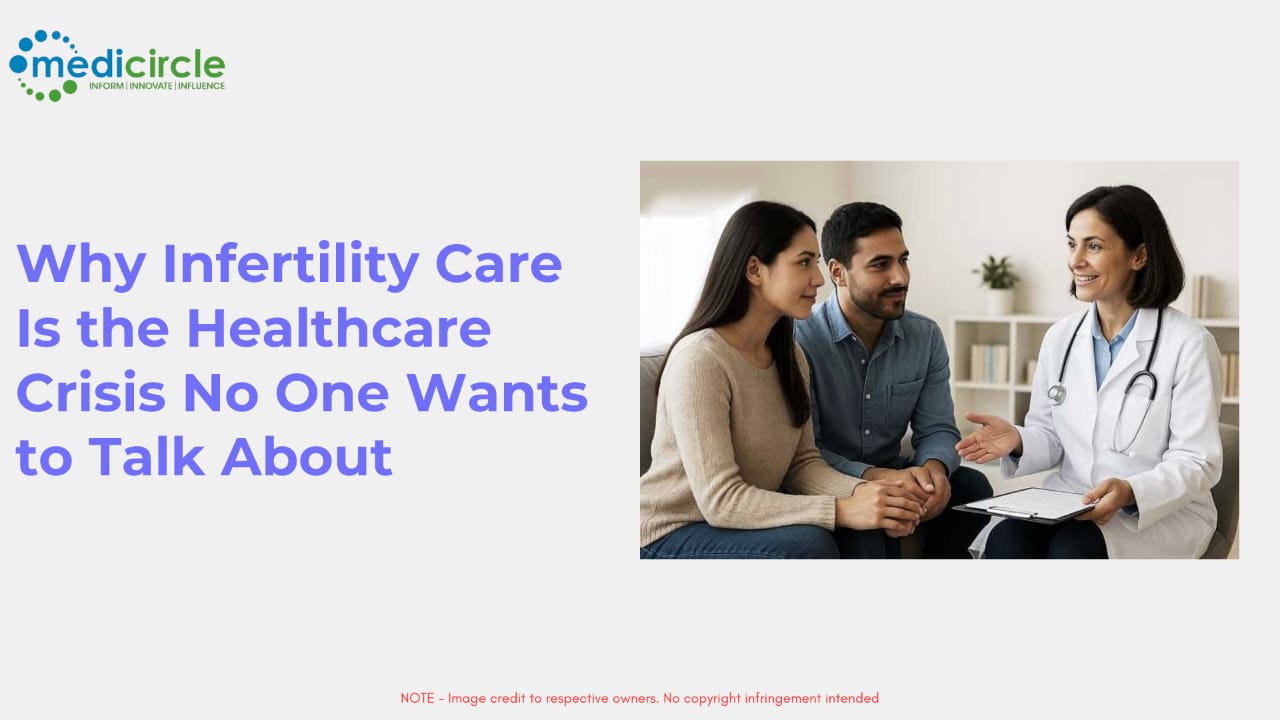
 As global conversations around maternal health, safe childbirth, women’s health and sexual health progress, infertility must no longer remain the missing chapter.




Infertility has lived in the shadows for far too long, treated as a private sorrow, a personal failure, or a family issue rather than the public health challenge it truly is. Around the world, millions silently carry the weight of longing for a child, hiding their fear, their frustration, and the emotional toll of trying to conceive. The World Health Organization’s recent guideline gently pulls this issue out of the shadows and places at the centre of global health conversations. But behind the medical terminology and global statements lies a more human story about equity, dignity and the basic right to build a family.
Infertility affects more than 1 in 6 people of reproductive age. This is not a rare condition, not a niche concern, not a problem confined to a small fraction of society. It is a reality that touches friends, neighbours, colleagues, and families across every nation. Yet the access to infertility treatment remains a privilege enjoyed by few and denied to many. The WHO describes this disparity as a major equity issue, and the description is painfully accurate. While diseases receive budgets, campaigns and policy urgency, infertility lingers at the margins, leaving people to navigate treatment alone, often drowning in costs that no ordinary household should have to bear.
What makes infertility especially challenging is not just the medical diagnosis but the heavy financial burden that comes with it. Advanced reproductive treatments like IVF remain out of reach for most families. In several countries, a single cycle costs twice the average annual income. Even in nations where healthcare systems are more structured, fertility treatment is often placed outside insurance coverage, forcing families into painful choices between their dreams and their financial survival. The WHO reminded the world that infertility care is largely paid out-of-pocket, causing catastrophic expenses for many couples. When starting a family becomes a debt-inducing journey, the system has failed those it promises to protect.
The emotional landscape of infertility is complex. For both men and women, it creates an internal world filled with questions, doubts, guilt and fear. Stigma often layers itself over an already difficult journey. Women are frequently blamed or teased, men hesitate to seek help for fear of judgement, and couples find themselves isolated in silence. This silence becomes even heavier when the only available treatments are unaffordable or unavailable, forcing people to explore unproven methods or unsafe alternatives out of desperation.
The WHO’s decision to define infertility as the inability to achieve pregnancy after 12 months or more of regular, unprotected intercourse brings clarity, but the conversation must go beyond definitions. Infertility care is not simply about IVF clinics, advanced laboratories or complex interventions. It begins at the primary healthcare level, in simple guidance and everyday practices. Lifestyle decisions, smoking cessation, weight management, alcohol moderation and understanding fertile windows can all influence reproductive health. Many couples spend years in confusion without receiving basic fertility counselling, unaware that early guidance may have changed their journey entirely.
The new guideline offers 40 recommendations covering male infertility, female infertility and unexplained cases. It emphasises safer, fairer and more accessible fertility care across different income settings. By encouraging governments to integrate infertility services into routine primary healthcare, the WHO hopes to bridge the gap between aspiration and access. This approach allows health workers to offer early evaluation, basic tests and lifestyle support before referring couples for higher-level care. Fertility education becomes equally important in this plan. Awareness about age-related fertility decline, medical conditions affecting reproductive health and understanding one’s own biological clock can empower individuals long before they start trying to conceive.
Society often forgets that infertility affects men too. While the public narrative has long focused on women, male infertility contributes to nearly half of all cases. Yet the shame associated with it makes men hide behind silence, avoiding clinics and suffering emotional turmoil in private. The WHO guideline tries to correct this imbalance by recommending equal focus on male and unexplained infertility. This is a reminder that the journey towards parenthood belongs to both partners, and the healthcare system must respect and address the needs of both.
Beyond the clinical aspect, the guideline also recognises the emotional burden infertility creates. Couples undergoing repeated tests, waiting for results, facing failed cycles or dealing with stigma require psychological support as much as medical guidance. Stress, depression, anxiety and feelings of inadequacy are common companions of infertility, intensifying with every setback. By highlighting the need for supportive care, counselling and mental health services, the WHO acknowledges the human side of the condition, something the healthcare system often overlooks.
The global infertility challenge is closely tied to social norms. In many cultures, parenthood remains a symbol of completion, and those who cannot conceive are quietly pushed to the margins. Women especially face harsh stigma, whispered conversations, unsolicited advice and social pressure that deepen their emotional wounds. In some cases, they are forced to pursue unscientific treatments, fall prey to deceptive clinics or spend money on expensive therapies that promise miracles but deliver disappointment. Clear government regulations, strict quality checks and transparent information are essential to protect vulnerable couples from exploitation.
By recommending that infertility services be included in national health strategies, the WHO brings hope to millions who have waited too long for recognition. Countries must now take the next step from acknowledging the issue to integrating fertility care in public health systems. Building strong fertility programmes, subsidising treatment, offering insurance coverage, regulating clinics and training healthcare workers will shape a more compassionate pathway for those longing for a family.
The Indian healthcare landscape mirrors many global patterns. Fertility problems are rising, influenced by lifestyle changes, pollution, delayed marriages, stress and underlying health conditions. Yet the high cost of IVF and limited access to specialised care keep infertility treatment beyond the reach of many. Private clinics dominate the field, while government facilities offering IVF remain scarce. Couples in rural and semi-urban areas struggle even more, travelling long distances for consultations and spending a large portion of their savings on tests alone. Integrating infertility treatment into India’s public health system could transform this scenario and make reproductive healthcare fairer and more equitable.
The burden of infertility is not simply medical. It affects mental health, disrupts family harmony, strains relationships and erodes self-esteem. The WHO guideline’s call for community-level education becomes vital in countries like India, where myths, misinformation and societal pressure create additional obstacles. Teaching adolescents about reproductive health, empowering young adults with knowledge about fertility decline, encouraging early diagnosis and reducing stigma can change entire generations approach to reproductive well-being.
But the real challenge lies in affordability. IVF costs in India range widely, sometimes exceeding what average families can manage. Even treatments like ovulation induction, hormonal support, IUI therapy or basic diagnostic tests can become expensive when repeated multiple times. Creating insurance policies that cover infertility treatment, offering government subsidies and increasing the number of public sector fertility centres can ease this burden. As the WHO reminds the world, fertility care is not a luxury. It is a fundamental component of reproductive health, and access to it should not depend on one’s income.
The global infertility crisis demands more empathy, more policies, more awareness and more responsible healthcare planning. It requires governments to recognise that millions of couples are not just statistics but individuals carrying deep emotional pain. It requires society to move away from outdated beliefs and create room for compassion. It requires the healthcare sector to bridge the gap between medical advancements and accessibility. Above all, it requires us to understand that infertility is not a personal failure; it is a medical condition deserving of care, dignity and support.
The WHO guideline is not merely a document; it is a reminder that bringing a child into the world should not be a privilege reserved for the wealthy. It is a statement that reproductive rights and reproductive healthcare must evolve together, reflecting the realities of modern life. As global conversations around maternal health, safe childbirth, women’s health and sexual health progress, infertility must no longer remain the missing chapter.
The world is changing, families are changing, and the medical world is changing too. But one truth remains untouched i.e. the desire to create life is deeply human, deeply emotional and deeply universal. When a health challenge affects one in every six people, it is no longer a private struggle; it becomes a global concern. When treatments push families into debt, it becomes a question of fairness. When silence replaces support, it becomes a social wound.
Infertility care must move from the edge of policy conversations into the centre. The WHO’s message is clear and powerful: equitable, affordable and accessible fertility care is not optional; it is essential. And if countries choose to act on this guidance, millions of dreams that once seemed distant may finally find a path home.
Source: ETHealthworld.com





.jpeg)








.jpg)
.jpg)
.jpg)
.jpg)
.jpg)
.jpg)


.jpg)
.jpg)
.jpg)