 Thursday, October 08, 2026
 The next time your fingers move through soil, grain, or fabric, consider that they may be sensing more than pressure and texture.




Human touch has always been understood as the most intimate of senses, confined to the moment skin meets surface. We learn about the world, so the story goes, only when something presses against us, warms us, or resists our fingers. Sight reaches across distances, sound travels through air, smell drifts on invisible currents, but touch has always been portrayed as stubbornly close-range. You have to make contact, or so we believed. New research now challenges that deeply held assumption and quietly reshapes how we understand the human body. Scientists have found evidence that humans can sense objects before touching them, a subtle ability known as remote touch, suggesting that our hands may be listening to the world in ways we never fully recognised.
The discovery comes from an unusual collaboration between psychologists and roboticists at Queen Mary University of London and University College London. Drawing inspiration from the animal kingdom, the researchers began with a simple question. If certain birds can feel what they cannot see, could humans be doing something similar without realising it? In nature, this ability is not unheard of. Shorebirds such as sandpipers and plovers routinely locate prey hidden beneath layers of sand. They do this without sight or direct contact. Instead, they rely on minuscule changes in pressure and movement within the sand itself. When a buried shellfish shifts or resists the flow of grains, the bird senses it. This phenomenon, known as remote touch, allows these animals to hunt with astonishing precision.
Humans lack the specialised beaks and sensory structures that make this possible for birds. Our hands, by comparison, seem blunt instruments. Yet daily life hints that touch may not be as simple as textbooks suggest. Anyone who has searched for a key buried in a beach bag, sifted through soil while gardening, or rummaged through rice in a kitchen jar knows the faint sense of something being “there” just before contact. Until now, such moments were dismissed as guesswork or coincidence. The new research suggests otherwise.
To explore this hidden capacity, the research team designed a deceptively simple experiment. Volunteers were asked to gently move their fingers through sand in search of a concealed cube. The key instruction was that participants should try to sense the object before physically touching it. There were no visual cues, no vibrations from machines, and no direct feedback until contact occurred. What followed surprised even the researchers. Participants consistently identified the presence of the buried object in advance. They were not guessing blindly. Their success rates were far higher than chance would allow.
This finding alone would be intriguing, but the deeper insight lies in how this sensing occurs. The team went beyond behavioural results and examined the physics of what happens when a hand moves through granular material like sand. Sand is not a solid, nor is it a liquid. It behaves in complex ways, transmitting tiny mechanical signals when something interrupts its flow. As a finger moves through sand, the grains shift and rearrange. If a solid object lies nearby, these movements change ever so slightly. The resistance alters, the direction of grain flow adjusts, and microscopic pressure patterns form. The human hand, it turns out, is sensitive enough to detect these changes.
What is astonishing is just how sensitive it is. The researchers found that human participants were operating close to the theoretical physical limits of what can be detected in such conditions. In other words, our sense of touch is performing at a level once thought impossible without specialised biological tools. This sensitivity does not require conscious effort or training. It appears to be an inherent capability, one that has simply gone unnoticed because modern life rarely demands it.
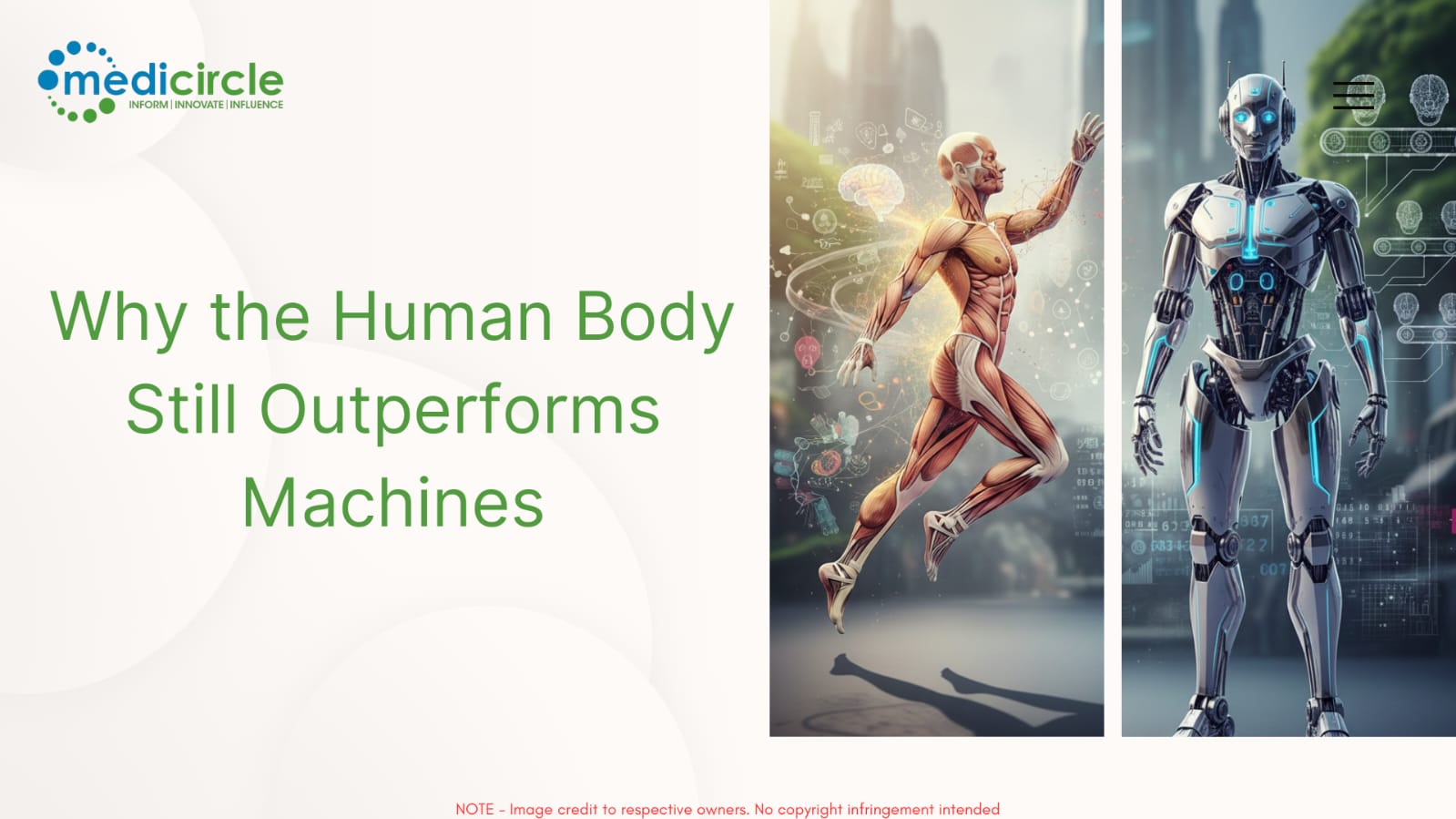
To place human performance in context, the team compared it with a robotic tactile sensor trained to detect buried objects using machine learning. The robot, guided by a Long Short-Term Memory algorithm, could sometimes sense objects from slightly greater distances than humans. Yet it struggled with accuracy. False detections were common, and its overall precision lagged behind that of human participants. Humans achieved a precision rate of over 70 percent within the detectable range, while the robot managed only around 40 percent. The comparison reveals something humbling for the world of artificial intelligence. Even as machines grow more powerful, the human body continues to set benchmarks that technology finds difficult to match.
This discovery forces a rethink of how touch works in humans. Traditionally, touch has been described as having a fixed receptive field, meaning the area of skin that responds to stimulation. The new findings suggest that this field may extend beyond the skin itself, at least in certain environments. Touch, it seems, does not always begin at contact. It begins in anticipation, shaped by the physical world around us and the subtle signals it carries.
Understanding how the body integrates these faint mechanical cues could shed light on sensory processing disorders, rehabilitation after nerve injury, and age-related sensory decline. Patients who lose fine tactile sensitivity due to diabetes, stroke, or chemotherapy often struggle with everyday tasks. If touch can be trained or enhanced to make better use of these pre-contact signals, new therapeutic approaches may emerge. It opens the possibility of sensory rehabilitation that does not rely solely on restoring direct contact sensitivity but also on improving how the brain interprets environmental feedback.
The discovery also resonates with the growing field of assistive technology. For individuals with visual impairment, tactile information plays a central role in navigating the world. Tools that amplify remote touch could help detect obstacles, textures, or hazards before contact, reducing risk and improving independence. Imagine gloves or handheld devices that translate subtle pressure changes into clearer tactile cues, guided by the principles uncovered in this research. Such innovations could transform daily life for millions.
Beyond healthcare, the implications extend to industries where sight is limited or unreliable. In archaeology, delicate artifacts are often hidden beneath layers of soil or sand. Current excavation methods risk damage through direct contact. A tactile system inspired by human remote touch could allow archaeologists to sense objects before touching them, preserving fragile history. In disaster response, rescuers searching through debris could benefit from tools that detect hidden objects or voids without direct pressure. Even space exploration stands to gain. Rovers exploring sandy terrains on Mars or the Moon face challenges when visual data is unclear. Touch-based sensing systems modeled on human perception could offer safer and more effective exploration methods.
What makes this research particularly compelling is its multidisciplinary nature. Psychologists, roboticists, and physicists worked together, each field informing the other. Human experiments guided the design of robotic learning models, while robotic performance helped interpret human data. This exchange explains a broader lesson for science and medicine. Breakthroughs often occur at the boundaries between disciplines, where assumptions are questioned and perspectives collide.
The study also invites reflection on how much of our sensory world remains unexplored. Modern healthcare tends to focus on what can be easily measured, scanned, or imaged. Subtle sensory abilities that do not fit neatly into diagnostic categories are often overlooked. Yet these capacities may play quiet but important roles in daily functioning, safety, and wellbeing. Recognising them could enrich how clinicians assess sensory health, especially in ageing populations where tactile decline contributes to falls, injuries, and loss of independence.
The language used by the researchers themselves hints at the scale of this shift. They speak of changing our conception of the perceptual world, of redefining the receptive field of touch. These are not minor adjustments to existing theories. They are invitations to rethink how humans interact with their environment at the most basic level. Touch, once seen as passive and reactive, emerges as active and predictive. The hand does not merely wait for contact. It probes, listens, and interprets long before skin meets surface.
The human body is more capable than we often give it credit for. Even as technology races ahead, there remain layers of natural intelligence embedded within us, refined over millions of years. Discoveries like this remind us that health is not just about fixing what is broken but about understanding and respecting the intricate systems already at work.
As research continues, scientists will explore whether this ability extends beyond sand to other materials and environments. They will investigate how training, age, or neurological conditions affect remote touch. They will ask whether this sense can be sharpened or restored when damaged. Each answer will deepen our understanding of human perception and its role in health and disease.
For now, the finding stands as a revolution in sensory science. The next time your fingers move through soil, grain, or fabric, consider that they may be sensing more than pressure and texture. They may be reaching into space itself, gathering information before contact, guiding you through the world with a sense you never knew you had. In a healthcare landscape increasingly shaped by machines and metrics, this reminder of human sensitivity feels both grounding and hopeful





.jpeg)








.jpg)
.jpg)
.jpg)
.jpg)
.jpg)
.jpg)


.jpg)
.jpg)
.jpg)