 Tuesday, October 27, 2026
 As surveillance continues and laboratory results provide greater clarity, authorities appear committed to transparency and containment.




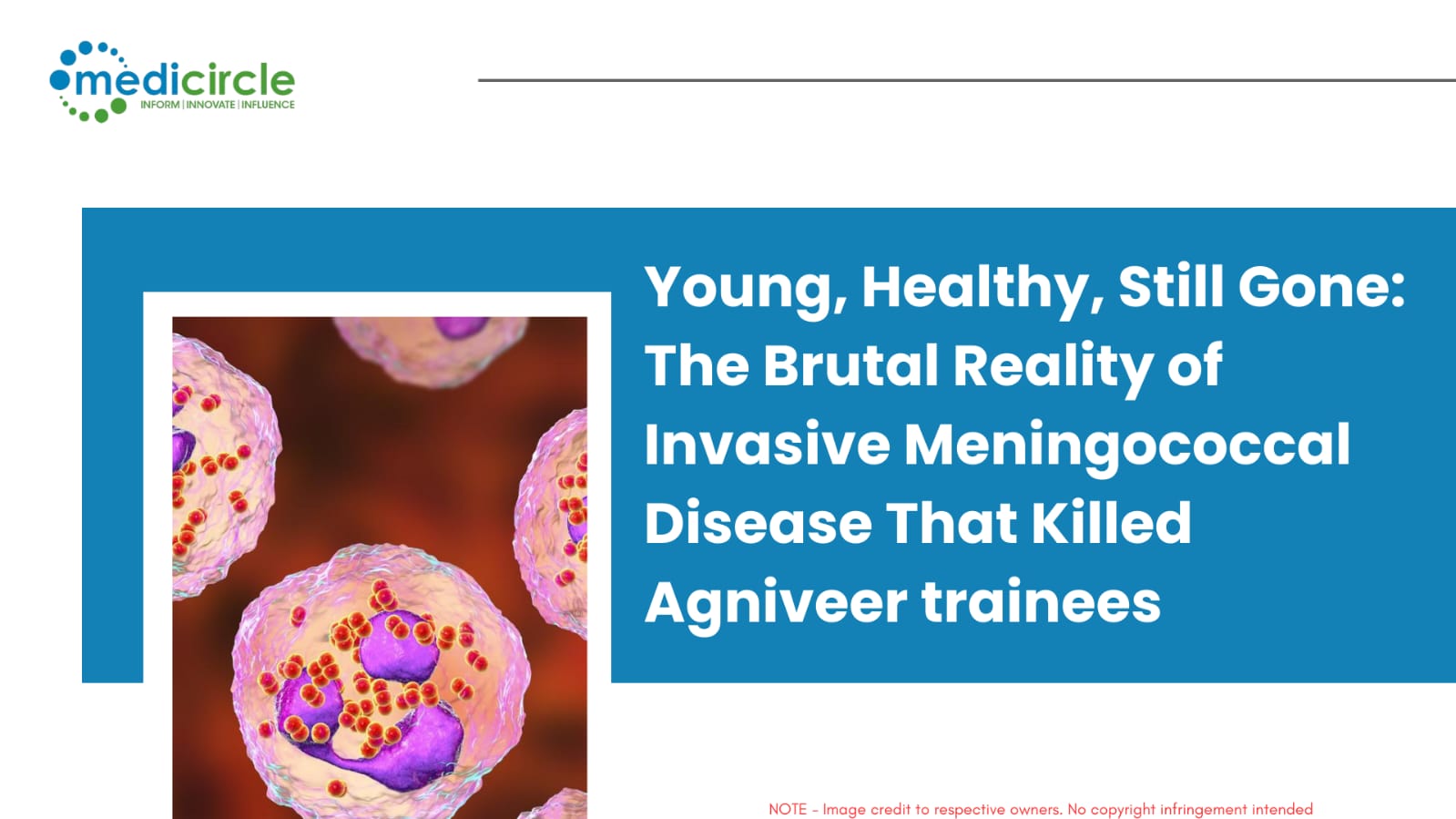
In the disciplined rhythm of military life, where drills begin at dawn and camaraderie grows in shared barracks, illness is rarely expected to strike with devastating speed. Yet in Shillong, at a major Army training establishment, two young Agniveer trainees lost their lives within hours of hospitalisation after developing symptoms consistent with meningococcal infection. Their sudden deaths have shaken not just the defence community but also public health observers, who understand how swiftly this rare yet aggressive bacterial disease can unfold.
The incident has triggered intensified disease surveillance, isolation measures, preventive antibiotic administration, and strict containment protocols within the Assam Regimental Centre. Health and defence authorities moved quickly once the suspected cluster emerged, initiating contact tracing, medical monitoring, and temporary restrictions in sections of the facility. While laboratory confirmation is ongoing, the clinical picture has raised concern about invasive meningococcal disease, a condition known for its rapid progression and high mortality when not treated at the earliest stage.
Meningococcal infection is caused by the bacterium Neisseria meningitidis, which spreads through respiratory droplets and close personal contact. In many people, the organism may reside harmlessly in the throat without causing illness. In rare circumstances, however, it invades the bloodstream or the lining of the brain, leading to meningitis or meningococcemia. When this invasion occurs, the disease can escalate in a matter of hours. Fever, headache, body ache, fatigue, or mild throat discomfort may appear indistinguishable from seasonal viral infections. This similarity creates a dangerous window in which early symptoms are overlooked or underestimated.
Medical experts often describe meningococcal disease as unpredictable. A healthy young adult may feel mildly unwell in the morning and critically ill by nightfall. Once the bacteria enter the bloodstream, they can trigger overwhelming sepsis, causing inflammation, clotting abnormalities, organ failure, and shock. In cases of meningitis, inflammation of the protective membranes surrounding the brain can lead to altered consciousness, seizures, and rapid neurological decline. The mortality rate remains significant despite modern antibiotics, particularly when treatment is delayed.
The deaths of the two trainees highlight the unique vulnerability of institutional environments such as military academies, hostels, boarding schools, and dormitories. Close living quarters, shared facilities, and frequent interpersonal interaction facilitate the spread of respiratory pathogens. Outbreaks of meningococcal disease have historically been documented in similar settings worldwide, including university campuses and military training camps. The concentration of young adults in confined spaces creates ideal conditions for transmission.
In response to the suspected cases, authorities have placed exposed personnel under observation and administered prophylactic antibiotics to close contacts. Preventive medication is a standard public health strategy in meningococcal clusters. By eliminating bacterial carriage in those who may have been exposed, health teams aim to halt further spread. Isolation of symptomatic individuals, temporary movement restrictions, mask use in designated areas, and sanitisation of common spaces form part of the containment approach. These measures reflect established infectious disease control protocols designed to protect high-density populations.
While there is no evidence of wider community transmission beyond the training centre, the episode underscores the importance of early recognition and rapid response in managing infectious disease threats. Public health preparedness involves not only hospital care but also surveillance systems capable of detecting unusual patterns. When multiple cases arise in a single institution, swift communication between medical officers, laboratory services, and public health authorities becomes critical.
The clinical challenge lies in differentiating early meningococcal infection from common viral illnesses. Initial symptoms may include fever, nausea, muscle pain, irritability, or headache. A stiff neck, sensitivity to light, confusion, or a distinctive rash may develop later. In meningococcemia, a purplish rash caused by bleeding under the skin can signal advanced disease. However, these signs may appear late in the course. For clinicians, maintaining a high index of suspicion is vital, especially in cluster settings.
Vaccination plays an important role in meningococcal disease prevention. Several meningococcal vaccines target specific serogroups responsible for invasive infection. In many countries, immunisation is recommended for adolescents, military recruits, and individuals living in communal housing. Vaccine coverage varies depending on national policy and regional epidemiology. Whether broader vaccination strategies are required in certain high-risk institutions is a matter often debated following outbreaks.
The Shillong cases bring attention to the broader issue of infectious disease preparedness within structured environments. Military training centres operate with rigorous schedules and close interpersonal engagement. Health screening protocols are typically robust, yet no system is immune to sudden outbreaks. The balance between operational readiness and medical caution becomes delicate when a fast-moving infection emerges.
Infectious diseases have repeatedly demonstrated their capacity to disrupt institutions. From influenza outbreaks in barracks to COVID-19 clusters in dormitories, shared spaces amplify risk. The key determinant of outcome often lies in response speed. Early identification, isolation, prophylaxis, and transparent communication can prevent escalation. Delayed recognition allows bacteria or viruses to exploit close contact networks.
Beyond the immediate containment measures, the incident raises questions about symptom awareness among young adults. Many trainees may dismiss early fever or fatigue as minor ailments. In physically demanding settings, mild discomfort is often ignored. Education about warning signs, especially during outbreaks, becomes essential. Encouraging prompt medical reporting can save lives when dealing with aggressive infections.
The psychological impact of sudden deaths within a training cohort should not be overlooked. Grief and anxiety may ripple through peers and instructors. Transparent communication from health authorities helps prevent misinformation and panic. Clear guidance about risk levels, preventive steps, and ongoing monitoring reassures both families and the wider public.
Meningococcal disease exemplifies the intersection of microbiology, emergency medicine, and public health policy. Rapid diagnostic testing, intravenous antibiotics, intensive care support, and coordinated surveillance form the backbone of management. Time remains the most critical factor. The difference between early treatment and delayed intervention can be measured in hours.
In India, sporadic outbreaks of meningococcal infection have been reported over the decades, particularly in northern regions. Surveillance mechanisms have strengthened in recent years, yet the disease remains uncommon. Its rarity may contribute to diagnostic delay because clinicians encounter it infrequently. Continuous medical training and awareness campaigns help maintain readiness for such cases.
The Shillong episode also reflects the broader reality that infectious diseases evolve in complex ways. Global travel, population movement, and climate variability influence transmission patterns. Although there is currently no indication of widespread spread beyond the affected facility, vigilance remains essential. Laboratory analysis will clarify whether the cases were caused by a particular serogroup and whether additional preventive strategies are warranted.
Public health experts often emphasise that outbreaks test systems more than individuals. Preparedness plans exist precisely for moments like these. The rapid institution of contact tracing, medical observation, and prophylaxis suggests adherence to established protocols. Monitoring will likely continue for several incubation cycles to ensure no secondary cases emerge.
The phrase “rare but deadly” frequently accompanies discussions of meningococcal disease. While incidence is low compared to respiratory viruses or gastrointestinal infections, its severity commands respect. Mortality can occur even in healthy adolescents and young adults. Survivors may face long-term complications such as hearing loss, neurological deficits, or limb amputations in severe septic cases. Early antibiotic therapy dramatically improves outcomes, reinforcing the message that speed saves lives.
For families and communities, the sudden loss of young individuals serves as a sobering reminder of infectious disease unpredictability. Advances in modern medicine have reduced mortality from many conditions, yet certain pathogens retain the capacity to overwhelm swiftly. Strengthening awareness about symptoms such as persistent high fever, neck stiffness, confusion, or unexplained rash can prompt earlier medical attention.
In institutional settings, routine health checks and prompt reporting mechanisms are crucial safeguards. Training facilities, schools, and universities may consider periodic education sessions about communicable diseases, especially in regions where outbreaks have previously occurred. Integrating preventive health education into orientation programmes can enhance collective resilience.
The Shillong incident shows the dual responsibility shared by medical teams and individuals. Healthcare providers must maintain vigilance for uncommon but severe infections. Individuals must recognise when symptoms exceed the ordinary. Together, these efforts form a protective barrier against rapid disease progression.
As surveillance continues and laboratory results provide greater clarity, authorities appear committed to transparency and containment. The absence of wider spread offers cautious reassurance. Yet the episode remains a powerful case study in infectious disease management. It illustrates how quickly meningococcal infection can escalate, how closely connected environments demand swift response, and how preparedness systems must function seamlessly under pressure.
In the disciplined halls of a training centre, where physical endurance and teamwork are cultivated daily, an invisible bacterium briefly disrupted the order. The lessons extend beyond one institution. They speak to the broader necessity of early detection, rapid antibiotic therapy, preventive vaccination strategies, and sustained public health vigilance. Fever is often harmless. Sometimes it is a warning. Recognising the difference in time can mean the difference between recovery and tragedy.
Source: ndtv.com





-23-300x250.png)

.jpeg)







.jpg)
.jpg)
.jpg)
.jpg)
.jpg)
.jpg)
.jpg)
.jpg)
.jpg)

