 Thursday, October 08, 2026
 By teaching machines to interpret these subtle signals, researchers are expanding the boundaries of preventive medicine. If implemented thoughtfully this technology could help ensure that fewer patients endure years of undiagnosed endocrine disease




In the rhythm of everyday life, our hands rarely draw medical attention unless they ache, tremble, or show signs of injury. They type emails, prepare meals, fasten buttons, and greet loved ones. But what if these familiar features held subtle clues to a serious hormonal disease that often goes undetected for years? What if a simple photograph of the back of a hand could alert doctors to a rare endocrine disorder long before complications take hold?
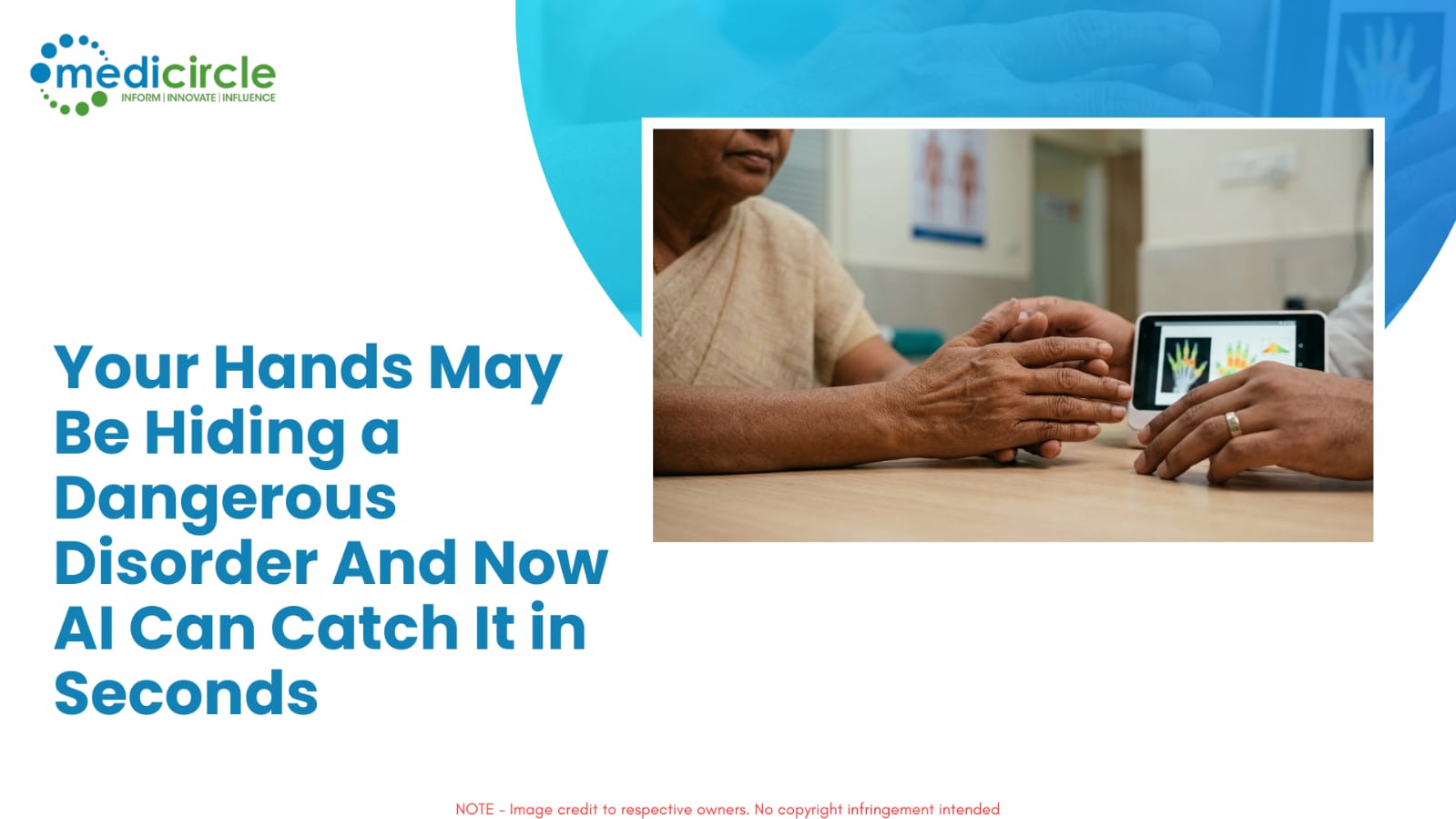
Researchers at Kobe University have developed an artificial intelligence system that aims to do precisely that. Their work focuses on acromegaly, a rare endocrine disorder caused by prolonged exposure to excessive growth hormone. The disease typically emerges in middle age and progresses gradually, often escaping notice until visible physical changes and systemic complications have already advanced. By training an AI model to analyze images of the back of the hand and a clenched fist, the research team believes they may have found a privacy-conscious, practical way to improve early detection.
Acromegaly is not a condition most people recognize immediately. Unlike acute illnesses that strike suddenly, it unfolds over many years. The body begins to change slowly. Hands and feet may enlarge. Rings feel tighter. Shoe sizes increase. Facial features can become more pronounced. Internally, bones thicken and organs may grow beyond normal limits. Because these shifts occur incrementally, patients and even clinicians may attribute them to aging, weight changes, or other common explanations. As a result, diagnosis is often delayed, sometimes for close to a decade.
That delay carries consequences. Untreated acromegaly is associated with cardiovascular disease, diabetes, joint problems, sleep apnea, and an overall reduction in life expectancy. Early intervention can significantly reduce these risks, yet many patients are diagnosed only after complications have emerged. In the field of endocrinology, the challenge has long been how to identify subtle, early-stage cases before irreversible damage occurs.
Artificial intelligence in healthcare has promised earlier diagnosis across many specialties, from radiology to dermatology. In recent years, several AI diagnostic tools have relied heavily on facial recognition technology, analyzing facial features to detect genetic or endocrine disorders. While these systems have shown potential, they raise understandable privacy concerns. Facial images are deeply personal and uniquely identifiable. Storing and processing them for medical screening presents ethical and data security questions that cannot be ignored.
The team at Kobe University approached the problem from a different angle. Instead of focusing on faces, they turned their attention to the hands. In clinical practice, physicians often examine a patient’s hands alongside facial features when evaluating endocrine conditions. Acromegaly frequently manifests as enlargement and thickening of the hands, making them a logical focal point. By limiting their analysis to photographs of the back of the hand and a clenched fist, the researchers designed a system that avoids capturing highly identifiable palm patterns or facial details.
This privacy-sensitive strategy proved essential in gathering data. The study involved 725 patients across 15 medical centers throughout Japan. Together, they contributed more than 11,000 images, creating a substantial dataset for AI training and validation. Importantly, these images were collected in real-world clinical environments. Different hospitals used various cameras, lighting setups, and staff members to capture photographs. Such variability can challenge machine learning models, yet it also strengthens them. A system trained under diverse conditions is more likely to perform reliably outside controlled laboratory settings.
The findings, published in Journal of Clinical Endocrinology & Metabolism on February 27, demonstrated high levels of sensitivity and specificity in detecting acromegaly. In direct comparisons using identical images, the AI system outperformed experienced endocrinologists. For a disease that often evades diagnosis for years, this level of accuracy is striking.
What makes this development particularly compelling is its simplicity. The AI does not require expensive imaging equipment or invasive testing. It relies on standard photographs of the hand’s dorsal surface and a clenched fist. These are images that could, in theory, be captured during routine health check-ups or even through telemedicine platforms. In regions where access to endocrine specialists is limited, such a tool could help primary care physicians identify patients who need further evaluation.
Still, it is important to understand the intended role of this technology. Doctors do not base a diagnosis solely on physical appearance. Acromegaly is confirmed through blood tests that measure growth hormone and insulin-like growth factor levels, as well as imaging studies of the pituitary gland. Medical history, symptom patterns, and laboratory data all contribute to a comprehensive assessment. The AI system is designed to support clinical judgment, not replace it. Its value lies in flagging potential cases that might otherwise slip through the cracks.
Healthcare disparities remain a persistent global concern. Specialized endocrine services are often concentrated in urban centers. Patients in rural or underserved communities may face long travel distances and extended waiting times. A screening tool that operates through widely available digital devices could bridge part of this gap. If a primary care physician suspects acromegaly based on AI-assisted analysis, referral to a specialist can occur earlier, potentially altering the course of the disease.
The implications extend beyond acromegaly. Many systemic diseases leave visible traces on the hands. Rheumatoid arthritis can deform joints. Chronic anemia may alter nail appearance. Finger clubbing can signal underlying lung or heart disease. The research team envisions adapting their model to detect additional hand-related conditions. If successful, this approach could broaden the scope of AI-based disease screening while maintaining strong privacy safeguards.
Artificial intelligence in medicine often sparks debate. Enthusiasm about innovation is tempered by concerns about overreliance, algorithmic bias, and data protection. The Kobe University project addresses several of these issues thoughtfully. By excluding facial images and distinctive palm lines, the researchers reduced the risk of personal identification. By training the model on images collected from multiple institutions with varied equipment, they enhanced its robustness. By positioning the system as a complement to clinical expertise, they acknowledged the indispensable role of human judgment.
There is also a philosophical dimension to this development. For decades, medical diagnosis has relied heavily on laboratory values and imaging technologies that peer inside the body. Yet medicine began with observation. Physicians were trained to notice subtle physical signs, to read the body’s outward expressions of internal imbalance. In some ways, this AI system represents a digital extension of that tradition. It amplifies the clinician’s eye, identifying patterns too subtle or gradual for human perception alone.
The economic impact of delayed diagnosis should not be overlooked. Chronic complications of acromegaly require long-term management, including cardiovascular care, diabetes treatment, and orthopedic interventions. Early identification may reduce healthcare costs by preventing advanced disease stages. In a broader sense, AI-powered screening tools could streamline referral pathways, improving efficiency within strained healthcare systems.
Yet caution remains essential. High performance in controlled studies does not guarantee flawless real-world application. Algorithms must be continuously evaluated and updated. Data privacy laws vary across countries, and implementation must align with local regulations. Patient consent and transparency about how images are stored and analyzed will be critical to maintaining public trust.
Moreover, no algorithm can capture the full complexity of human health. A patient’s story, lifestyle, genetic background, and environmental exposures all shape disease risk. Artificial intelligence can highlight patterns, but it cannot replace empathy, communication, and nuanced clinical reasoning. The ideal future of healthcare blends technological precision with compassionate care.
What stands out about this research is its practicality. It does not rely on futuristic hardware or invasive procedures. It leverages something as simple as a photograph. In doing so, it invites us to reconsider how much information the human body reveals on its surface. The hands that grip steering wheels and hold coffee cups may carry early warnings of systemic disease. Recognizing those signals sooner could spare patients years of uncertainty.
For individuals living with undiagnosed acromegaly, the journey can be isolating. Subtle changes accumulate. Fatigue sets in. Joint pain becomes persistent. Friends may comment on altered appearance without understanding the cause. A decade can pass before the underlying hormone imbalance is identified. The psychological burden of delayed diagnosis is significant. Earlier recognition through AI-assisted screening could offer reassurance and timely intervention.
The study from Kobe University arrives at a moment when digital health is expanding rapidly. Telemedicine consultations have become more common. Remote monitoring devices track heart rates and glucose levels. Smartphone cameras are increasingly used in dermatology assessments. Integrating a hand-based AI screening tool into this ecosystem seems plausible. Patients in remote regions could submit images securely for evaluation, prompting earlier specialist referrals when necessary.
As the system evolves, further research will determine how it performs across diverse populations beyond Japan. Skin tone variations, occupational wear, and cultural differences in healthcare access may influence results. Global validation studies will be crucial before widespread adoption. Transparency about algorithm development and ongoing performance monitoring will foster confidence among clinicians and patients alike.
In the end, this innovation prompts a larger reflection on the future of medical diagnostics. Early detection remains one of the most powerful tools in healthcare. When diseases are identified at an early stage, treatment is often more effective, complications are fewer, and quality of life improves. Artificial intelligence offers new pathways to achieve that goal, especially for rare diseases that clinicians may encounter infrequently.
A photograph of the back of a hand may seem unremarkable. Yet within its contours and proportions lies a wealth of biological information. By teaching machines to interpret these subtle signals, researchers are expanding the boundaries of preventive medicine. If implemented thoughtfully, with respect for privacy and clinical integrity, this technology could help ensure that fewer patients endure years of undiagnosed endocrine disease.
The promise is not that machines will replace doctors. It is that they will sharpen the doctor’s eye, support timely referrals, and reduce the likelihood of missed diagnoses. In a healthcare landscape marked by complexity and inequality, tools that improve access and accuracy are welcome. The hands that shape our daily lives may soon guide us towards earlier answers, proving that even the most ordinary parts of the body can hold extraordinary diagnostic power.






.jpeg)








.jpg)
.jpg)
.jpg)
.jpg)
.jpg)
.jpg)


.jpg)
.jpg)
.jpg)