 Thursday, October 08, 2026
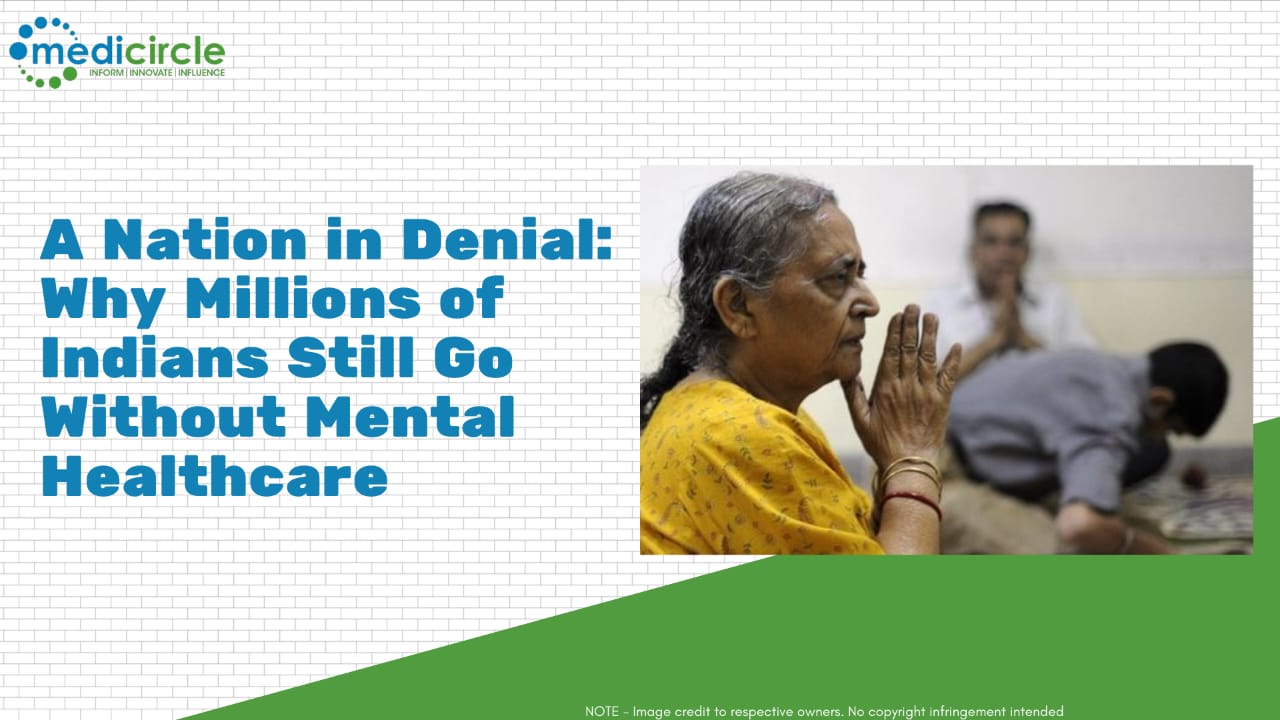
 Until mental health is given the same priority as physical health, millions will continue to suffer unseen and unheard.




In a country that prides itself on medical excellence, technological growth, and rising health awareness, a silent crisis continues to grow unchecked. Mental illness, despite being among the most treatable health conditions, remains largely untreated for millions of Indians. The scale of neglect is staggering. Nearly eight out of ten people living with psychiatric disorders in India do not receive timely or appropriate care. This is not a marginal public health concern. It is a national emergency unfolding quietly in homes, classrooms, workplaces, and hospital corridors.
This uncomfortable truth was brought into focus by the Indian Psychiatric Society during discussions ahead of the ANCIPS 2026, scheduled to take place at Yashobhoomi in Delhi later this month. What emerged was not just a set of statistics, but a collective alarm from mental health professionals who see, every day, the cost of delayed care, ignored symptoms, and missed opportunities for healing.
India carries one of the widest mental health treatment gaps in the world. National data shows that more than 85 percent of people with common mental disorders remain outside the formal healthcare system. Globally, over 70 percent of individuals with mental illness do not receive care from trained professionals, and in many low-income settings, access drops to single digits. For a nation of India’s size and diversity, these numbers translate into millions of lives shaped by untreated anxiety, depression, psychosis, addiction, and trauma.
The tragedy lies in the fact that mental illnesses respond well to early intervention. With timely diagnosis, counselling, medication, and social support, recovery is not the exception but the norm. Yet, most patients reach care only after months or years of suffering, when symptoms have deepened and lives have already fractured. By then, families are exhausted, careers disrupted, children pulled out of school, and hope severely tested.
Mental health experts point out that stigma remains the most stubborn barrier. Fear of being labelled, judged, or excluded forces many individuals to hide their distress. Emotional pain is often dismissed as weakness, mood changes are trivialised, and serious psychiatric symptoms are mistaken for personality flaws or moral failure. In many households, seeking psychiatric help is still seen as a last resort, or worse, a shameful act that must be concealed.
This silence is reinforced by a lack of awareness. Early warning signs of mental illness are frequently overlooked or misunderstood. Persistent sadness, panic attacks, sleep disturbances, behavioural changes, or substance misuse are rarely recognised as medical conditions that require professional care. Instead, people are advised to “be strong,” “pray more,” or “adjust.” These delays allow illness to tighten its grip, making recovery longer and more complex.
The shortage of trained mental health professionals adds another layer to the crisis. India’s mental health workforce is grossly inadequate for its population needs. Psychiatrists, clinical psychologists, psychiatric social workers, and mental health nurses are unevenly distributed, concentrated largely in urban centres. For vast rural and semi-urban populations, access to specialist care remains a distant dream. Even when services exist, long waiting times and overburdened clinics discourage follow-up and continuity of care.
Senior doctors warn that delayed treatment often transforms manageable conditions into lifelong disabilities. Untreated psychiatric illness increases the risk of suicide, substance dependence, chronic physical illness, and social isolation. Families bear an enormous emotional and financial burden, often without guidance or support. Productivity losses, workplace absenteeism, and unemployment linked to mental illness quietly drain the economy, even as national growth figures continue to rise.
Children and adolescents are among the most affected, yet the least served. Studies suggest that nearly 80 percent of young people with diagnosable mental health conditions in certain regions receive no care at all. These untreated years shape their academic performance, self-esteem, and future relationships. Emotional distress during childhood does not simply disappear with age; it evolves, often into more severe adult disorders.
Older adults face a different but equally troubling reality. Close to 84 percent of elderly individuals with mental health conditions remain untreated. Symptoms such as depression, anxiety, or memory problems are often dismissed as normal ageing. Social isolation, loss of independence, and lack of family support further compound their suffering. Mental healthcare for the elderly remains one of the most neglected areas in India’s healthcare system.
Experts at the IPS gathering stressed that mental health must no longer be treated as a separate or secondary issue. It needs to be woven into primary healthcare, where most people first seek help. Training family physicians and frontline health workers to recognise and manage common mental disorders can dramatically improve early detection. Strong referral systems can ensure that patients who need specialist care are not lost along the way.
Encouraging steps have been taken in recent years. Initiatives such as the national Tele-MANAS mental health helpline and the expansion of the District Mental Health Programme reflect growing policy attention. These efforts have increased visibility and provided crucial support to many individuals in distress. However, mental health professionals caution that scale and sustainability remain key challenges. Demand far outstrips current capacity, and without consistent investment, progress risks remaining patchy.
The upcoming ANCIPS 2026 conference is expected to serve as a critical platform for doctors, researchers, policymakers, and advocates to move beyond diagnosis of the problem and toward solutions. Integration of mental health into general healthcare, expansion of training programs, increased budgetary allocation, and long-term public awareness campaigns are no longer optional measures. They are essential for closing a treatment gap that has persisted for decades.
Mental illness does not exist in isolation. It intersects with poverty, education, gender inequality, workplace stress, and social change. Ignoring it weakens families, communities, and the nation itself. Addressing it strengthens human capital, improves quality of life, and reduces preventable suffering.
Mental health disorders are treatable. The science exists. The expertise exists. What remains missing is timely access, social acceptance, and political will at scale. Until mental health is given the same priority as physical health, millions will continue to suffer unseen and unheard.
India stands at a crossroads. It can continue to allow mental illness to remain hidden behind closed doors, or it can confront the reality with honesty, compassion, and action. The cost of inaction is already visible. The question now is whether the country is ready to listen to the voices it has ignored for far too long





.jpeg)








.jpg)
.jpg)
.jpg)
.jpg)
.jpg)
.jpg)


.jpg)
.jpg)
.jpg)