 Thursday, October 08, 2026
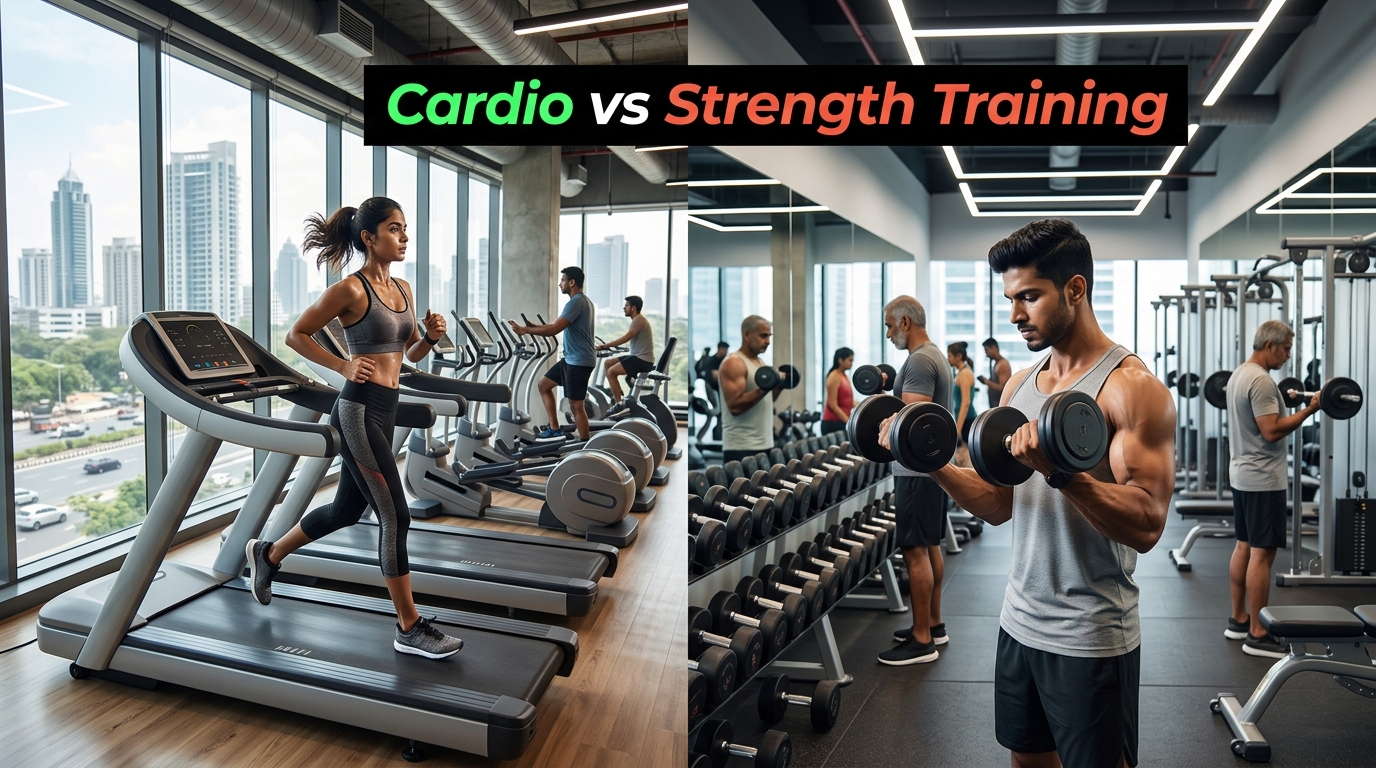
 Cardio and strength training offer distinct benefits, from immediate calorie burn to long-term metabolic gains. Understanding how each impacts endurance, muscle growth, and fat loss helps create a balanced fitness routine for sustainable results and overall performance improvement.




Cardio vs Strength Training: Which One Is Right?
Walk into any gym, and you’ll see the same divide. Some people head straight to the treadmill, chasing calories burned. Others move toward weights, focusing on building strength and muscle. The debate around cardio vs strength training has been ongoing for years, and the truth is not as simple as choosing one over the other.
Your body responds differently to each type of exercise. While cardio focuses on endurance and calorie burn, strength training builds muscle and boosts metabolism. Understanding the difference between cardio and strength training is essential if you want results that actually last.
Understanding Cardio and Strength Training
Cardio, also known as aerobic exercise, includes activities like running, cycling, and swimming. It increases your heart rate and improves cardiovascular endurance. On the other hand, strength training involves resistance exercises such as weightlifting, bodyweight exercises, or resistance bands.
When comparing cardio exercise vs strength training, the main distinction lies in how your body uses energy. Cardio burns more calories during the workout, while strength training builds muscle that continues to burn calories even after you finish exercising.
Cardio vs Strength Training for Weight Loss
One of the most searched questions is which is better for weight loss cardio or strength training. The answer depends on how you define weight loss.
Cardio creates an immediate calorie deficit, making it effective for quick results. This is why many people rely on cardio vs weights for weight loss strategies when starting their fitness journey.
However, strength training plays a long-term role. Building muscle increases your resting metabolism, meaning your body burns more calories even when you are not working out. This makes strength training vs cardio weight loss a more sustainable approach over time.
If your goal is fat loss rather than just losing weight, the debate of cardio vs strength training for fat loss becomes even more relevant. Strength training helps preserve muscle while burning fat, giving your body a more toned and defined appearance.
Calories Burned: Cardio vs Weights
A common comparison is calories burned strength training vs cardio. Cardio typically burns more calories in a single session. Running or cycling for 30 minutes can burn significantly more calories than lifting weights for the same duration.
However, strength training has an afterburn effect, where your body continues to burn calories post-workout. This makes cardio vs weights fat loss a more complex discussion than just counting calories.
Body Transformation: Cardio Body vs Weights Body
The difference between a cardio body vs weights body is visible over time. Cardio-focused routines often lead to a lean but sometimes less defined physique. Strength training, on the other hand, creates muscle definition and improves body composition.
When comparing cardio vs strength training body, it becomes clear that weights help in shaping the body, while cardio helps in reducing overall fat levels.
Heart Health and Overall Fitness
Cardio is excellent for heart health. It strengthens your heart, improves lung capacity, and enhances endurance. This is why many experts emphasize cardio vs strength training for heart health as an important consideration.
However, strength training also contributes to cardiovascular health indirectly by improving metabolism, reducing body fat, and supporting overall physical function.
The comparison of cardio vs strength training for health shows that both forms of exercise are essential for a balanced fitness routine.
Which Should You Do First?
Another common question is is it better to do cardio first or weights. The answer depends on your goal.
If your primary goal is endurance or stamina, starting with cardio makes sense. If your goal is strength or muscle building, it is better to begin with weights.
The debate of better to do cardio first or weights ultimately comes down to prioritizing what matters most to you.
How Much Cardio vs Strength Training Do You Need
Finding the right balance is key. Many people ask how much cardio vs strength training is ideal.
For general health, combining both is recommended. A mix of moderate cardio and regular strength training sessions ensures that you get the benefits of both endurance and muscle development.
When focusing on weight loss, adjusting the ratio of how much cardio vs strength training to lose weight becomes important. A balanced approach often delivers the best results.
Is Strength Training Better Than Cardio?
The question is strength training better than cardio does not have a one-size-fits-all answer. Each type of exercise offers unique benefits.
Strength training is often considered more effective for long-term fat loss and body composition. This is why many people believe strength training is better than cardio for sustainable results.
However, cardio remains essential for heart health and endurance. Instead of choosing one, combining both creates the most effective fitness strategy.
The Best Approach: Combining Both
Rather than debating cardio versus strength training, the real solution lies in integration. A balanced routine that includes both forms of exercise provides the best outcomes.
Combining cardio and strength training improves endurance, builds muscle, supports fat loss, and enhances overall health. This approach ensures that you do not miss out on any benefits.
Conclusion
The debate around cardio vs strength training often leads people to choose sides. But the truth is, your body needs both.
Cardio helps you burn calories and improve heart health. Strength training builds muscle and boosts metabolism. Together, they create a powerful combination for weight loss, fat loss, and long-term fitness.
Instead of asking which is better cardio or strength training, the better question is how you can use both to achieve your goals.
Because in fitness, balance always wins.
FAQs
- What is the difference between cardio and strength training?
The difference between cardio and strength training lies in endurance vs muscle building.
- Which is better for weight loss cardio or strength training?
Both help, but combining them gives the best results.
- Does cardio burn more calories than weights?
Yes, but strength training burns calories even after workouts.
- Is strength training better for fat loss?
Yes, it helps preserve muscle while reducing fat.
- Should I do cardio or weights first?
It depends on your fitness goal.
- Can I do both cardio and strength training?
Yes, combining both is ideal.
- How often should I train?
At least 4–5 days a week with a mix of both.
- Is cardio enough for weight loss?
It helps, but adding strength training improves results.
- What is better for beginners?
A mix of light cardio and basic strength training.
- Which is better for overall health?
Both are important for complete fitness.






.jpeg)










.jpg)
.jpg)
.jpg)
.jpg)
.jpg)
.jpg)


.jpg)