 Thursday, October 08, 2026
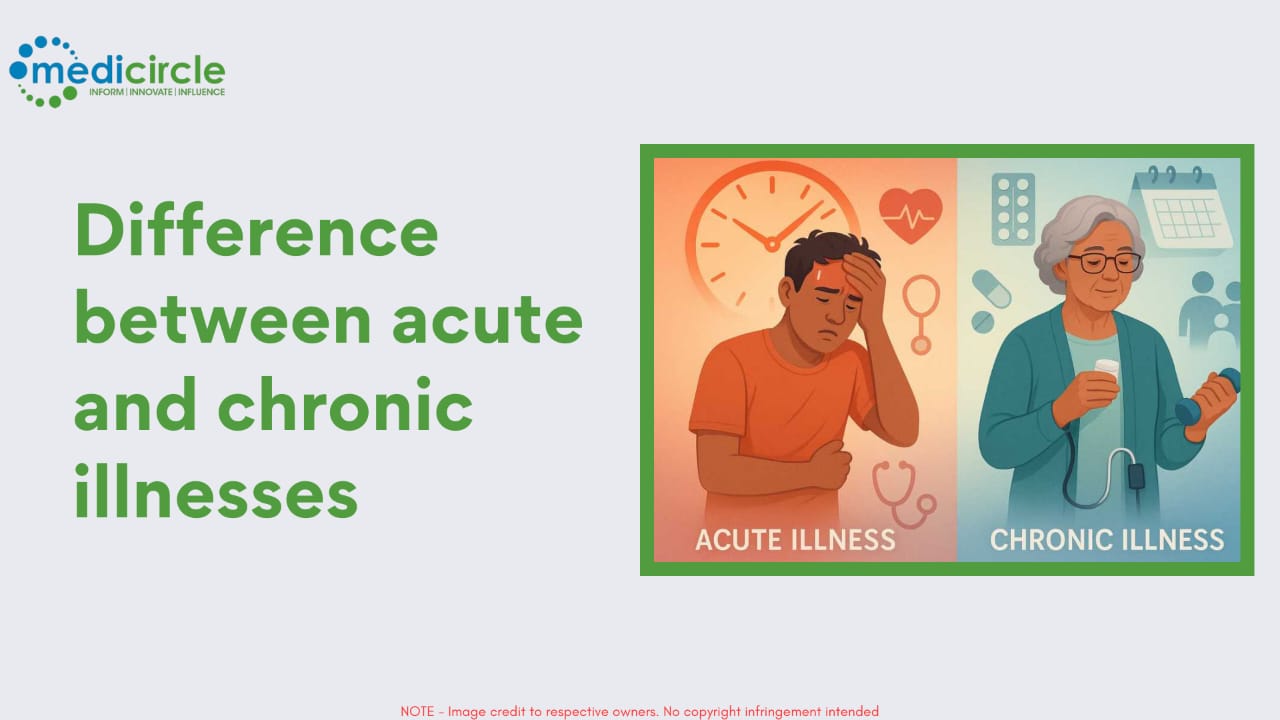
 This article explains the difference between acute and chronic illnesses in simple terms, helping readers understand symptoms, treatment goals and how to respond wisely to short-term and long-term health conditions.




We all know what it is like. One day you are perfectly fine and the next a pounding headache and fever keep you in bed. That is illness making a sudden loud entrance. Then there is the other kind. The kind your aunt manages with her morning walk and medication, a steady companion for years. Both are health challenges but they operate on completely different clocks. Getting a grip on the difference between acute and chronic illness is not about memorizing definitions. It is about making sense of your own body’s signals and knowing how to respond.
Breaking down the basics:
What do doctors really mean by these terms? Let us talk about it plainly.
An acute illness is that sudden downpour in the middle of a sunny day. It hits hard and fast. You might have gone to bed feeling okay and woken up with a sore throat and chills. These conditions come on quickly, demand your attention and usually do not stick around for long. A stomach infection, seasonal flu or a twisted knee from a misstep are all classic examples. Your body mounts a swift defense and with some care you typically recover within days or weeks.
A chronic illness in contrast is like the slow change of seasons. It develops over a much longer period often quietly and it is here for the long haul. By definition these are conditions that last for three months or more and many last a lifetime. Think of diabetes, long-standing high blood pressure or arthritis. They do not disappear after a short course of medicine. Instead they become part of a person’s daily reality, a condition to be managed rather than a temporary problem.
Beyond duration:
The difference between acute and chronic illness is not just about how long they last. It affects how you feel, how you are treated and how you live with the condition.
Spotting the signs:
Acute problems are hard to miss. The symptoms are clear and intense such as fever, sharp pain or vomiting. Chronic conditions can be subtle. High blood pressure is often called the silent killer because it may cause no symptoms for years. Many people discover raised blood sugar levels only during routine testing. The change is gradual rather than sudden.
Two treatment goals:
This is one of the most important differences in care. With an acute illness the aim is to cure it. You take the medicines, rest or undergo treatment and the problem resolves.
With a chronic illness the goal shifts to control and long-term management. Care becomes a partnership with your doctor. The focus is on keeping the condition stable, preventing complications and maintaining quality of life. Daily choices matter, including diet, physical activity, regular medicines and stress control. It is less about fixing a single issue and more about steady ongoing care.
Why this matters in India:
In India this understanding is especially important. Our health system deals with both infectious diseases that cause acute illness and a growing burden of chronic lifestyle conditions such as diabetes, heart disease and thyroid disorders.
Knowing the difference helps patients understand why some illnesses need short-term treatment while others require lifelong follow-up. It shifts the mindset from fear to planning. A chronic illness is not a life sentence. It is a condition that can be lived with successfully when managed well.
The overlap zone:
Health is never perfectly simple. Sometimes, these categories overlap. A person living with a chronic illness can face an acute crisis. Someone with chronic asthma might have a sudden, terrifying attack that needs emergency care. A person with osteoporosis, a chronic bone-thinning condition, can experience the acute trauma of a fracture. Knowing this helps you recognize when a manageable condition needs urgent attention.
Taking charge of your health:
The purpose of understanding acute and chronic illness is not to label a condition and move on. It is to understand your health journey.
An acute illness is like a temporary roadblock. It slows you down but once resolved you return to normal. A chronic illness means adjusting to a different route. The destination remains a healthy meaningful life but the journey requires awareness, planning and active participation.
This knowledge brings clarity and confidence into action. Whether you are dealing with a sudden fever or adapting to a long-term diagnosis understanding your condition is the first step toward better health. Your health story has both fast chapters and slow ones. Learning its rhythm helps you take better care of yourself today and in the years ahead.






.jpeg)








.jpg)
.jpg)
.jpg)
.jpg)
.jpg)
.jpg)


.jpg)
.jpg)
.jpg)