 Sunday, October 11, 2026
 The emerging discussion around AI brain fry offers a valuable reminder that innovation must be accompanied by thoughtful design.




Artificial intelligence entered the workplace with the promise of liberation. It was marketed as the ultimate productivity partner capable of drafting reports, analyzing data, generating ideas, and accelerating decision-making. For businesses under constant pressure to move faster and do more with less, the technology appeared to be a long-awaited solution. Yet a growing body of workplace research now suggests that the story may be more complicated. As artificial intelligence tools become embedded in everyday professional life, many workers are discovering that the same systems designed to ease workloads may be pushing their minds to uncomfortable limits.
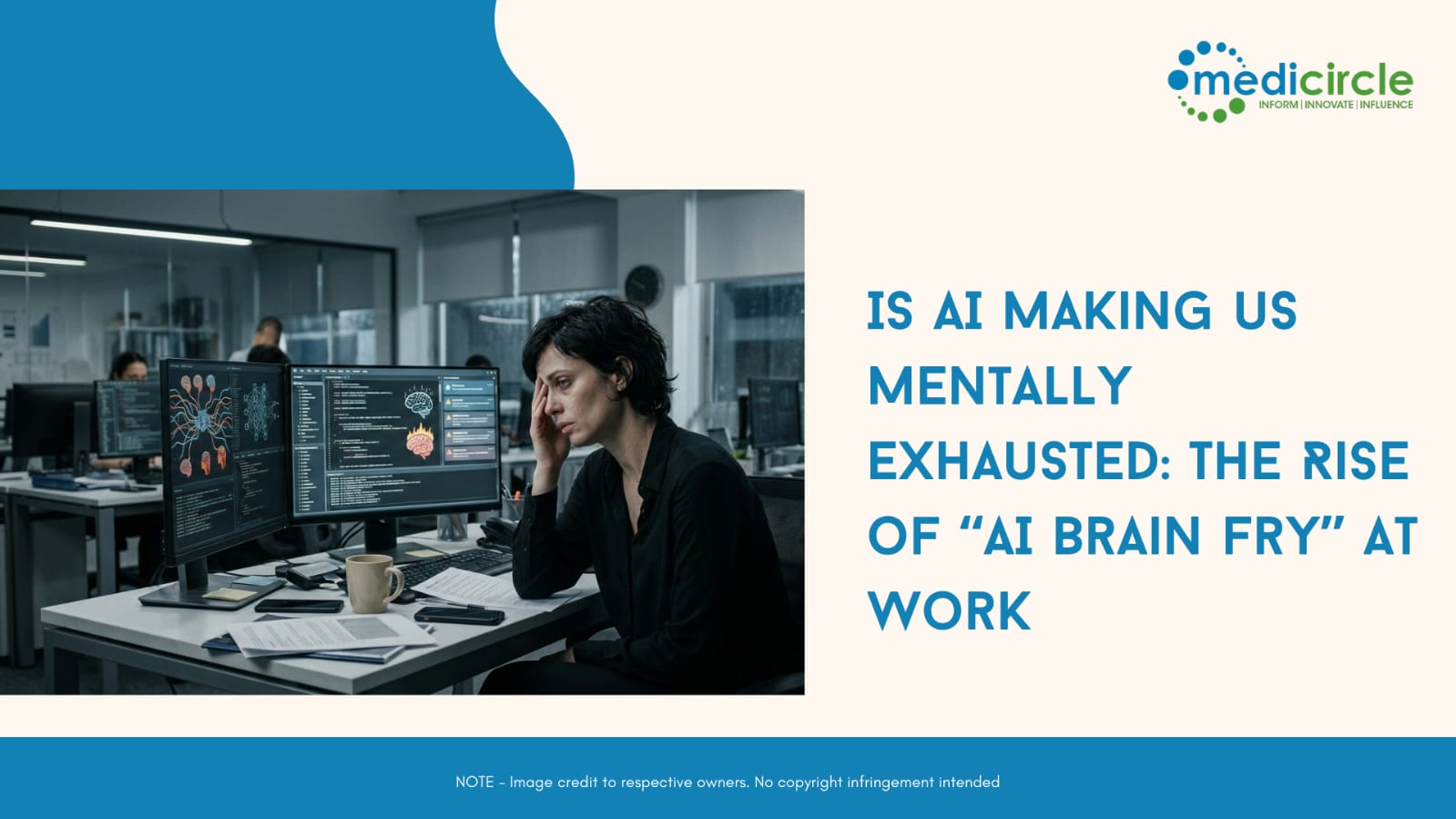
A recent large-scale workplace survey has highlighted a troubling phenomenon that researchers are beginning to describe as “AI brain fry.” The term may sound informal, but the symptoms reported by employees suggest something deeper: cognitive fatigue caused by excessive interaction with AI systems. Instead of feeling empowered by automation, some professionals say their minds feel overwhelmed, crowded, and constantly switched on.
The research, which analyzed responses from nearly fifteen hundred full-time employees across the United States, explored how artificial intelligence is shaping the modern workday. The participants represented a wide range of industries, from marketing and finance to software development and human resources. Many were regular users of AI-powered productivity tools designed to draft content, summarize information, analyze documents, or assist with complex decisions.
For a significant portion of these workers, AI had become an integral part of their daily workflow. It helped them move faster and handle larger volumes of tasks. However, the survey revealed that this constant interaction with AI was creating an unexpected side effect: mental exhaustion.
About fourteen percent of respondents said they experienced a form of cognitive strain directly linked to prolonged use of artificial intelligence systems. This strain was characterized by mental fatigue that appeared after extended periods of monitoring, interacting with, or supervising AI tools. The employees affected by this fatigue were often those considered high performers i.e. individuals who relied heavily on AI to increase productivity beyond their normal limits.
In fields where speed and output are highly valued, the phenomenon was especially common. Marketing professionals juggling campaigns, software developers reviewing AI-generated code, human resource managers drafting documents with digital assistants, and finance analysts interpreting automated reports all reported similar experiences. The tools meant to amplify their capabilities were sometimes creating a new layer of cognitive pressure.
Workers who described this mental fatigue often used vivid language to explain what it felt like. Some compared the sensation to a low, constant buzzing in the mind. Others described a fog that made it difficult to concentrate. There were reports of headaches, slower decision-making, and a lingering sense of mental clutter that persisted even after the workday ended.
These symptoms suggest that artificial intelligence, despite its reputation as a time-saving innovation, may be reshaping how the human brain processes information at work. Instead of eliminating cognitive effort, AI tools sometimes shift the burden into new forms of mental activity.
One of the central challenges appears to be the need for constant oversight. While AI can generate text, perform calculations, and analyze patterns, it still requires human supervision to ensure accuracy. Employees must check outputs, verify facts, correct errors, and decide whether the results are useful or misleading. This ongoing review process demands sustained attention.
For many professionals, the workday has gradually transformed into a cycle of prompting, reviewing, editing, and verifying AI-generated content. Rather than focusing on a single task from beginning to end, workers often move back and forth between multiple AI platforms. One system may help draft a document, another may summarize information, while a third assists with technical decisions.
The result can resemble a digital juggling act.
Employees may find themselves supervising several AI tools simultaneously while also managing their original responsibilities. Each system generates suggestions, drafts, or analyses that require evaluation. The human worker becomes the final decision-maker, responsible for determining what information can be trusted.
Researchers have identified this oversight role as one of the most draining aspects of AI-powered work. The survey revealed that employees who spent significant time supervising AI systems reported noticeably higher levels of mental fatigue. Monitoring multiple automated tools created an environment where attention was constantly divided.
This pattern aligns with long-standing research in cognitive science. The human brain performs best when it can focus on a limited number of tasks. Frequent task switching forces the brain to repeatedly shift its attention, which consumes mental energy. Over time, this process can create a sense of overload.
Artificial intelligence tools, ironically, may be amplifying this problem. By enabling workers to handle more tasks at once, they also encourage faster switching between activities. A professional might begin the morning reviewing AI-generated summaries, shift to editing automated reports, move on to verifying analytics outputs, and then return to revising content produced by a writing assistant.
While each task may appear efficient on its own, the cumulative effect can create cognitive strain.
One engineering manager who participated in the research described the experience in striking terms. The manager explained that several AI tools were assisting with different aspects of technical work. One program evaluated engineering decisions, another generated summaries, and a third helped draft documentation.
At first, the system seemed efficient. Yet over time, the manager noticed that concentration was becoming harder to maintain. Instead of simplifying the workflow, the tools created a constant stream of information that required attention.
The sensation was not exactly physical exhaustion. It was more like mental noise i.e. the feeling of having too many thoughts competing for focus at once. Eventually, the manager realized that managing the AI tools was taking as much effort as solving the technical challenges themselves.
Experiences like these raise an important question about the future of workplace productivity. For decades, technological progress has been associated with efficiency and reduced workload. Automation was expected to free employees from repetitive tasks and allow them to focus on creative or strategic work.
Artificial intelligence was supposed to accelerate this transformation.
But the emerging research suggests that the relationship between automation and human effort is more complex. In some cases, AI does reduce manual work. In others, it creates new responsibilities that require constant mental engagement.
The need to evaluate AI-generated content is one example. While an AI system can produce drafts or recommendations quickly, humans must decide whether those outputs are reliable. This process involves judgment, critical thinking, and attention to detail.
When this evaluation happens repeatedly throughout the day, cognitive fatigue can begin to accumulate. Another factor contributing to AI brain fry is the sheer volume of information generated by digital tools. Artificial intelligence can produce summaries, reports, suggestions, and analyses in seconds. While this capability is impressive, it can also lead to information overload.
The brain has a limited capacity for processing new information. When employees are exposed to a continuous flow of data, decisions, and automated suggestions, the mental workload can increase rather than decrease. Researchers studying workplace cognition have long warned that information overload can impair decision-making. When individuals are presented with too many choices or too much data, their ability to evaluate options may decline. Decision fatigue can follow, leading to slower thinking and reduced confidence.
The new research on AI brain fry suggests that similar patterns may be emerging in modern offices. This mental strain has consequences beyond momentary fatigue. The survey revealed that employees experiencing AI-related cognitive exhaustion were more likely to consider leaving their jobs. The intention to quit rose noticeably among those who reported brain fry symptoms.
For companies investing heavily in artificial intelligence, this trend carries significant implications. High-performing employees who rely on AI tools are often among the most valuable members of an organization. If these professionals begin to feel overwhelmed by technology rather than supported by it, workplace satisfaction may decline.
There are also economic considerations. Mental fatigue can affect the quality of decisions made by employees. When cognitive resources are depleted, individuals may struggle to evaluate complex situations effectively. In industries where strategic decisions carry financial consequences, this decline in mental clarity could have measurable costs.
Researchers estimate that decision fatigue linked to AI brain fry may increase the likelihood of poor choices or delayed action. For large corporations managing major investments, even small declines in decision quality could translate into significant financial losses over time.
Despite these concerns, artificial intelligence remains a powerful tool with enormous potential. The technology is transforming industries from healthcare and finance to education and logistics. Many professionals continue to find AI extremely helpful when used thoughtfully.
The key challenge may lie in how these systems are integrated into daily work. Instead of treating AI as a limitless productivity engine, organizations may need to recognize the cognitive limits of the human brain. Just because technology allows employees to process more information does not mean their minds can absorb it indefinitely.
Some experts suggest that companies should rethink the expectations surrounding AI-driven productivity. Rather than pushing workers to constantly increase output, leaders may need to focus on sustainable workflows that protect mental well-being.
Practical changes could include limiting the number of AI tools employees must monitor at once, encouraging periods of uninterrupted work, and designing systems that reduce unnecessary notifications or alerts.
Another potential solution involves improving the reliability of AI outputs. When artificial intelligence systems produce results that require less verification, the burden of oversight may decrease. Advances in AI accuracy could therefore reduce some of the cognitive load currently experienced by workers.
Training also plays a role. Employees who understand how to use AI tools efficiently may experience less frustration and mental strain. Clear guidelines about when to rely on AI and when to work independently could help create healthier work patterns.
At the same time, individuals themselves may need to develop new strategies for managing digital workloads. The rise of artificial intelligence has introduced a new form of digital collaboration in which humans and machines share responsibility for problem-solving.
Navigating this relationship requires balance.
Workers may benefit from setting boundaries around AI usage, taking regular mental breaks, and prioritizing tasks that require deep concentration without constant digital interference. Protecting cognitive energy could become an essential skill in the AI-powered workplace.
The conversation around artificial intelligence often focuses on technological capabilities: faster algorithms, smarter models, and increasingly sophisticated automation. Yet the human dimension of this transformation deserves equal attention.
After all, technology is meant to enhance human potential, not exhaust it. The emerging discussion around AI brain fry offers a valuable reminder that innovation must be accompanied by thoughtful design. Tools that expand productivity should also respect the limits of human cognition.
As artificial intelligence continues to reshape the professional landscape, understanding its psychological impact will become increasingly important. The goal should not simply be faster work, but healthier and more sustainable work.
In the coming years, organizations, researchers, and employees will likely explore new ways to integrate AI into daily routines without overwhelming the human mind. Achieving this balance may determine whether artificial intelligence becomes a true partner in productivity or a source of silent mental strain.
For now, the message from early research is that artificial intelligence may be capable of extraordinary speed and efficiency, but the human brain remains the most important system in the workplace. Protecting its health may be the most important productivity strategy of all.
Source: futurism.com






.jpeg)










.jpg)
.jpg)
.jpg)
.jpg)
.jpg)
.jpg)


.jpg)