Never Alone: Can AI Save India’s Youth from Silent Suicides?

▴ World Suicide Prevention Day
Never Alone is a promise that in moments of darkness, help will be available, stigma will not silence, and young lives will not slip away unnoticed.

Hello! If you're looking for high-quality genericmedications, fast delivery and excellent customer service, ourstore is the right choice for you. With over 20 years of onlineexperience, we guarantee safe, effective products that are alwaysin stock. Delivery within 48 hours, free shipping from $200, and 100% money-back guarantee if your order doesn't arrive on time.

👉 Order now at BestCheapPills and discover exclusive discounts for registeredcustomers!
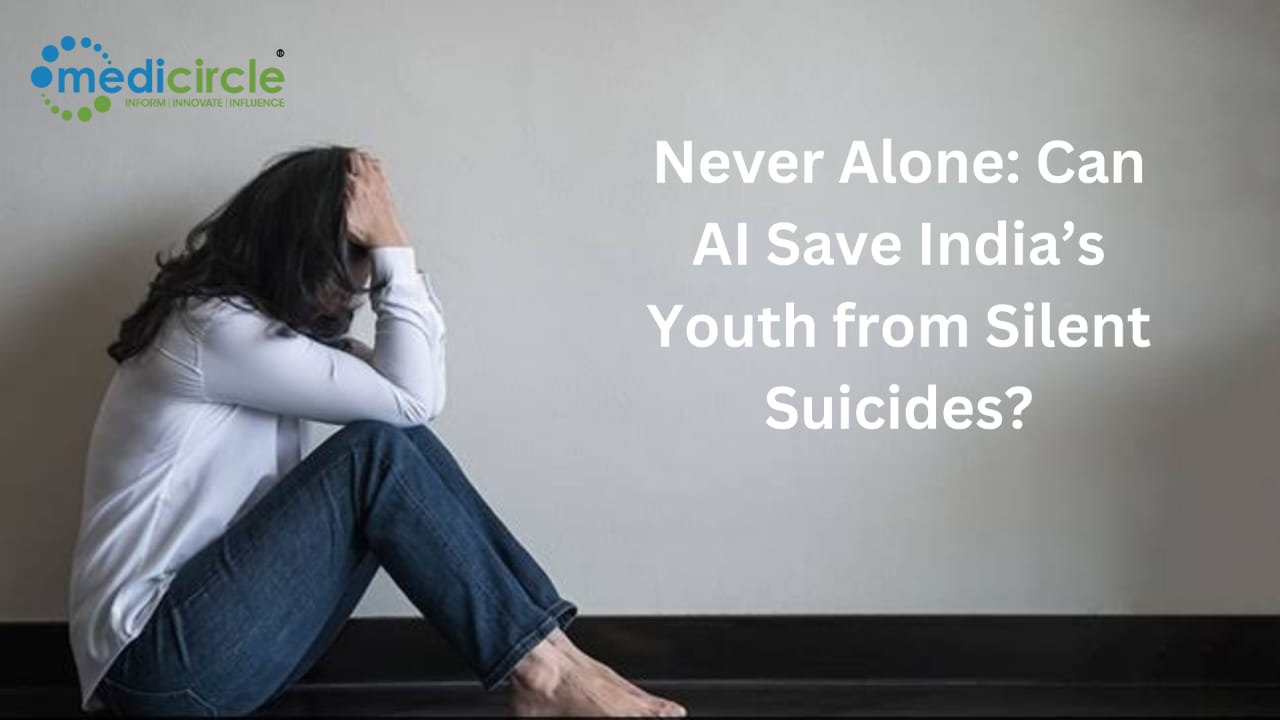
Every few minutes, somewhere in the world, a life is lost to suicide. According to the World Health Organisation, one person dies every 45 seconds, and three out of every four of these deaths occur in low and middle-income countries. India, tragically, has been carrying the weight of this crisis for decades, and in 2022, the country recorded 1,70,924 suicide deaths which is the highest in more than half a century. These are not just numbers. Behind each statistic is a family broken forever, a community scarred, and a young mind that saw no other way out. As India observes World Suicide Prevention Day, the question echoes louder than ever: are we doing enough to protect those who live under the shadow of despair?

In an attempt to answer this pressing call, the All India Institute of Medical Sciences (AIIMS), Delhi, has launched an innovative programme that combines technology with empathy. Appropriately named Never Alone, this Artificial Intelligence-based mental health and wellness initiative aims to combat suicidal tendencies among students while breaking the suffocating silence that still surrounds mental health in India. It is no coincidence that this programme was unveiled on World Suicide Prevention Day, because suicide is not only a clinical issue but also a social emergency that demands immediate attention and creative solutions.

The app, which is designed as a web-based platform, offers round-the-clock support through WhatsApp, ensuring that help is never more than a message away. Students can access both virtual and offline consultations with trained professionals, making it a hybrid bridge between technology and human care. Its pillars are screening, intervention, and post-intervention follow-up, reflecting the understanding that suicide prevention is not a one-time act but a continuous process of listening, guiding, and supporting.

The affordability of this initiative adds to its significance. As Dr. Nand Kumar, Professor of Psychiatry at AIIMS-Delhi, explained, the model costs only 70 paisa per student per day. In a country where mental health services are often inaccessible or expensive, this cost-effective design carries the potential to bring mental health care into classrooms, lecture halls, and dormitories. For AIIMS institutions nationwide, the service will be free, supported by the Global Centre of Integrative Health (GCIH), a not-for-profit venture guided by globally renowned AIIMS alumnus Dr. Deepak Chopra. Known for his pioneering work in integrative health and mind-body practices, Dr. Chopra’s involvement highlights a powerful blend of science, compassion, and vision.

What makes this initiative truly vital is its focus on young people. Data from the National Crime Records Bureau shows that in 2022, the largest share of suicides in India came from young adults between 18 and 30 years of age, accounting for 35 percent of all cases. Another 32 percent were aged 30 to 45. These are the years often described as the foundation of life with periods of education, career building, and family responsibilities. Yet, beneath the surface, these years are also filled with crippling pressures, uncertain futures, broken relationships, financial burdens, and the silent weight of expectations. For many, the burden becomes unbearable.

Dr. Kumar stressed that suicide prevention requires a public health approach, a collective effort that moves beyond seeing suicide as an isolated act of despair and instead treats it as a crisis demanding large-scale intervention. He acknowledged that while many suicides are linked to mental disorders such as depression and alcohol dependence, a significant number occur impulsively during moments of acute crisis: the sudden collapse of a relationship, crushing academic failure, a financial setback, or the unbearable strain of chronic illness. In such moments, access to immediate, stigma-free support can mean the difference between life and death.

One of the most painful truths he pointed out is that 70 to 80 percent of people suffering from mental health problems never seek treatment. Even in environments where psychiatrists and psychologists are available, such as medical colleges, suicides occur with disturbing frequency. The reasons are complex but familiar: stigma, fear of being judged, lack of awareness, and the mistaken belief that asking for help is a sign of weakness. It is here that Never Alone attempts to break the cycle. By offering a discreet, secure, and easily accessible platform, it encourages students to seek help without fear of exposure or ridicule.

Suicide in India is not just a medical condition but a mirror reflecting the struggles of a society caught between tradition and modernity, ambition and burnout, silence and the desperate need to speak. Families often fail to recognise the signs until it is too late, and friends may not know how to respond when someone confides their pain. Educational institutions, burdened with results and rankings, rarely prioritise mental wellness as much as academic excellence. In this landscape, an initiative like Never Alone introduces a cultural shift. It declares that mental health is not a hidden matter but a shared responsibility.

The power of AI in this programme lies in its ability to scale. Technology can do what human resources cannot i.e. reach thousands of students simultaneously, screen them quickly for risk factors, and connect them with timely interventions. The security of the platform ensures privacy, while its integration with WhatsApp makes it accessible without demanding new technology or complicated learning curves. In a country where smartphones are widespread but mental health awareness is scarce, this approach could prove transformative.

AI is not here to replace the psychiatrist or the counsellor, but to bring the distressed student closer to them. It is not there to substitute human connection, but to make sure no one is left without at least the first line of support. For a young person drowning in silence, even the knowledge that there is a safe space available 24x7 could be enough to delay a fatal decision and open the door to recovery.

The broader context cannot be ignored. India’s suicide rate is among the highest in the world, and while awareness campaigns have grown, the infrastructure to support mental health remains woefully inadequate. The doctor-to-patient ratio in psychiatry is far below global standards, and rural areas remain almost untouched by accessible mental health care. Against this backdrop, scalable digital interventions become not just helpful but necessary.

At the same time, suicide prevention demands more than services; it demands a change in mindset. Conversations about mental health must move from hushed corners to open platforms. Families must learn to see mental illness not as a shame but as an illness like any other. Educational institutions must recognise that nurturing young minds means not just filling them with knowledge but protecting their emotional well-being. Governments and regulators must ensure that policies, funding, and awareness align with the urgency of the crisis.

The Never Alone initiative is a step in this direction, but the journey ahead is long. Suicide prevention is not about one app, one hospital, or one campaign. It is about building an ecosystem where seeking help is normal, where intervention is timely, and where empathy is as common as ambition. It is about teaching students that strength lies not in silence but in reaching out. It is about showing society that a life lost to suicide is not inevitable but preventable.

On World Suicide Prevention Day, as AIIMS Delhi, AIIMS Bhubaneswar, and the Institute of Human Behaviour and Allied Sciences join hands in rolling out this programme, the message is that India’s youth deserve more than sympathy after they are gone, they deserve support while they are here. The haunting reality is that every 45 seconds, another life is lost somewhere in the world. The hope, however, lies in interventions like Never Alone, which remind us that no cry for help should go unheard, no young person should feel abandoned, and no family should be left grieving a preventable death.

If India is to confront its suicide crisis, it must embrace this blend of technology, awareness, and compassion. Suicide prevention is not just a medical responsibility but a societal duty. Never Alone is not simply an app, it is a promise that in moments of darkness, help will be available, stigma will not silence, and young lives will not slip away unnoticed.


In the end, preventing suicide requires determination. It requires families to listen without judgment, teachers to notice without dismissal, institutions to invest without hesitation, and policymakers to act without delay. It requires every one of us to remember that behind every statistic lies a son, a daughter, a friend, a colleague, a dream unfinished. Technology can guide, professionals can heal, but society must care. Only then can India hope to rewrite its suicide story from despair to resilience, from silence to support, and from isolation to a collective assurance that truly, no one is ever alone.

Tags : #WorldSuicidePreventionDay #NeverAlone #StopSuicide #BreakTheStigma #YouAreNotAlone #PreventSuicide #CareWithCompassion #AIForMentalHealth #StrongerTogether #MentalHealth #MentalWellness #smitakumar #medicircle

Related Stories

Loading Please wait...

-Advertisements-


Trending Now

Cholesterol Explained: Good vs Bad Cholesterol and What It Means for Your HeartJuly 11, 2026
Role of Technology in Hospitals: How Indian Healthcare is Being ReshapedJuly 11, 2026
175 years after ancestors left UP, Indo-Trinidadian infant receives rare liver transplant at Apollo DelhiJuly 10, 2026
Fortis Escorts Faridabad Strengthens Advanced Care Ecosystem with Launch of: Fortis Cancer Institute Institute of Neurosciences Centre of Excellence in Critical Care and ECMOJuly 10, 2026
India’s first focused health AI Conclave unites doctors and AI expertsJuly 10, 2026
University of Leeds Opens Applications for MSc Biotechnology with Business Enterprise for Indian StudentsJuly 10, 2026
How Doctors Are Changing the Face of Indian HealthcareJuly 10, 2026
Medical Innovations to Watch in 2026: How Technology Is Reshaping Healthcare in IndiaJuly 10, 2026
Government of India Notifies Polymatech Electronics’ Semiconductor and Electronic Components SEZ at Nava Raipur, ChhattisgarhJuly 09, 2026
Iswarya Fertility Center Raises Over INR 350 Crore from OrbiMed AsiaJuly 09, 2026
Happiest Health Announces Launch of Speciality Clinics Happiest Paediatrics, Happiest Orthopaedics, Happiest Gynaecology, Happiest Endocrinology & Your Personal PhysicianJuly 09, 2026
Cetaphil launches new AM/PM Antioxidant Serum Duo in India July 09, 2026
THIP Partners with ISSRF to Launch Digital Patient Education Programme for EndometriosisJuly 09, 2026
Blood Tests Everyone Should Understand: A Complete Guide for Indian AdultsJuly 09, 2026
CT Scan vs MRI: Understanding the Difference and Choosing the Right Diagnostic Imaging TestJuly 09, 2026
Robotic Surgery in Modern Urology and Gynecology: Precision, Recovery, and SafetyJuly 08, 2026
Apollo Hospitals Gives Filipino Twin Brothers a New Lease of Life Through Rare Twin Liver TransplantsJuly 08, 2026
Fibroheal Raises ₹14 Crore to Fuel Next Phase of Growth and Entry in Developed MarketsJuly 08, 2026
Veda Rehabilitation & Wellness Opens Himalayan Mental Health Recovery Retreat in Sikkim for Addiction Recovery and Mental WellbeingJuly 08, 2026