 Thursday, October 08, 2026
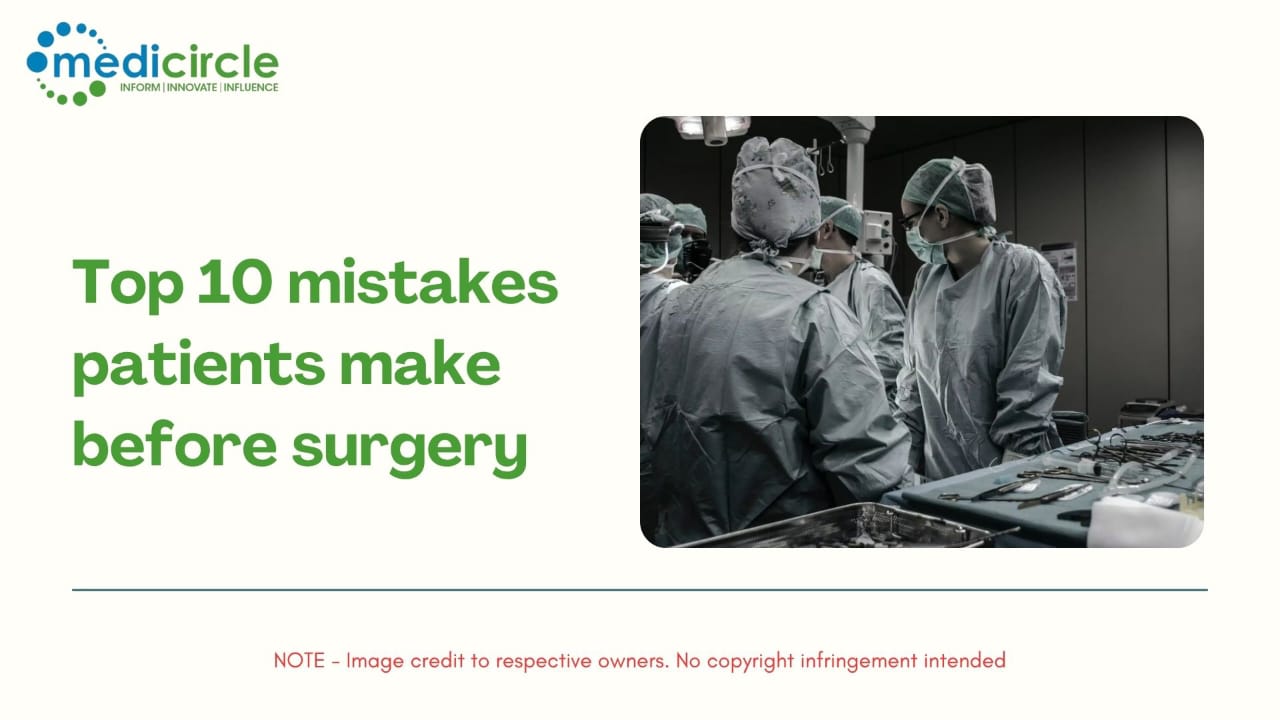
 Preparation before surgery can greatly influence your recovery and outcome. This guide highlights ten easily overlooked pre-operative mistakes and practical steps to ensure a safe and smooth surgical journey.




Facing surgery can feel like standing at the foot of a mountain. The climb seems steep and the path is unknown. But what if we told you that a successful journey depends less on the mountain itself and more on the preparation for the climb? Too often, patients, armed with good intentions but hampered by anxiety, make simple errors that can turn a straightforward path into a rocky one.
Think of this not as a list of things you are doing wrong, but as a friendly guide. Our goal is to walk with you, so you can approach your operation with confidence and peace of mind.
Mind over matter:
Long before you put on a hospital gown, your mental state sets the stage. Fear and uncertainty are powerful forces that can lead to the first few stumbles.
- Skip Dr. Google:
We have all done it. A quick search about a medical procedure leads you down a rabbit hole of frightening stories and worst case scenarios. The internet is a vast library without a librarian. The information you find is generic, often extreme and rarely applies to your specific situation. This do it yourself research can fuel sleepless nights and make you second guess the expert advice from your surgical team, the people who actually know your health history.
- Your voice matters:
There is a common feeling, especially in our culture, that we should not trouble the doctor with “silly” questions. So we sit quietly, nodding along, while our minds are buzzing with doubts: “What if it hurts? How long will recovery take?” Remember, a surgeon's job is not just to operate; it is to care for the patient. They expect and want your questions. Jotting them down in a small notebook before your appointment can make all the difference. A clear mind is a calmer mind.
- No shame in healing:
Certain health issues, like hernias or piles come with an unspoken embarrassment. This stigma can be so powerful that it causes people to postpone a needed procedure for months or even years. It is a difficult hurdle, but it is vital to remember that for your medical team, these are everyday conditions. They see a patient who needs care, not a condition to be judged. Your health is always more important than any misplaced sense of shame.
Ready your body:
Your body is about to undergo a significant event. How you treat it in the days leading up to surgery is crucial for a smooth procedure and recovery.
- Even one bite counts:
“Surely a sip of water or a small cup of tea is fine?” This is one of the most dangerous assumptions. The rule to fast is the most critical instruction you will receive. When under anesthesia, your body's natural reflexes like swallowing are switched off. Any food or liquid in your stomach can travel back up into your lungs, causing a severe infection called aspiration pneumonia. This rule is absolute and includes all food, water and even paan.
- Every pill counts:
You might be on medication for blood pressure, diabetes or pain. You might even take a daily aspirin for your heart. It is absolutely essential that your surgeon knows about every single pill, capsule or tablet you take. Some medicines, especially blood thinners can increase bleeding during surgery. Your doctor will give you a clear plan on which ones to pause and when. Holding back this information is a risk you do not want to take.
- The “Natural” medicine trap:
This is a very common oversight. Many of us take Ayurvedic powders, homeopathic pills or herbal supplements like ginkgo or garlic, considering them harmless because they are “natural.” But “natural” does not mean “inactive.” Many of these can thin your blood or react with anesthesia. Your surgical team needs a complete picture and that includes every supplement you consider part of your wellness routine.
- Do not ignore illness:
If you wake up with a cough, cold or fever a few days before your surgery, do not ignore it and hope it will go away. An active infection, even a minor one, puts extra stress on your body and can make anesthesia much riskier. Being honest about a sudden illness allows your team to make the safest call, which might mean rescheduling for your own protection.
The overlooked practicalities:
Getting your life in order is just as important as preparing your body. A little planning at home can prevent a lot of stress later.
- Set up for recovery:
After surgery, simple tasks can feel impossible. Will you be able to climb stairs? Who will cook meals? It is a smart idea to set up a comfortable recovery area on the ground floor, stock your kitchen with easy to make food and arrange for a family member or friend to help with chores. Coming back to an organized home lets you focus on what truly matters: healing.
- Paperwork matters:
Surgery involves a lot of administrative work; insurance claims, hospital forms and financial approvals. Leaving this for the day before your operation only adds to the anxiety. Tackling these tasks a week in advance lifts a huge weight off your shoulders. For major surgeries, it is also a responsible step to ensure your important documents are in order.
- A final puff:
It is a common thought: a cigarette to calm the nerves or a small drink to help sleep the night before. Unfortunately, this does more harm than good. Smoking narrows blood vessels, drastically reducing the oxygen supply needed for healing. Alcohol can interfere with anesthesia and your post-operative medications. The best gift you can give your body is to abstain for as long as possible before the surgery.
Take charge of your care:
In the end, a successful surgical outcome is a team effort. You, your family, your surgeons and your nurses are all on the same side. At Medicircle, we believe that your active participation is the cornerstone of this process. By being aware of these common pitfalls, you stop being a spectator and become the leader of your own health journey.
Walking into that operating room knowing you have done everything right; for your mind, your body and your daily life is incredibly empowering. It transforms a daunting medical event into a managed, positive step toward a healthier you.






.jpeg)








.jpg)
.jpg)
.jpg)
.jpg)
.jpg)
.jpg)


.jpg)
.jpg)
.jpg)