 Tuesday, October 27, 2026
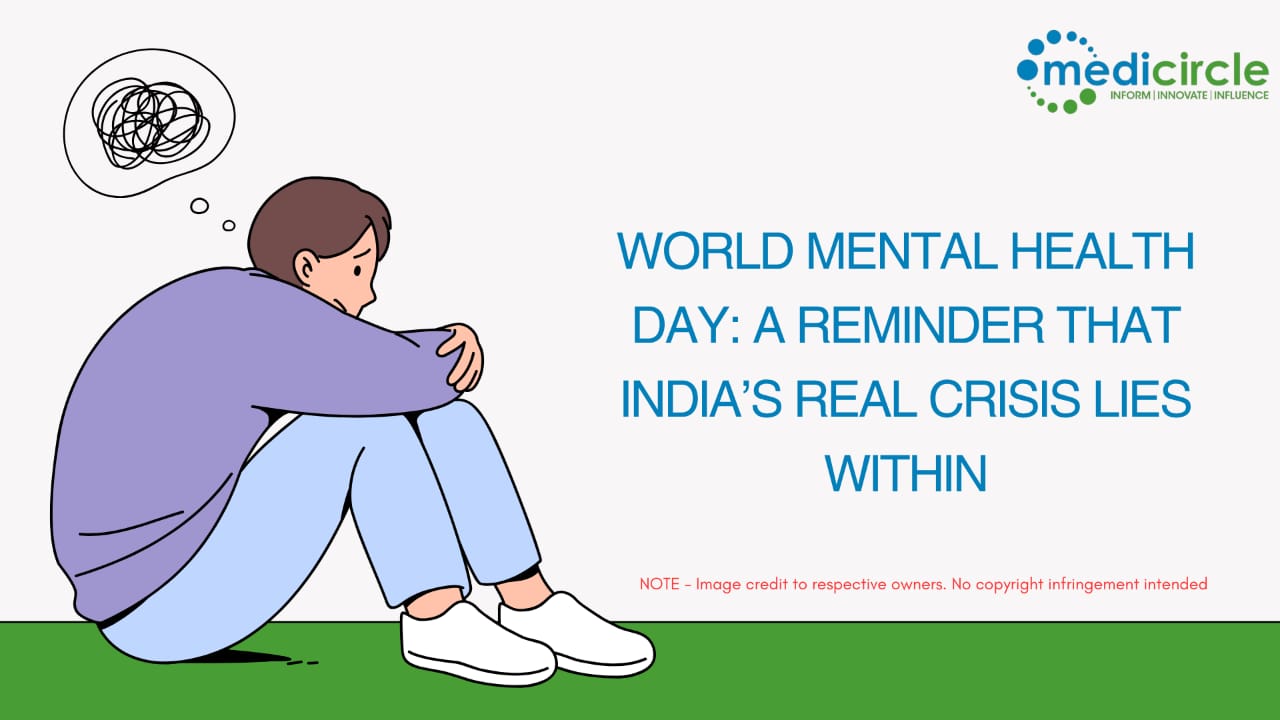
 The time has come for India to move beyond silence, beyond stigma, and towards a future where seeking help is an act of courage, not shame.




World Mental Health Day was first observed in 1992 at the initiative of the World Federation for Mental Health, with the support of the World Health Organization (WHO). The aim was simple, to create awareness and drive open conversations around mental well-being. Over the years, it has grown into a movement that connects people across continents, breaking the walls of shame and ignorance surrounding mental illness. The 2025 theme, “Mental Health is a Universal Human Right”, is both a declaration and a demand that insists every individual, regardless of age, gender, or economic background, deserves access to mental healthcare and emotional safety.
India’s journey with mental health has been a long, complex one. The country that once celebrated mindfulness through yoga, meditation, and Ayurveda now finds itself at the edge of a mental health epidemic. According to the World Health Organization, one in every eight Indians suffers from a mental health disorder, a figure that translates into millions battling depression, anxiety, schizophrenia, bipolar disorder, or substance abuse. Behind these numbers lie real stories of young people pressured by expectations, working professionals crushed by burnout, mothers dealing with postpartum depression, and elderly citizens lost in loneliness.
The National Mental Health Survey conducted by NIMHANS revealed that nearly 150 million Indians need active mental health intervention, but only a fraction receives it. The gap between need and access remains alarming. For every 100,000 people, India has barely one psychiatrist, one psychologist, and two psychiatric nurses. The WHO recommends at least three mental health professionals per 100,000 population, which places India far below the global standard. Despite being one of the fastest-growing economies, mental health services remain concentrated in urban pockets, leaving rural India largely underserved. In villages, where awareness is low and stigma high, mental illness is still mistaken for “possession” or “weakness of character.”
The roots of this crisis go deeper than infrastructure or policy. It lies in the way Indian society perceives emotions and vulnerability. From childhood, people are taught to endure pain quietly, to be strong, and to avoid being labeled as “weak.” This mindset leaves little room for emotional expression. Young men are told that “boys don’t cry,” while women are expected to bear their struggles silently in the name of family and duty. Over time, such conditioning manifests as depression, anxiety, or even suicidal tendencies. According to the National Crime Records Bureau (NCRB), India recorded more than 1,70,000 suicides in 2023, the highest ever in history. Every nine minutes, one person ends their life in the country, and most victims are between the ages of 18 and 45 i.e. the nation’s most productive demographic.
While suicide is a symptom of deep psychological distress, it is also an indicator of the collective failure to create an empathetic society. The lack of accessible mental health support, coupled with the social taboo around seeking help, keeps individuals from speaking up. Many turn to social media for solace, expressing their pain in cryptic posts or videos, often ignored until it’s too late. The truth is, India has been speaking about mental health but just not listening enough.
The Mental Healthcare Act of 2017 was a significant step forward. It recognized mental health care as a right and aimed to provide affordable and accessible treatment. It also decriminalized suicide, acknowledging that those who attempt it need help, not punishment. However, implementation remains weak. The allocation for mental health in the Union Budget still lingers below one percent of the total health budget which is a reflection of how low the issue sits on the policy priority list. Most mental health programs are underfunded, understaffed, and urban-centric, making it harder for the vulnerable to receive timely intervention.
In India, the issue of mental health extends beyond hospitals and policies. It touches education, employment, gender, and social equity. Studies show that 50% of mental health conditions begin before the age of 14, and yet, Indian schools seldom have counselors. Students face immense pressure to perform, and those who fail to meet expectations often internalize their struggles. The increasing cases of student suicides in coaching hubs like Kota serve as tragic reminders of the system’s emotional neglect. On the other end of the spectrum, workplace stress has become the new silent epidemic. The corporate culture glorifies overwork and competition, leaving employees emotionally drained. The World Health Organization has officially classified “burnout” as an occupational phenomenon, and Indian professionals rank among the highest globally in stress levels.
Women, too, face unique mental health challenges shaped by societal roles and gender discrimination. Postpartum depression affects nearly one in five new mothers in India, yet many remain undiagnosed. Domestic violence, economic dependence, and lack of emotional support contribute to rising cases of depression and anxiety among women. Similarly, the elderly face mental health issues like dementia and loneliness, often ignored or dismissed as signs of aging. For LGBTQ+ individuals, rejection, bullying, and discrimination further intensify the risk of mental distress. The mental health conversation cannot be one-size-fits-all; it must be intersectional and inclusive.
The COVID-19 pandemic was a turning point that exposed the mental health vulnerability of every social group. Lockdowns, isolation, job losses, and uncertainty triggered widespread psychological distress. Reports suggested that cases of anxiety and depression nearly tripled during the pandemic. Yet, the crisis also encouraged people to talk about their feelings, seek therapy, and break the silence around mental health. It forced governments, institutions, and individuals to realize that mental well-being is not a luxury it is essential to survival.
Technology has also started playing a transformative role. From tele-therapy platforms to AI-based mental health tools, access to help is improving. However, digital mental health services must be regulated to ensure quality, privacy, and ethical care. The emergence of mental health influencers on social media has helped normalize conversations, but misinformation remains a threat. The challenge now is to move from awareness to action and to create systems that offer real support, not just hashtags.
Schools must integrate mental health education into their curriculum. Teachers should be trained to recognize signs of distress among students and guide them towards professional help. Workplaces must go beyond annual wellness sessions and establish confidential counseling services, flexible work policies, and empathetic leadership. Media must portray mental illness responsibly, avoiding stereotypes that reinforce stigma. Families, the first circle of emotional support, must learn to listen without judgment and encourage open dialogue. Healing begins with conversation.
At its heart, World Mental Health Day is not about grand speeches or symbolic events. It’s about the quiet realization that everyone is fighting a battle unseen. It’s about recognizing that the cheerful colleague, the hardworking student, or the silent homemaker might be struggling internally. It’s about understanding that mental health is not weakness; it is humanity. The day reminds us that empathy, kindness, and listening are as crucial as medication or therapy.
India’s future depends on the emotional well-being of its people. A nation cannot progress when its citizens live in constant psychological distress. The healthcare system must evolve to treat mental health as an integral part of overall wellness. The government must allocate adequate funds, strengthen community-based programs, and fill the gap in trained professionals. Collaboration between public health systems, NGOs, corporates, and digital innovators can create an ecosystem where help is just a call away.
There is hope. India’s youth are increasingly vocal about mental health, breaking generational silence. Celebrities and public figures are using their influence to normalize therapy and self-care. Mental health startups are offering affordable counseling and awareness programs. Slowly, the country is learning that to heal as a nation, it must first heal its mind.
As World Mental Health Day reminds us, every mind matters. The fight is not just for awareness but for acceptance. The time has come for India to move beyond silence, beyond stigma, and towards a future where seeking help is an act of courage, not shame. The strength of a nation is measured not by its economy, but by the happiness and peace of its people. Until every Indian feels mentally safe and emotionally heard, the work remains unfinished. Because true health is not just the absence of disease but also the presence of peace.




-23-300x250.png)

.jpeg)








.jpg)
.jpg)
.jpg)
.jpg)
.jpg)
.jpg)
.jpg)
.jpg)
.jpg)

