Wednesday, October 07, 2026
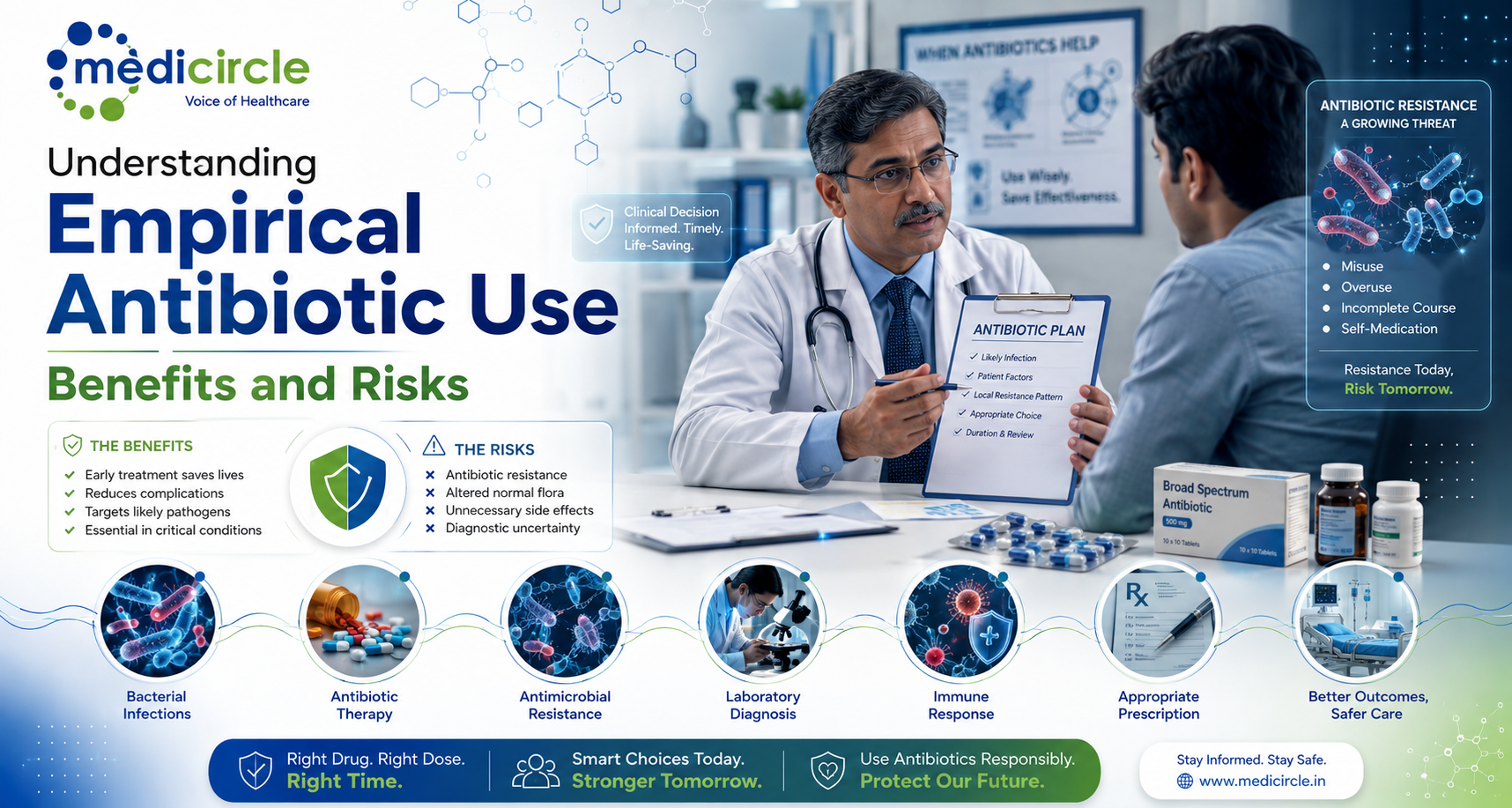
 Empirical antibiotic use is a critical, life-saving medical practice for severe infections, but its unguided overuse across India accelerates antimicrobial resistance, requiring a careful balance through diagnostic stewardship.




The Balance of Empirical Antibiotics
When you or a family member falls seriously ill with a suspected bacterial infection, every single minute becomes critical. In an ideal world, a doctor would identify the exact germ causing the trouble and prescribe a highly specific medication to eliminate it. However, identifying a specific bacterium requires laboratory testing, and this process usually takes several days to complete. When an infection is highly aggressive, waiting for a laboratory report is a luxury that patients simply cannot afford.
To bridge this critical time gap, healthcare providers rely on a common clinical practice known as empirical antibiotic use. This approach involves initiating medical treatment immediately. Doctors use their clinical experience and local health data to choose the medication that is most likely to be effective. While this medical strategy is indispensable and saves countless lives daily, it also has a significant downside.
In India, the unguided and widespread use of these powerful drugs is accelerating a major public health crisis, which is antimicrobial resistance. Navigating this complex medical landscape requires a delicate balance between immediate life-saving intervention and the long-term preservation of global drug efficacy.
Defining Empirical Treatment
To understand this medical concept, it helps to look at how doctors make decisions when time is a critical factor. Empirical therapy is a calculated medical strategy. Instead of waiting for a definitive laboratory culture to name the specific microbe causing an illness, a doctor evaluates your symptoms, physical signs, and medical history. They combine this information with knowledge of common regional infection trends to select an antibiotic that covers the most probable bacterial targets.
This approach contrasts sharply with directed therapy, where a treatment plan is built around precise, confirmed laboratory data.
When a patient presents with an infection, the healthcare provider must draw laboratory cultures first to identify the exact cause. Immediately after collecting these samples, the medical team starts a broad-spectrum empirical antibiotic to provide immediate protection to the patient. Once the laboratory results arrive after forty-eight to seventy-two hours, the doctor can safely de-escalate treatment by switching the patient to a highly targeted, narrow-spectrum drug.
To manage the critical period before laboratory results are ready, hospitals and clinics use regional epidemiological data. This specialized data tracks which bacteria are currently active in a specific community and which medications are successfully defeating them.
Once the laboratory results are finalized, which usually occurs within 48 to 72 hours, the medical team should review and adjust the treatment. They transition the patient from a broad-spectrum empirical antibiotic to a highly targeted, narrow-spectrum drug. This vital step is called de-escalation, and it ensures the patient receives the most effective treatment with minimal unnecessary drug exposure.
Benefits of Quick Treatment
The single greatest benefit of empirical antibiotic use is its proven ability to save lives when time is working against the patient. In acute, high-stakes medical emergencies, delaying treatment can significantly increase the risk of permanent organ damage or death.
Critical Emergency Care
For severe, fast-moving conditions like sepsis, which is a systemic body-wide response to infection, bacterial meningitis, or advanced pneumonia, every single hour matters. Administering an immediate, broad-spectrum antibiotic helps contain the infection before it can overwhelm the natural defenses of the body or cause septic shock.
Common Outpatient Care
Beyond the intensive care unit, empirical therapy provides practical advantages for everyday outpatient care. When a patient shows clear, unmistakable signs of a standard urinary tract infection or a straightforward bacterial skin infection, starting a standard course of antibiotics right away offers rapid relief.
This immediate action keeps the infection from worsening. It also spares the patient the financial and logistical stress of undergoing expensive laboratory testing for a routine illness. In the diverse healthcare landscape of India, where access to advanced diagnostic laboratories can be inconsistent in rural or semi-urban areas, empirical protocols ensure patients receive timely, standardized care.
Risks of Inappropriate Use
Despite the clear benefits in emergencies, extended or unguided empirical antibiotic use can cause noticeable harm to the health of an individual.
Disrupted Internal Ecosystems
The most immediate drawback is the impact on our natural microbiome. Broad-spectrum antibiotics are designed to cast a wide net, which means they cannot differentiate between harmful pathogens and the beneficial bacteria living in your gut.
By unintentionally clearing out these helpful microbes, the medication can trigger side effects ranging from mild stomach upset to severe complications like Clostridioides difficile. This specific bacterium can thrive when normal gut flora is depleted, leading to severe, debilitating diarrhea and colon inflammation.
Mismatched Medication Problems
Relying entirely on empirical choices without follow-up laboratory testing can also lead to ineffective treatment. If an illness is actually caused by a virus, a fungus, or a highly resistant bacterial strain that the chosen antibiotic cannot kill, the patient receives no therapeutic benefit.
Instead, they are exposed to unnecessary drug toxicities, potential allergic reactions, and strain on vital filtering organs like the liver and kidneys. Furthermore, treating an illness blindly can mask the true diagnosis, delaying correct therapies and allowing the underlying condition to worsen.
The Superbug Crisis
The societal cost of overusing empirical antibiotics is the rapid acceleration of antimicrobial resistance. When bacteria are repeatedly exposed to these medications without being fully eliminated, they adapt, mutate, and develop sophisticated defense mechanisms, rendering standard treatments ineffective.
|
Vulnerable Medical Fields |
Impact of Losing Effective Antibiotics |
|
Routine Surgeries |
Simple procedures like joint replacements or Caesarean sections become high-risk due to untreatable infections. |
|
Cancer Care |
Chemotherapy weakens the immune system, and without working antibiotics, minor infections can become fatal. |
|
Neonatal Care |
Premature infants with underdeveloped immune systems are left highly vulnerable to resistant germs. |
India has emerged as a global focal point for this public health challenge. Common bacterial strains, such as Escherichia coli and Klebsiella pneumoniae, are increasingly showing resistance to powerful, last-resort medications.
Several deeply ingrained cultural habits and systemic gaps drive this issue across the country:
- Over the Counter Sales: Despite strict regulations like the Schedule H1 drug classification, which bans the sale of potent antibiotics without a valid prescription, enforcement remains uneven, and these medicines are often easily obtained.
- The Self Medication Habit: Many people frequently self-medicate, using leftover pills from a family member or purchasing a single dose based on casual advice to treat a sudden fever or a common cold. The majority of these seasonal illnesses are viral, making antibiotics completely useless against them.
- Diagnostic Gaps: A shortage of affordable, rapid diagnostic facilities in many regions pressures healthcare providers to overprescribe broad-spectrum options out of caution, creating a continuous cycle that turns manageable bacteria into resilient superbugs.
Sustainable Prescribing Steps
Reclaiming control over how antibiotics are used requires a coordinated, practical effort across the entire healthcare system.
The first step begins inside our medical institutions through strict antibiotic stewardship programs. Hospitals and clinics must develop and regularly update local prescribing guidelines that reflect the specific resistance patterns found in their communities. Medical professionals must remain committed to the discipline of de-escalation, which means ordering diagnostic cultures before the first dose is given, reviewing those results within two to three days, and narrowing the therapeutic focus as soon as the data allows.
Preservation of Antibiotic Efficacy:
|
Medical System Actions |
Public and Patient Actions |
|
Develop localized prescribing guidelines |
Stop all self-medication habits |
|
Enforce mandatory treatment de-escalation |
Complete full prescribed courses exactly |
|
Adopt rapid point-of-care testing |
Consult professionals for fevers or colds |
Simultaneously, we must prioritize the adoption of rapid diagnostic technologies. If a doctor can use a reliable point-of-care test to determine whether an infection is viral or bacterial within minutes, the need for speculative empirical prescriptions drops significantly.
Public awareness campaigns are equally vital. Educating families about the differences between viral and bacterial illnesses, the hidden dangers of self-treatment, and the absolute necessity of completing a prescribed course of medicine is essential. By listening to the guidance of the scientific community and favoring professional diagnosis over convenience, we can protect these invaluable treatments for the future.
Safeguarding Shared Resources
Empirical antibiotic use is a cornerstone of modern clinical medicine, providing a vital safety net when dangerous infections move quickly. Its power to protect patients during medical emergencies is beyond question. However, the chronic misuse of these drugs, combined with a lack of diagnostic follow-up, carries serious consequences that threaten to undermine decades of progress in managing infectious diseases.
Maximizing the life-saving benefits of empirical therapy while limiting its long-term harms requires a shared commitment to careful prescribing, community education, and better diagnostic support. By viewing antibiotics as a finite, precious resource rather than a quick fix, both healthcare providers and the public can ensure these remarkable treatments remain effective for generations to come.






.jpeg)




.jpg)
.jpg)
.jpg)
.jpg)
.jpg)
.jpg)


.jpg)
.jpg)
.jpg)
.jpg)
.jpg)
.jpg)