Tuesday, October 27, 2026
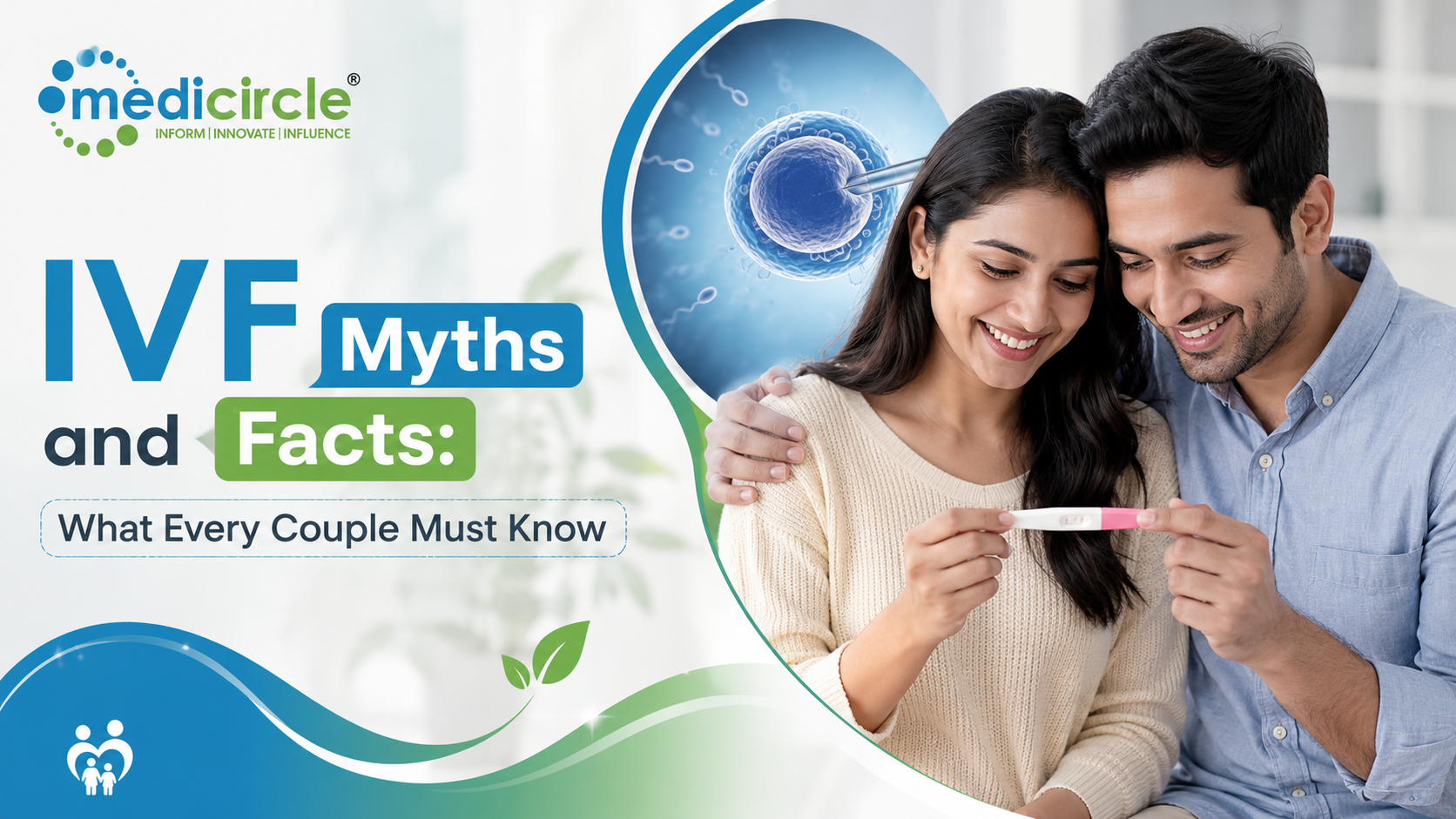
 IVF myths cause unnecessary fear among Indian couples. This article presents medical facts on IVF safety, success rates, procedures, and shared fertility responsibility to support informed decision-making.





Why So Many Couples Approach IVF With Fear Instead of Facts
In vitro fertilization, more commonly known as IVF, has helped millions of couples across the world achieve parenthood. Yet in India, despite growing awareness and increasing access to fertility treatment, IVF continues to be surrounded by a thick layer of misinformation, social stigma, and unfounded fear. Couples who are already navigating one of the most emotionally challenging journeys of their lives often find themselves overwhelmed not just by the treatment itself, but by the avalanche of conflicting information available online, in family circles, and across social media.
The problem is not a lack of information. The problem is an abundance of the wrong kind. Fear spreads faster than clarity, and a single alarming personal account on a forum can undo weeks of reassurance from a qualified fertility specialist. Understanding what is medically accurate and what is myth is no longer optional for couples considering IVF. It is essential.
Platforms like Medicircle serve a vital role in this landscape. As a trusted healthcare media and knowledge platform, Medicircle bridges the gap between expert medical knowledge and the patients who need it most. Through credible, expert-led health content, Medicircle helps Indian couples make informed decisions about fertility treatment rather than fear-based ones. When couples understand IVF correctly, they approach the process with greater confidence, clearer expectations, and stronger emotional resilience.
Understanding What IVF Actually Is
Before addressing myths, it is important to establish a clear understanding of what IVF involves. In vitro fertilization is a medically supervised assisted reproductive technology in which eggs are retrieved from a woman's ovaries and fertilized with sperm in a laboratory setting. The resulting embryo is then transferred into the uterus to establish a pregnancy.
The process typically involves hormonal stimulation to encourage the ovaries to produce multiple eggs, followed by ultrasound monitoring, egg retrieval under sedation, laboratory fertilization, and embryo transfer. The entire cycle spans roughly two to three weeks and requires close coordination between the patient and the fertility care team.
IVF is recommended for a range of fertility challenges, including blocked or damaged fallopian tubes, low sperm count or motility, polycystic ovarian syndrome, endometriosis, unexplained infertility, and cases where other fertility treatments have not succeeded. It is not a last resort. For many couples, it is simply the most medically appropriate path forward.
Common IVF Myths and the Medical Reality Behind Them
Myth 1: IVF Is Only for Older Women
One of the most persistent myths in Indian society is that IVF is a treatment reserved for women who have delayed marriage or childbearing until later in life. This belief is both inaccurate and harmful. It leads younger couples with genuine medical fertility challenges to feel judged or embarrassed about pursuing IVF.
Medical reality: IVF is recommended based on specific clinical indications, not age alone. A woman in her mid-twenties with bilateral tubal blockage, or a couple dealing with severe male factor infertility, may be advised to pursue IVF regardless of age. The decision is made by the treating fertility specialist after a thorough evaluation of both partners. Needing IVF at any stage of life is a medical finding, not a reflection of personal choices or lifestyle decisions.
Myth 2: IVF Guarantees Pregnancy in the First Cycle
Perhaps the most damaging myth, because of the emotional devastation it causes when expectations go unmet, is the belief that IVF always results in pregnancy on the first attempt.
Medical reality: IVF improves the probability of conception significantly for couples who meet appropriate criteria. However, success rates vary depending on the woman's age, ovarian reserve, egg quality, sperm quality, embryo development, and uterine receptivity. According to data from fertility centers across India and globally, average IVF success rates per cycle range from approximately 35 to 45 percent for women under 35, declining gradually with age. Many couples require more than one cycle. Each cycle, even if it does not result in pregnancy, provides the medical team with valuable information that can improve future outcomes. IVF is a process, not a guarantee.
Myth 3: IVF Babies Are Unhealthy or Developmentally Different
This myth is rooted in a fundamental misunderstanding of how IVF works. Some people believe that because conception occurs in a laboratory, the resulting child is somehow weaker, more prone to illness, or developmentally delayed compared to naturally conceived children.
Medical reality: Decades of research and follow-up studies involving millions of IVF-conceived children worldwide confirm that the overwhelming majority are healthy and develop normally. The process of fertilization occurring in a controlled laboratory environment under expert supervision does not alter the genetic makeup of the embryo or compromise the child's development. Any differences noted in select studies are typically linked to factors such as parental age or underlying health conditions, not to IVF itself. Since the birth of the world's first IVF baby in 1978, science has continually affirmed the safety and efficacy of the procedure.
Myth 4: IVF Always Results in Twins or Multiple Pregnancies
In India, many couples hold the misconception that IVF almost certainly leads to twins or triplets. This belief sometimes stems from older practices or from stories shared by acquaintances who underwent treatment years ago.
Medical reality: Contemporary IVF practice, both globally and in accredited Indian fertility centers, increasingly favors single embryo transfer to minimize the risks associated with multiple pregnancies. Multiple pregnancies carry significantly higher risks, including premature birth, low birth weight, gestational complications, and neonatal complications. With advances in embryo selection techniques such as preimplantation genetic testing and improved cryopreservation, doctors can now identify the single most viable embryo for transfer, achieving high success rates without the risks of multifetal pregnancies. The practice of transferring multiple embryos is declining because medical science has made it unnecessary.
Myth 5: The IVF Process Is Extremely Painful
Fear of physical pain is one of the most common reasons couples delay seeking fertility treatment or avoid IVF entirely. Online testimonials and secondhand accounts often amplify physical discomfort disproportionately.
Medical reality: The most physically intensive part of IVF is the hormonal stimulation phase, during which the woman self-administers daily injections. Most women describe this as manageable, akin to mild discomfort at the injection site and some bloating. The egg retrieval procedure is performed under anesthesia or sedation, meaning the patient does not experience pain during the procedure. The embryo transfer is typically a straightforward procedure comparable to a cervical smear in terms of discomfort, requiring no anesthesia in most cases. Couples who have completed IVF cycles frequently report that the emotional experience of waiting and uncertainty was far more challenging than the physical aspects of treatment.
Myth 6: Stress Causes IVF to Fail
In Indian cultural contexts, there is significant social pressure placed on women undergoing fertility treatment to remain calm, positive, and stress-free. When a cycle does not succeed, stress is often blamed, sometimes even by well-meaning family members.
Medical reality: While chronic, severe psychological distress can influence overall health and hormone regulation, occasional or moderate anxiety does not directly cause IVF cycles to fail. Implantation of an embryo is a complex biological process influenced by the quality of the embryo, the receptivity of the endometrium, immunological factors, and other clinical variables. Feeling worried during an IVF cycle is entirely normal and does not sabotage the outcome. Psychological support is valuable because it improves a patient's quality of life and emotional resilience, not because it has a direct physiological impact on implantation rates. Couples should seek counseling to support their well-being, not to prevent failure.
Myth 7: IVF Is Only About the Woman
In many Indian families, fertility challenges are still viewed primarily as a woman's issue. When IVF is discussed, attention is almost entirely directed at the woman, leaving male partners feeling like observers rather than participants in the treatment journey.
Medical reality: Male factor infertility accounts for approximately 40 to 50 percent of all infertility cases, according to multiple reproductive health studies and data from Indian fertility clinics. Sperm quality, quantity, motility, and DNA integrity are critical variables in IVF outcomes. Procedures such as intracytoplasmic sperm injection, commonly used alongside IVF, were specifically developed to address male fertility challenges. The medical evaluation and contribution of the male partner are as important as those of the female partner. Equally significant is emotional participation. IVF is a shared journey, and couples who support each other through the process typically report better emotional outcomes regardless of treatment results.
Myth 8: IVF Causes Long-Term Health Damage in Women
Some families discourage women from pursuing IVF by suggesting that the hormones and procedures involved cause permanent damage to the ovaries, increase cancer risk, or lead to premature menopause.
Medical reality: The hormonal medications used in IVF are administered for a short, defined period, typically 10 to 14 days, and under close clinical monitoring. Ovarian hyperstimulation syndrome, the most commonly cited risk, occurs in mild forms in a minority of patients and in severe forms in very few cases. Monitoring protocols in reputable Indian fertility centers have significantly reduced this risk. Extensive international research over decades has not established a causal link between IVF hormone stimulation and increased risk of ovarian, breast, or uterine cancers. Hormone levels return to baseline once the stimulation phase ends. The ovaries do not sustain lasting damage from a properly supervised IVF cycle.
Myth 9: If IVF Fails, Natural Pregnancy Is Impossible
Couples who experience failed IVF cycles sometimes conclude that their chances of ever having a biological child are over. This belief, while understandable emotionally, is not medically accurate.
Medical reality: A failed IVF cycle does not mean that natural conception is impossible. Some couples conceive naturally between IVF attempts or after discontinuing treatment entirely, sometimes because the diagnostic process itself uncovered and addressed underlying health issues. Each failed cycle also informs the medical team about what can be adjusted in subsequent attempts, including medication protocols, embryo selection, or uterine preparation. The fertility journey is rarely linear, and a failed cycle is a setback, not a final verdict.
The Role of Indian Healthcare Infrastructure in IVF Treatment
India has emerged as one of the leading countries in the world for fertility treatment, with a growing number of accredited IVF centers across metropolitan cities such as Mumbai, Delhi, Bengaluru, Chennai, Hyderabad, and Pune, as well as a rapidly expanding presence in Tier 2 cities. The Indian Council of Medical Research has established guidelines for assisted reproductive technology, and the Assisted Reproductive Technology Regulation Act, enacted in 2021, brought important regulatory oversight to fertility clinics across the country.
For Indian couples, this regulatory environment means greater accountability among fertility providers and clearer rights for patients. It also means that couples have access to a standardized quality of care when they choose accredited centers. Understanding these rights and the regulatory landscape is part of making an informed decision about fertility treatment.
How Medicircle Supports Couples Navigating the IVF Journey
Medicircle is designed precisely for moments like this. When couples are trying to separate medical fact from online noise, they need a trusted source that combines clinical accuracy with compassionate, accessible communication. Medicircle offers healthcare content developed through credible expert voices, specialists, and verified medical information, helping patients understand complex fertility topics in plain language.
Through its expert-led health articles, specialist interviews, patient education content, and healthcare brand partnerships, Medicircle creates a reliable space where both patients and healthcare professionals can engage meaningfully. For fertility clinics and reproductive health specialists looking to reach and educate a wider audience, Medicircle provides a responsible media platform that builds trust rather than traffic.
Couples seeking credible information about IVF in India, fertility specialists wanting to share their expertise, and hospitals committed to patient education can all find a purposeful home within the Medicircle ecosystem.
Conclusion: Knowledge Is the Foundation of a Better IVF Journey
The IVF journey is challenging enough without the additional burden of misinformation. Myths do not protect couples. They delay decisions, amplify fear, and create unrealistic expectations in both directions, whether excessive optimism or unwarranted despair. What couples need before they begin treatment is not reassurance built on false premises. They need accurate, compassionate, evidence-based information.
IVF is a well-established, scientifically sound medical treatment that has helped countless Indian families fulfill the dream of parenthood. When couples understand what the treatment actually involves, what the realistic success rates are, what risks are genuinely present and how they are managed, and what myths are simply unfounded, they enter the process with greater clarity and emotional strength.
Seeking guidance from qualified fertility specialists, relying on credible healthcare media platforms for information, and asking the right questions before treatment begins are the most important steps a couple can take. Knowledge does not guarantee success, but it makes the journey significantly more manageable.
Frequently Asked Questions
What is the IVF success rate in India for couples under 35?
IVF success rates in India for women under 35 typically range from 35 to 45 percent per cycle at reputable fertility centers, depending on individual factors such as ovarian reserve, egg quality, sperm health, and the clinic's laboratory standards. Success rates decrease gradually with advancing age. Couples should ask their fertility specialist for individualized success rate estimates based on their specific clinical profile, rather than relying on general averages alone.
How many IVF cycles does it usually take to achieve pregnancy?
There is no universal answer, as the number of cycles required varies based on individual fertility factors, age, the underlying diagnosis, and how the body responds to stimulation. Many couples achieve pregnancy within one to three cycles. Some may need additional attempts. Each cycle provides clinical information that the medical team uses to refine the approach. Couples should discuss a realistic treatment plan, including financial and emotional preparation for multiple cycles, with their fertility specialist before beginning treatment.
Is IVF safe for women with PCOS, which is very common in India?
Yes, IVF is an established treatment option for women with polycystic ovarian syndrome. Women with PCOS typically have higher numbers of antral follicles, which means they may respond strongly to hormonal stimulation. The primary precaution for women with PCOS undergoing IVF is careful monitoring to minimize the risk of ovarian hyperstimulation syndrome. Experienced fertility specialists adjust stimulation protocols to reduce this risk. Women with PCOS should discuss their specific situation with a qualified reproductive endocrinologist to determine the safest and most effective protocol for their IVF cyc





-23-300x250.png)

.jpeg)






.jpg)
.jpg)
.jpg)
.jpg)
.jpg)
.jpg)
.jpg)
.jpg)
.jpg)